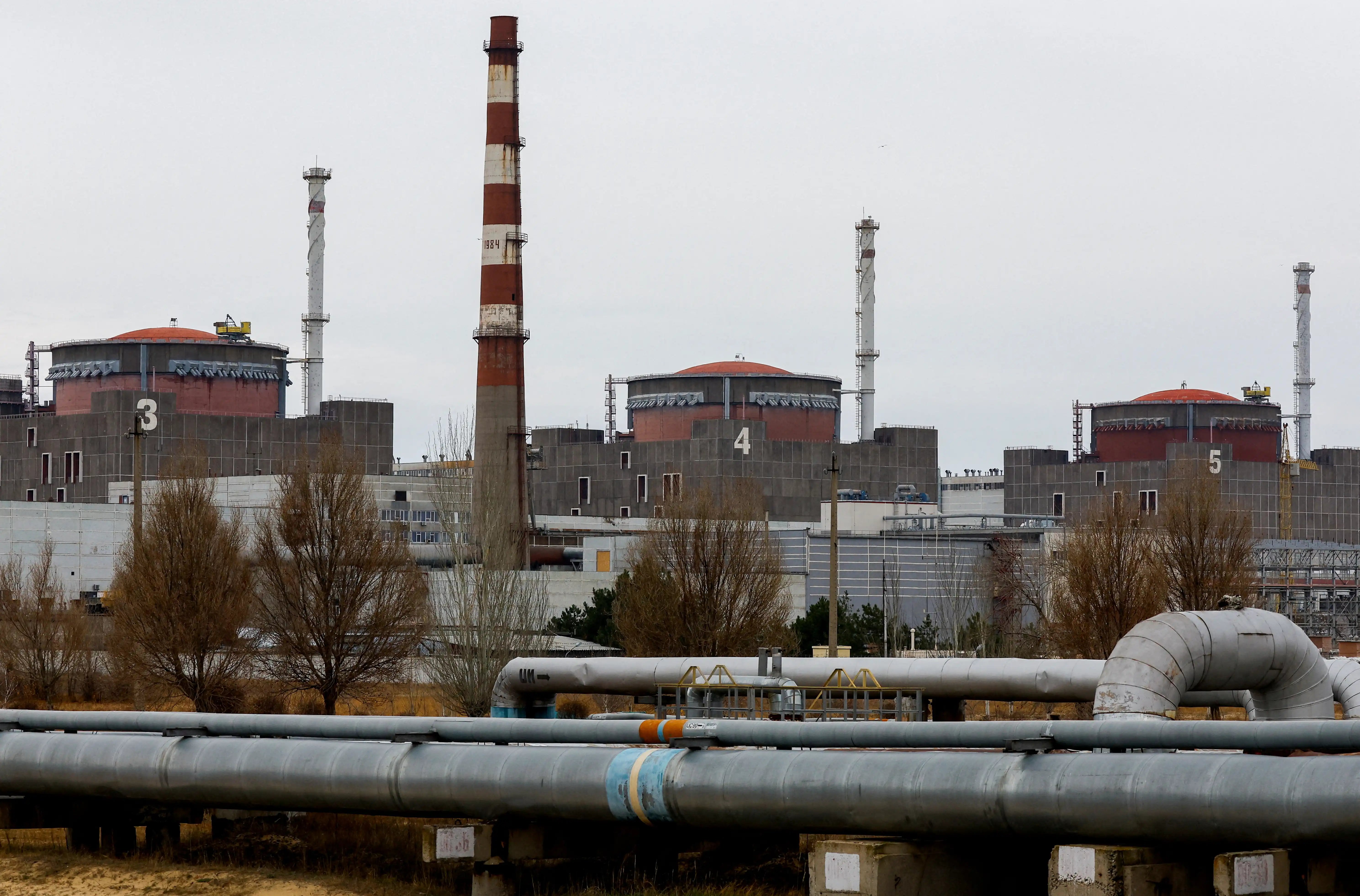

The latest effort by Russia and Ukraine to negotiate a localized ceasefire around the Zaporizhzhia Nuclear Power Plant reflects a recurring pattern driven not by diplomacy, but by repeated failures in critical infrastructure.
According to the International Atomic Energy Agency, both Moscow and Kiev are again engaged in talks to establish a temporary halt in fighting to allow repairs to a damaged external power line supplying the plant, Europe’s largest nuclear facility.
The urgency follows a series of disruptions in April, including the plant’s loss of external power for the 14th time since the war began, according to the IAEA.
This is not an isolated event. It reflects a pattern that has come to define the Russia Ukraine War, where damage to power infrastructure repeatedly forces emergency intervention.
Since early 2026, the IAEA has brokered multiple localized ceasefires to allow repair crews to access damaged transmission lines. In February, a localized ceasefire was agreed to enable work on a critical line after it was severed by military activity.
In March, the plant was reconnected to a backup line following repairs carried out under the protection of what the IAEA described as its fifth such ceasefire arrangement.
The sequence has become predictable: damage to energy infrastructure, disconnection from external power, reliance on emergency systems, and then urgent negotiations to stabilize the situation.
The Zaporizhzhia facility, under Russian control since 2022, is no longer generating electricity but remains dependent on a continuous external power supply to maintain cooling systems for nuclear fuel.
Without that power, the plant must switch to diesel generators, a last-resort safety mechanism that is not designed for prolonged operation.
At several points this year, the plant has operated on a single remaining external power line, increasing the risk associated with any further disruption.
This recurring instability has turned the facility into a focal point of strategic tension. Both Russia and Ukraine have accused each other of military activity near the plant, while the infrastructure itself remains exposed to ongoing conflict.
The IAEA continues to play a central role in managing these risks, facilitating ceasefires and monitoring safety conditions. However, its role remains limited to coordination, without the ability to prevent repeated damage or enforce lasting security arrangements.
The repeated need for ceasefires underscores a broader reality: nuclear safety at Zaporizhzhia now depends on temporary pauses in a war that shows no sign of ending.
Even when repairs are completed, they offer only short-term stability. Power connections restored under ceasefire conditions have repeatedly been lost again, reinforcing the fragile nature of the system.
For now, negotiations remain narrowly focused on restoring the plant’s external power supply. But the underlying risks, damaged infrastructure, active conflict zones, and limited oversight, remain unresolved.
What emerges is not a story of cooperation, but one of necessity, where preventing a nuclear accident requires repeated, temporary suspensions of a conflict that continues to escalate.
Related Posts