CAMBRIDGE, England. The young man who would one day rewrite humanity’s understanding of black holes was, in the eyes of his own father, drifting. He wandered the family home without ambition. He did not appear to study. And he had begun to confess, with a teenager’s casual cruelty toward his own gifts, that he had lost faith in physics.
It is 1961. The student in question is nineteen years old. His name is Stephen Hawking.
Newly surfaced diaries kept by Frank Hawking, the eminent tropical-disease specialist who fathered the most famous scientist of the modern era, paint a portrait of family worry that runs flatly against the polished mythology built around his son in the decades since. The notebooks, some of them written in a private code that the family historian has only just cracked, contain more than 200,000 decoded words documenting Stephen Hawking’s adolescence, his catastrophic medical diagnosis at twenty-one, his marriages and the slow accretion of fame that would eventually transform him into a global icon of human endurance.
The diaries belong to an archive that had been quietly held at the home of Mary Hawking, the physicist’s sister. They were turned over to Graham Farmelo, the science writer who is preparing what is being billed as the first definitive biography authorized by the Stephen Hawking estate. That book is scheduled for publication in September. What Farmelo found inside the boxes, by his own account, was not the smooth narrative of a destined genius but a raw and frequently uncomfortable record of doubt.
“We are a little worried at the way Stephen is turning out,” Frank Hawking wrote in one entry from 1961, when his son was a student at the University of Oxford. “He wanders about the house without much initiative and does not do much work.”
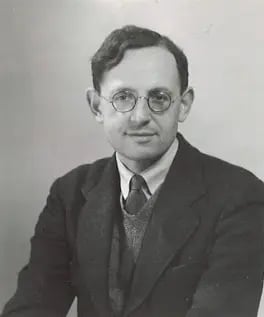
“If so, that is very sad,” Frank wrote. “At his age, I had great ambition to get on. If I had had half his opportunities, I would have done much more.”
The passages will surprise many readers who have come to think of Stephen Hawking through the heroic frame of the 2014 film The Theory of Everything, or through the calm authority of his synthesized voice on television. Yet they fit a picture that Hawking himself sometimes acknowledged in interviews late in life, when he admitted that as an undergraduate he had been bored, intellectually unchallenged and inclined to coast.
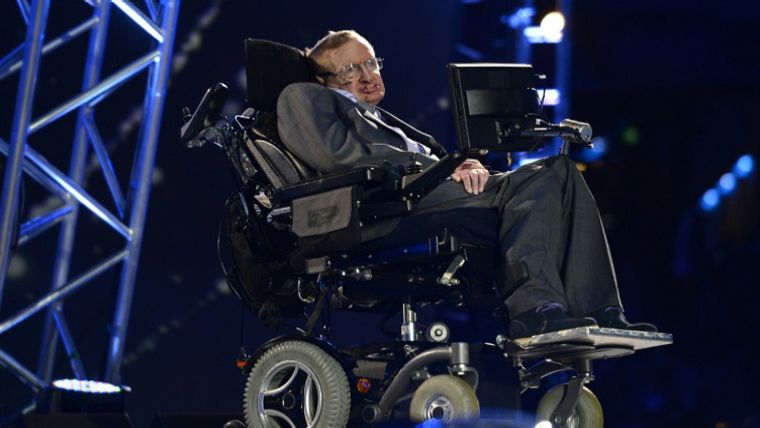
Within two years, the boredom would be irrelevant. In 1963, doctors at a London hospital told the family that Stephen, then twenty-one, had a degenerative neurological condition. They gave him roughly two years to live. The disease, a rare form of motor neurone disease, would eventually paralyse him almost entirely while sparing the mind that produced the singularity theorems, the discovery of black holes radiation and the international bestseller that introduced quantum cosmology to the kitchen table.
Frank Hawking’s diaries document the family’s parallel descent into a different kind of cosmology. The future, suddenly, was measured in months. “A slow and ghastly experience,” the father wrote in 1967, watching his son’s body fail and his career, against all medical expectation, take flight. The contradiction is what gives the entries their charge. The same parent who had feared his son was wasting his promise was now witnessing the most punishing test imaginable of that promise.
What emerges from those pages is a family history that is more recognisably human than the legend. The Hawkings were academic, ambitious and tightly wound. Frank had wanted his son to study medicine. Stephen wanted mathematics, then settled for physics because Oxford did not offer a mathematics degree at the time. The friction between father and son surfaces repeatedly. So does Isobel Hawking’s quieter, sharper reading of her son, captured in letters and notebooks that have also entered the archive.
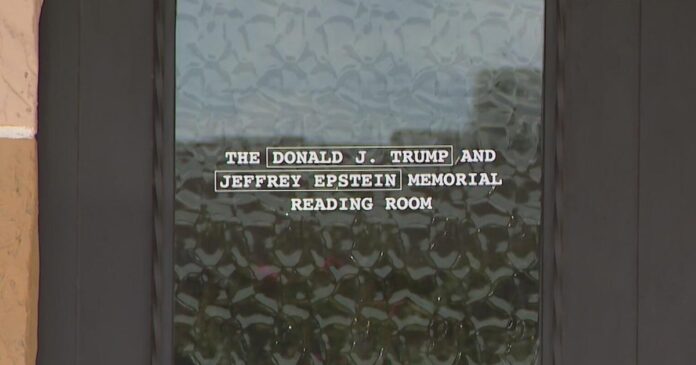
The biography arrives at a moment when Hawking’s public image is being scrutinised more aggressively than at any point since his death in March 2018. Photographs released last year as part of the United States Department of Justice’s disclosures regarding the financier Jeffrey Epstein placed Hawking, posed on a sun lounger flanked by two women, in scenes captured during a 2006 physics conference held in the United States Virgin Islands. The Hawking family has rejected what it has called insinuations of inappropriate conduct, noting that the women in the photographs were his round-the-clock carers and that no images of Hawking and Epstein together have ever been known to exist.
The new diaries are unlikely to alter that controversy in either direction. What they do is something more intimate and arguably more useful: they put a teenager’s idleness, a father’s frustration and a young man’s loss of faith in physics back into a story that has often been told as a straight line from precocity to greatness.
Hawking went on to publish A Brief History of Time, which sold more than thirteen million copies and stayed on the Sunday Times bestseller list for a record-breaking 237 weeks. He held the Lucasian chair of mathematics at the University of Cambridge, the post once held by Isaac Newton. He lived more than five decades past the deadline his doctors had drawn. When he died, his ashes were placed in Westminster Abbey, near the resting places of Newton and Charles Darwin.
What Frank Hawking did not write in his diaries, and what Farmelo’s biography will now have to reckon with, is the central irony of the family record. The boy his father feared was wasting his life turned out to be a man who, more than almost anyone else in the twentieth century, made the rest of the world stop and look up at the sky.