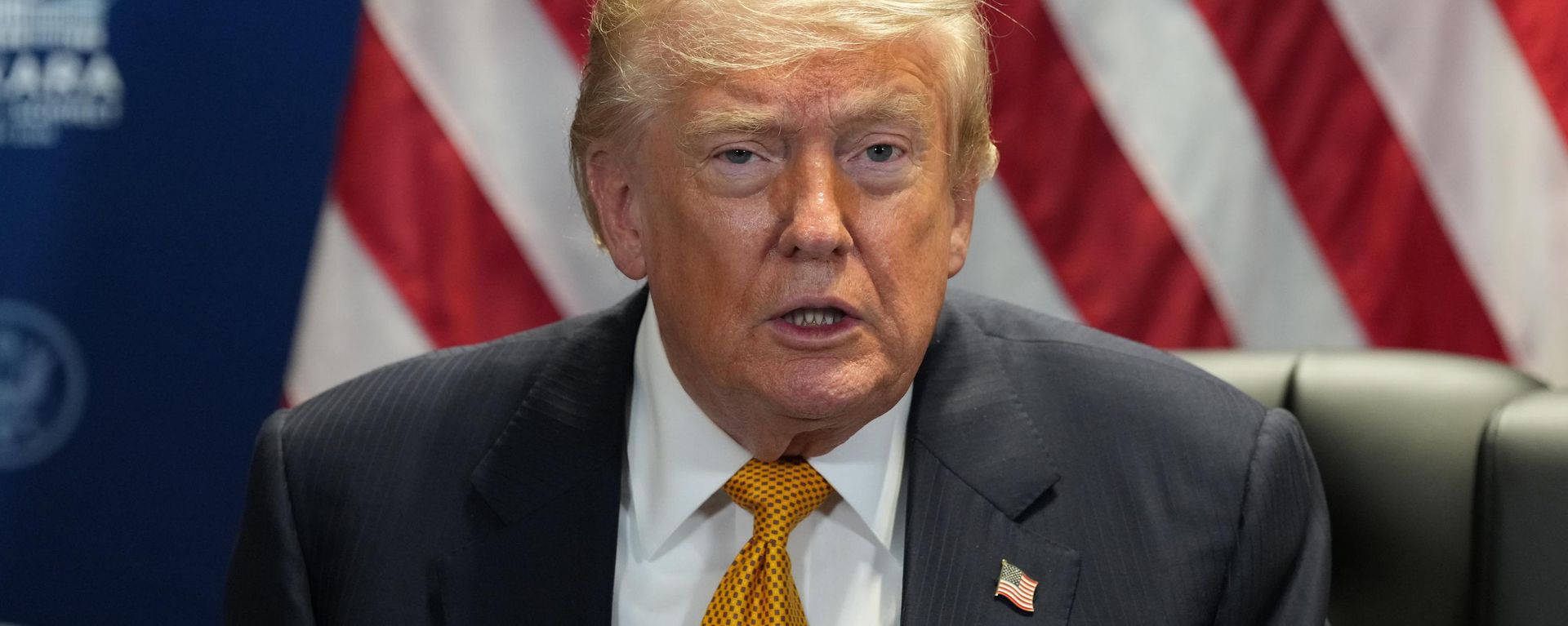

WASHINGTON – Donald Trump turned the rescheduled White House Correspondents’ Association Dinner on Friday into the kind of spectacle the event’s critics have warned about for years: a showcase for a president who treats press freedom as a strategic inconvenience and its practitioners as targets. When Trump compared CNN anchor Kaitlan Collins to transgender influencer Dylan Mulvaney – referencing the 2023 Bud Light marketing campaign that cost Anheuser-Busch more than twenty-seven billion dollars in market capitalization – he produced not just a punchline but a Sunday morning social media moment that has renewed calls to abolish the dinner entirely.
The joke, delivered to the assembled Washington press corps, was calibrated to land as mockery: “I thought Kaitlan Collins had really made it big with a major new sponsorship,” Trump told the room, “but then I was informed it wasn’t her on the Bud Light can – it was Dylan Mulvaney.” The audible reaction in the ballroom told one story. By Sunday morning, Trump had reinforced the moment by posting a doctored image on his social media platform placing Collins’ face on Mulvaney’s image from the Bud Light advertisement. That follow-up – petty, premeditated, designed to dominate another news cycle – is the signature of a president who does not distinguish between entertainment and governance.
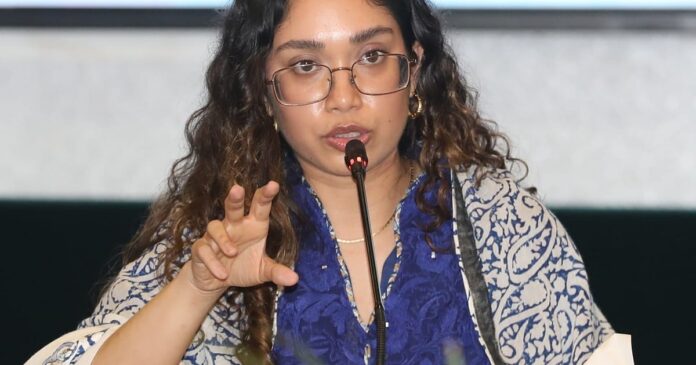
Mulvaney, who has spent more than a year on a lower profile following the Bud Light controversy that made her the most prominent target of a conservative consumer boycott in recent memory, responded on TikTok rather than in kind. “Being publicly mocked and criticized by this administration,” she said in the video, “is actually like the greatest compliment of all.” She invoked the company she finds herself in: the movement for trans and nonbinary rights, she argued, places her alongside people the administration fears precisely because it cannot silence them. “To the president,” she concluded, “thank you for reminding me that I am more powerful than I even knew.”
It was a response that required considerably more composure than the man who prompted it had shown. Trump’s instinct to return to a 2023 Bud Light reference – when Mulvaney is no longer fronting campaigns and the boycott drama has largely resolved – speaks to a grievance register that is not driven by current events so much as by a settled list of people to humiliate. Collins, who received the WHCA’s Award for Excellence in Presidential News Coverage at the same dinner for her reporting on the contentious February 2025 Oval Office meeting between Trump and Ukrainian President Volodymyr Zelensky, has been a particular focus of presidential irritation for years.
The Trump-Zelensky meeting that Collins covered was itself a combustible moment, one that drew international attention and generated sustained reporting that the White House found unwelcome. The WHCA awarding that coverage is not something a president comfortable with a free press would find amusing. Trump did not find it amusing. He expressed that displeasure by comparing the award recipient to a transgender influencer in a room full of journalists.
Jon Stewart, whose tenure on “The Daily Show” and subsequent influence in American political commentary have made him a credible voice on media culture, did not find the dinner amusing either – though for different reasons. Stewart called for ending the WHCA event altogether, describing the press corps’ continued participation as “an act of submission.” The phrase is not subtle. It frames the dinner – originally established to build goodwill between the press and the executive branch – as having inverted into a mechanism through which the president humiliates journalism and journalism applauds the spectacle.
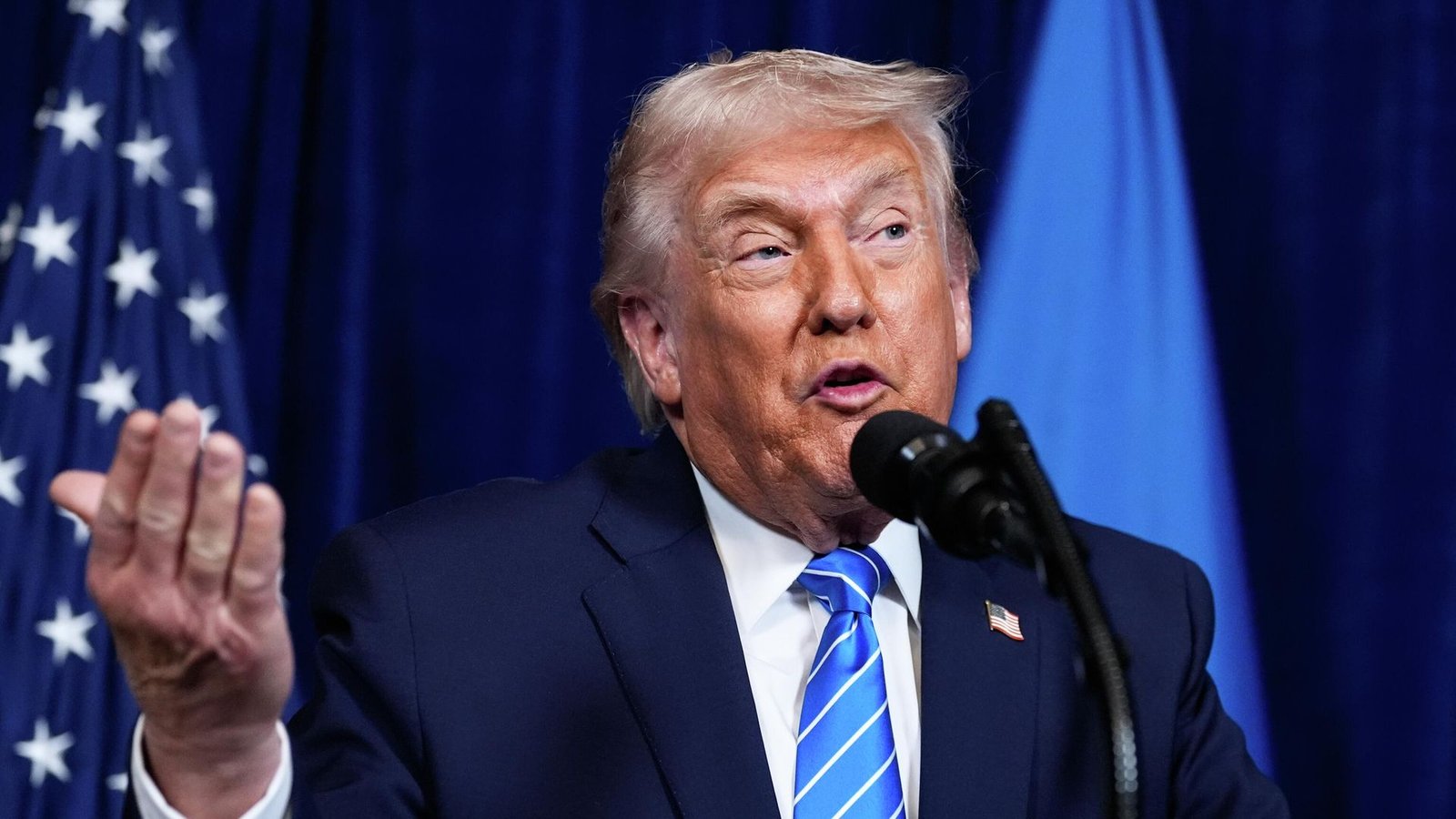
The context makes Stewart’s characterization difficult to dismiss. Press freedom concerns at the WHCA dinner had been explicitly raised by journalists and advocacy groups before the event began. Hundreds of reporters had urged the association to publicly confront Trump on press freedom at the rescheduled event. Five New York Times reporters received federal subpoenas at their homes earlier this month. The dinner proceeded anyway, and the president used it to mock a CNN anchor and a transgender woman.
The original dinner scheduled for April was cut short when an armed individual attempted to enter the Washington Hilton, triggering a security lockdown and the heroic intervention of Secret Service Officer Victor Gonzales. The rescheduled event in July was already operating under that shadow. That the president used the occasion to compare journalists to boycotted advertising campaigns added a particular texture to what was billed as a celebration of the free press.
Trump’s insults at the press corps on Friday evening – which ran well beyond the Collins-Mulvaney comparison – were bracketed by the simultaneous honoring of Gonzales, whose courage in April was genuine and whose recognition deserved better than the company it was forced to keep. The tonal instability of an event that cannot decide whether it is a press freedom ceremony or a presidential roast is not incidental. It is the product of a press association that has been unable to answer the question Stewart is now asking publicly.
Trump’s fourth-term stunt at the dinner – waving a “Trump 2028” hat to the assembled room – had already framed the evening as political theater before the Collins joke landed. The two moves together reveal the architecture of Trump’s approach to the event: the hat was the national ambition play, the Collins comparison was the culture war play, and the doctored image posted Sunday was the social media play. Legal debate over a third or fourth presidential term is now actively underway, which suggests the hat was not entirely a joke. None of what Trump does in public is entirely a joke.
For Mulvaney, the episode lands differently. She did not ask to be returned to the center of a political dispute she had already navigated once, at considerable personal and professional cost. Her response – measured, dignified, direct – was more effective communication than anything the president produced at the dinner. Whether that matters to the administration is beside the point. The record, as of Sunday, shows a sitting American president spending his weekend posting doctored images of a CNN anchor and a transgender woman, and a transgender woman responding by pointing out that she appears to be living rent-free in his head.
CNN defended Collins publicly and reaffirmed its editorial independence. That statement matters in a climate where the administration has pursued adversarial relationships with multiple legacy outlets. Collins, for her part, has kept her focus on her work – which is how she won the award that prompted Trump’s mockery in the first place. The irony is not lost on anyone watching.