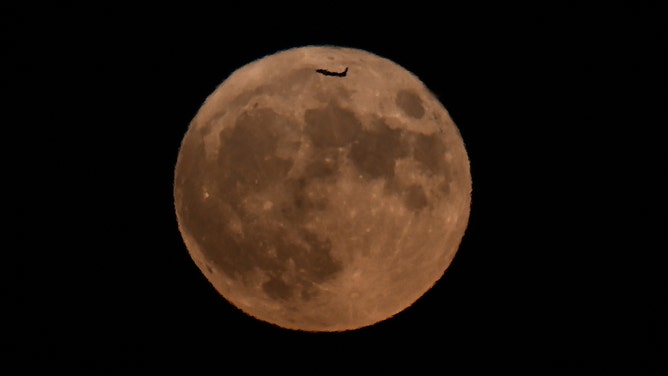

NEW YORK — A rare calendar Blue Moon will rise on the evening of May 30 and reach full phase in the early hours of May 31, the second full moon to appear in May 2026 and the first time two full moons have fallen in the same calendar month since August 2023. The event will close a stretch of skywatching set pieces that began with the Flower Moon on May 1 and includes a planetary lineup with Venus and Jupiter low in the western sky after sunset and Mars and Saturn rising in the east before dawn.
According to NASA’s Jet Propulsion Laboratory, the Blue Moon will reach exact full phase at 4:45 a.m. Eastern Time on May 31, although the lunar disk will look round and luminous on the nights of May 30 and June 1 as well. Despite the name, the moon will not actually appear blue. The term refers to the calendrical anomaly of two full moons within one 30 or 31-day month, an alignment that occurs only because the lunar cycle of about 29 and a half days falls just short of the average length of a month.
The mechanism is straightforward. Most months are 30 or 31 days long, while a full lunar cycle, from new moon to new moon, lasts about 29.5 days. When a full moon falls on the first or second day of a calendar month, a second full moon can squeeze in before the month ends. The arithmetic produces a calendar Blue Moon roughly once every 30 months, or about 6 percent of all full moons, according to the agency. The next one after May 31 will not arrive until December 2028.
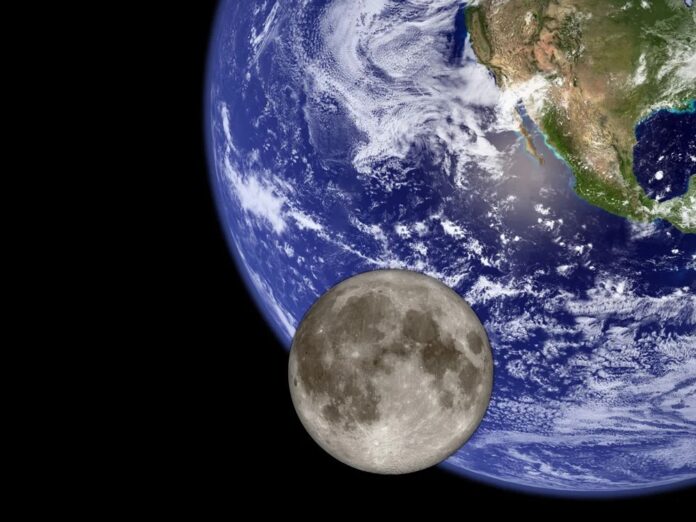
What is unusual about this particular Blue Moon is that it doubles as a micromoon. The moon’s orbit is slightly elliptical, and on May 31 the satellite will be near apogee, the farthest point in its monthly path around Earth at roughly 251,000 miles. As a result the lunar disk will appear approximately 7 percent smaller than an average full moon, and dimmer than the brilliant supermoons that bracket November and December. This will be the second of three consecutive micromoons in 2026, following the May 1 Flower Moon and preceding the June Strawberry Moon.
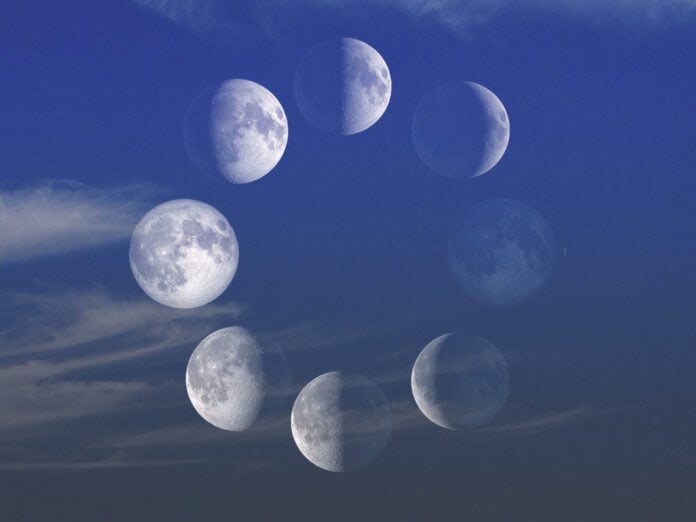
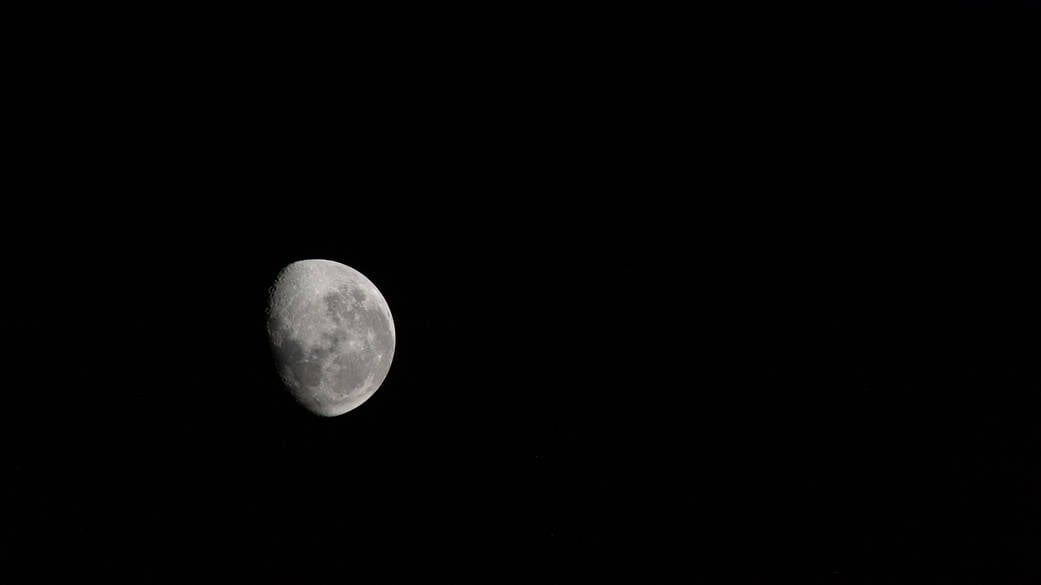
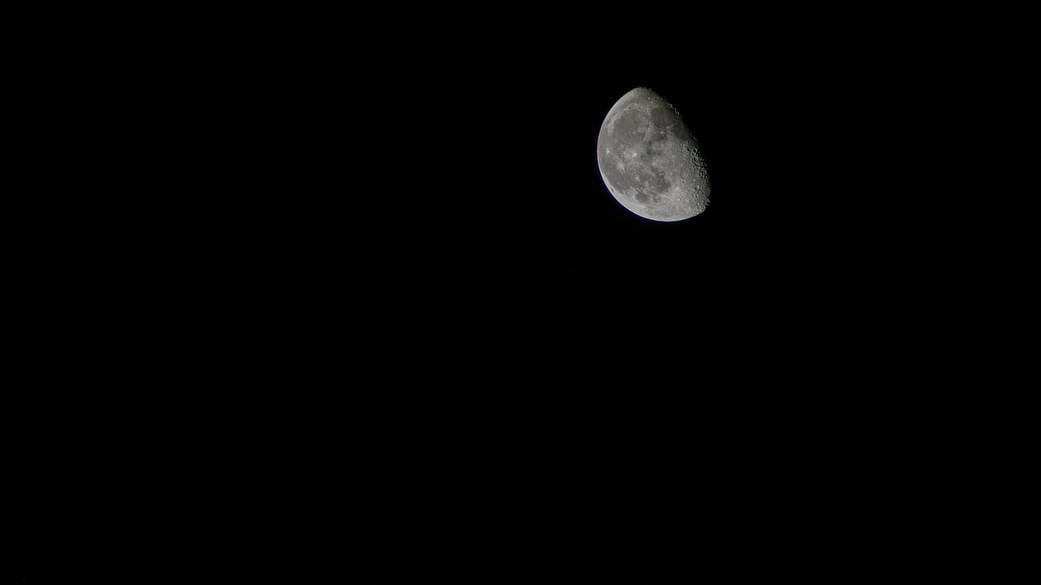
Skywatchers will get a useful warm-up act in the days before the Blue Moon itself. On the evening of May 26, the waxing gibbous moon, about 83 percent illuminated, will hang less than 40 degrees above the southern horizon, with the bright blue-white star Spica close to its left. Spica, the 15th-brightest star in the night sky, is actually two enormous stars locked in a four-day orbit, shining with a combined luminosity of more than 12,000 suns. The lunar disk will drift past Spica through the night and set in the west in the early hours of May 27.
The implication for telescope owners is that the waxing gibbous phase, not the full moon, is the better time to study the lunar surface. Low sun angles along the day-night terminator throw the rims of craters into sharp relief and reveal features that the flat illumination of a full moon washes out. Look for an arc of light along the terminator created when sunlight catches the peaks of the Montes Jura mountain range on the northwestern edge of Mare Imbrium, and for the bright ejecta rays radiating from the 58-mile-wide Copernicus Crater near the lunar equator.
The May 1 Flower Moon, the first of the month’s two full moons, was itself a Scorpio micromoon that set up the unusual double full moon calendar now unfolding. After the Blue Moon sets on June 1, the moon will continue its orbital path toward Antares, the red supergiant heart of the constellation Scorpio, which it will meet around the end of the month.
The planetary lineup running alongside the Blue Moon will be visible to anyone willing to set an alarm or wait through twilight. About 30 to 45 minutes after sunset, Venus and Jupiter will close on each other low in the west, with Venus the brighter of the two as it always is. About 45 to 60 minutes before sunrise, Mars and Saturn will be visible together low in the east, Mars showing its familiar rust color and Saturn its pale gold. Both pairings will be naked-eye objects from any reasonably dark location, though a small telescope will resolve Saturn’s rings and Jupiter’s four Galilean moons.
The cultural inheritance of the Blue Moon is older than the modern calendar definition that produces it. The earliest recorded use of the phrase, in 16th-century English, was sarcastic, a way of referring to something absurd or impossible. By the 1940s the Maine Farmers’ Almanac had codified a seasonal definition, the third full moon in a season containing four, but a 1946 article in Sky & Telescope magazine, which misread the almanac’s rule, accidentally popularized the calendrical definition that has dominated American usage ever since. Both definitions are now considered correct, and both produce events about as rare as the idiom suggests.
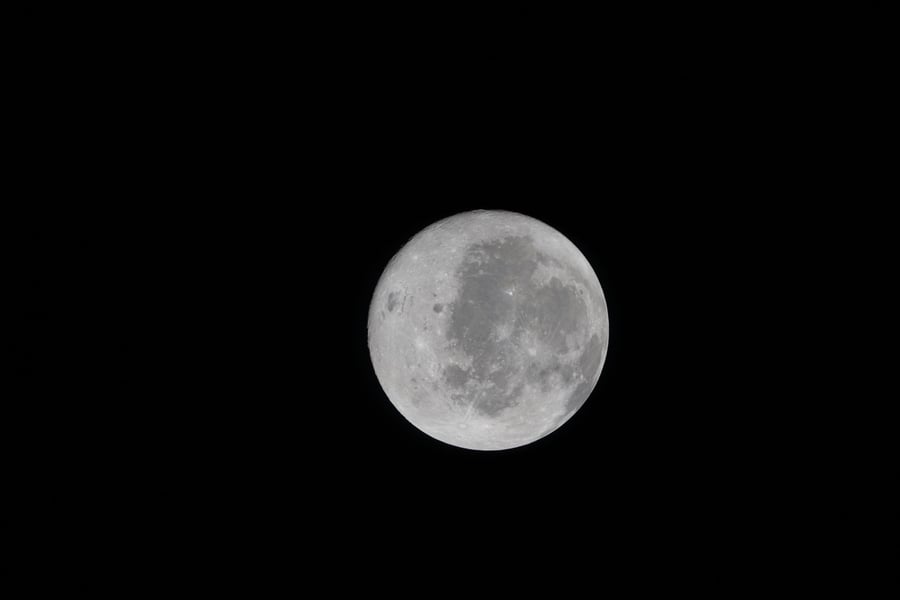
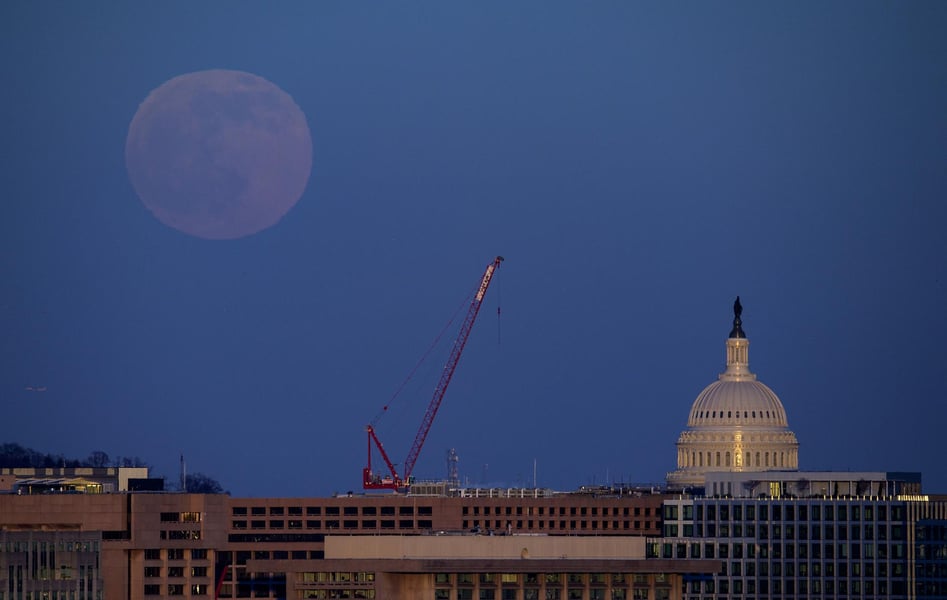
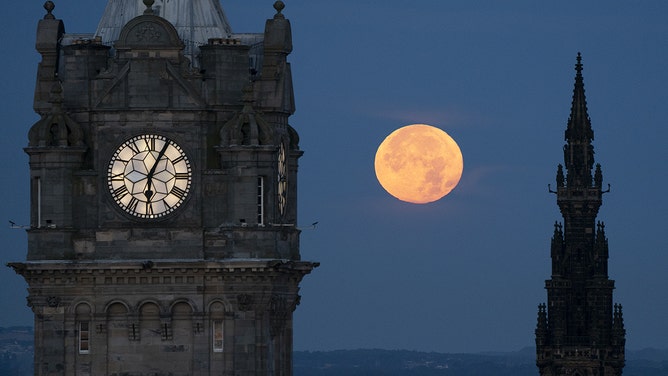
For viewers in North America, the moon will rise in the east shortly after sunset on May 30, glowing golden or orange near the horizon as the long path of its light through the lower atmosphere scatters away the blue and green wavelengths. As the moon climbs, the disk will fade to a familiar silver white. The lunar terminator will not be visible at the moment of full phase, but the lunar maria, the dark basaltic plains that form the so-called face of the moon, will be on full display.
Astronomers recommend the usual viewing precautions for anyone hoping for the best experience. Drive at least 30 to 60 minutes outside city lights, give the eyes 20 minutes to dark-adapt without looking at phone screens, and dress warmer than the temperature suggests, since lying still under the sky for an extended period cools the body faster than walking does. A pair of 7×50 or 10×50 binoculars will reveal more lunar detail than the naked eye and is far easier to use than a beginner telescope.
The Blue Moon also sits within a much larger arc of lunar activity in 2026. The competition between American and Chinese lunar programs intensified earlier this month, with both space agencies fixing the south polar region as the prize. NASA announced its first Moon Base hardware contracts on May 26, awarding nearly $1 billion to Blue Origin, Astrolab, Lunar Outpost and Firefly Aerospace to deliver rovers, landers and drones to the lunar surface before the planned 2028 Artemis IV crewed landing. China is targeting its own crewed landing for 2030, and possibly earlier.
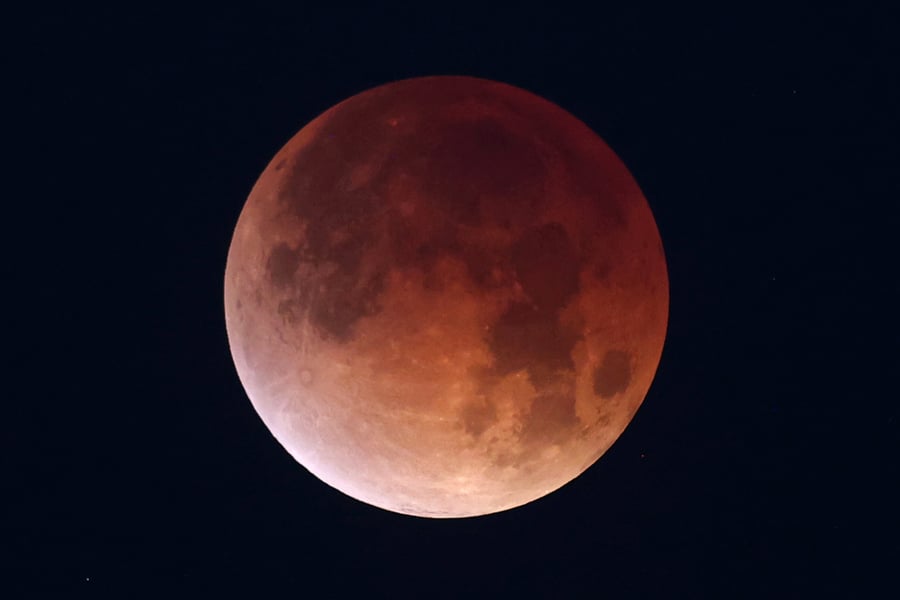
According to early reporting from Space.com’s skywatching desk, the southern lunar pole that will host that hardware will be visible to backyard telescopes on the May 26 conjunction night, sitting close to the day-night divide on the lunar disk. Two thousand twenty-six’s remaining major lunar moments include two lunar eclipses, both visible from the Americas, and three supermoons clustered in the final weeks of the year.
Raquel Villanueva, the JPL researcher who hosts the agency’s monthly “What’s Up” video series, told viewers that the Blue Moon is the headline event of an otherwise quieter month for lunar phenomena. The Eta Aquarid meteor shower, which peaks in the first week of May, comes from particles shed by Halley’s Comet, and will return as a curtain raiser on the same window again next year. Halley’s itself does not return to the inner solar system until 2061.
According to NASA, the May 31 Blue Moon will be followed by a stretch of more visually dramatic events later in the year. November and December will each host a supermoon, with the November 24 and December 23 full moons appearing as much as 14 percent larger and 30 percent brighter than average. Until then, the calendar coincidence of two full moons in one month, paired with a quiet planetary alignment in the west and east, will have to do.