
France’s National Police will deploy 8,000 officers from every branch of the force to secure the G7 summit in the lakeside resort of Évian-les-Bains next month, authorities announced Wednesday, in one of the most sweeping domestic security operations the country has mounted for a diplomatic gathering in years.
The summit, set for June 15–17 under France’s G7 presidency, will bring together the leaders of the United States, Germany, Japan, Britain, Canada and Italy, alongside European Union officials and a roster of invited guests including the heads of government of India, Brazil, South Korea and Kenya. For President Emmanuel Macron, it will be the last G7 summit of his tenure before French presidential elections.
The police statement, released on the platform X, said officers from public security, protective services, law enforcement, judicial police and intelligence units would all be drawn into the deployment. Drones and counter-drone systems will be part of the operation, and border crossings will receive heightened scrutiny. The seven heads of state and their delegations are scheduled to arrive at Geneva’s international airport on June 15, after which they will be handed to the protection of France’s Service for the Security of High-Ranking Officials, known by its French acronym SDLP.
The French announcement came as the wider security perimeter around the summit was coming into relief. Authorities have designated two concentric zones around the town: a Blue Zone covering Évian-les-Bains and portions of five surrounding municipalities, and a tighter Red Zone encompassing the summit venues themselves. Residents and business owners wishing to enter the Blue Zone must register on a government platform to obtain a G7 Pass; entry to the Red Zone requires a separate, more rigorous application process. Exceptional security measures are set to begin on June 11, four days before the formal opening.
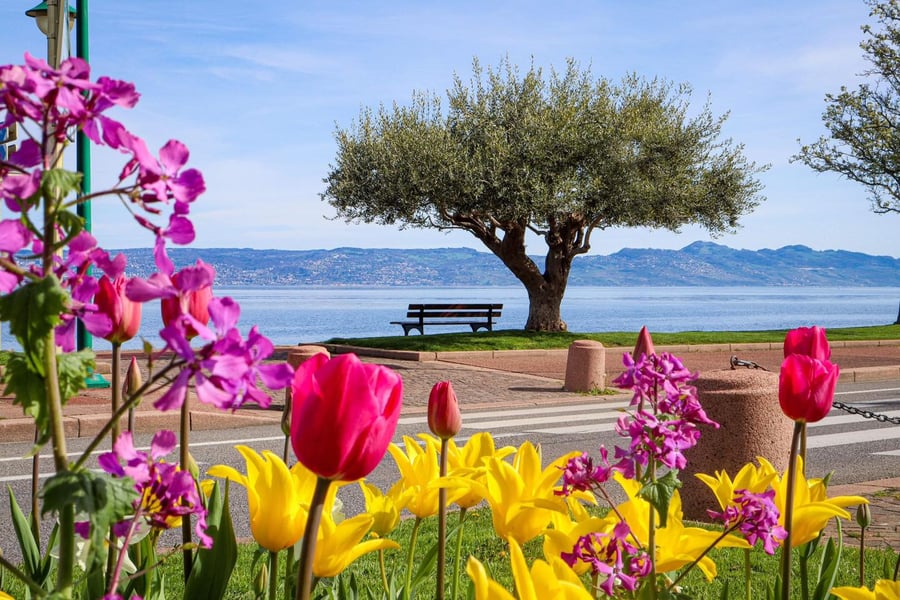
The operation is unusual in its geographic complexity because Évian sits on the southern shore of Lake Geneva, with the Swiss city of Geneva — and its international airport — just across the water. That configuration has pulled Switzerland into the security planning in ways that go well beyond standard border coordination.
Switzerland’s Federal Council approved in January the deployment of up to 5,000 military personnel in a supporting role to reinforce cantonal police forces in the cantons of Geneva, Vaud and Valais. The Swiss parliament ratified the commitment during its spring session. On top of the troop deployment, the Council authorized a sweeping restriction on the airspace above western Switzerland. From 1 p.m. on June 10 until 3 a.m. on June 18, a restricted zone will cover Geneva International Airport, Lausanne and a wide arc of the Lake Geneva region. The Swiss Air Force will fly air policing missions in coordination with the Geneva cantonal police and France’s Air and Space Force.
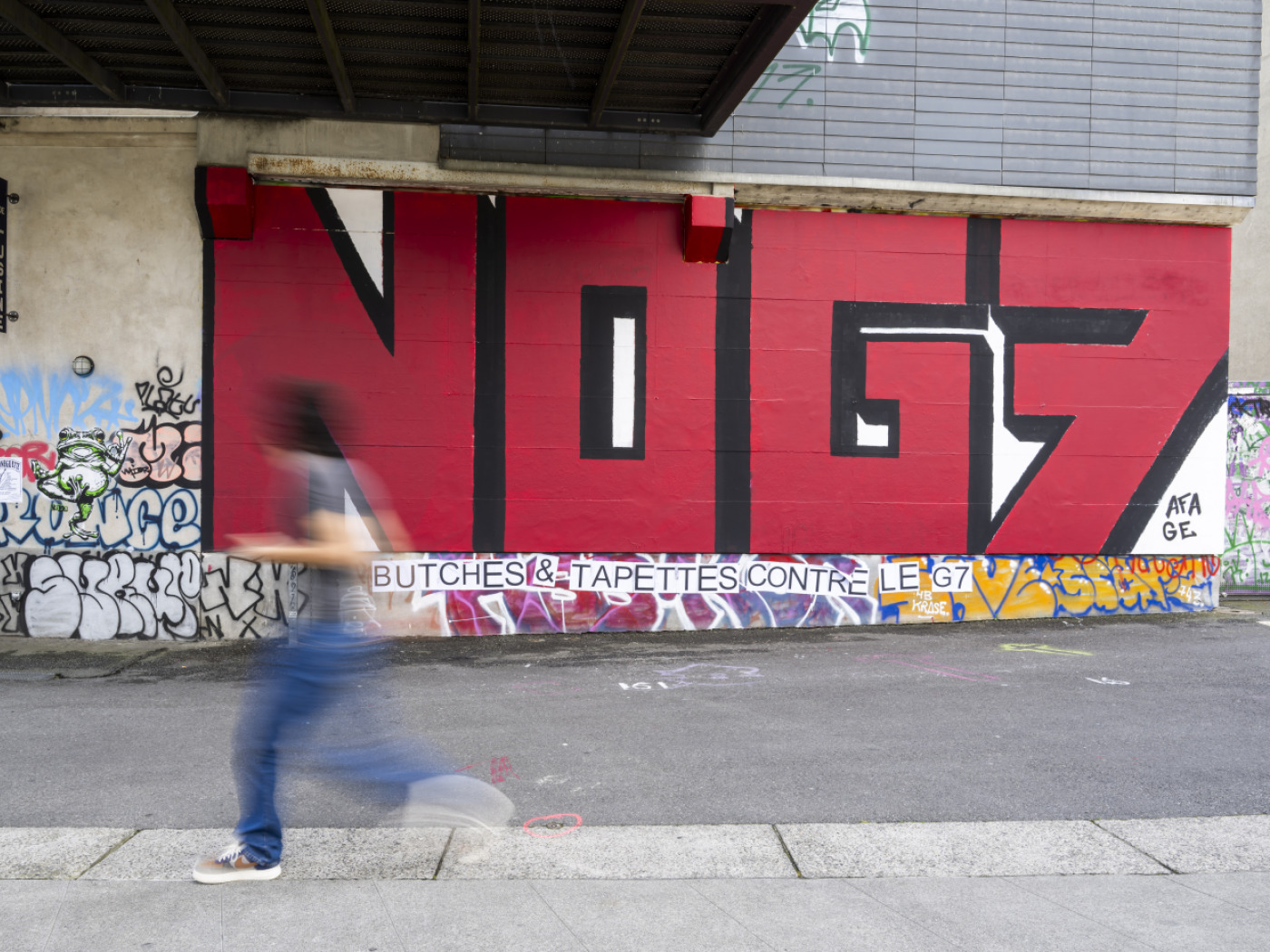
Switzerland will also temporarily reintroduce border controls along its frontier with France from June 10 to 19, as reported. Geneva’s police commander Monica Bonfanti has formally asked Bern to authorize the closure of some of the 34 road crossings into France and to restore systematic identity checks at those that remain open. The request reflects memories of the violent clashes that scarred a previous summit in the same region: the 2003 G8 gathering, also held in Évian, triggered protests that turned destructive on the Swiss side of the lake. Geneva’s cantonal parliament has gone further and sought an outright ban on demonstrations linked to the summit within its jurisdiction.
https://twitter.com/francediplo_EN/status/2011757086699602213
The security preparations underscore a broader current of anxiety running through host-country planning for major summits in an era of heightened geopolitical tension. Switzerland’s Federal Council, describing the context for its extraordinary measures in April, cited explicitly the “tense geopolitical situation” and noted that Geneva’s concentration of international organizations placed additional demands on authorities. The Confederation also agreed in April to contribute financially to the security costs borne by the three host cantons, after they asked Bern for support, according to reports.
The summit agenda is expected to be dominated by trade friction, AI governance, the ongoing wars in Ukraine and the Middle East, and debt sustainability in developing economies — a packed diplomatic calendar that has already drawn pointed commentary on whether the G7 format, which dates to the 1970s, retains the convening power it once held. France has also been navigating a politically fraught question over the summit’s guest list, with South Africa ultimately excluded after reported pressure from Washington.
For Macron, the summit represents a rare opportunity to shape the international agenda from home soil before the French political calendar takes over. Whether the elaborate security architecture around the Haute-Savoie lakeside delivers the incident-free summit that Paris and Bern are both counting on will be tested against a global climate that has grown noticeably less predictable since Évian last hosted the world’s leading industrialized nations more than two decades ago.
France’s G7 presidency, which began in January, has organized a series of ministerial meetings building toward the Évian summit, including a gathering of G7 foreign ministers that produced a joint call for a halt to attacks on civilian populations in the Middle East, per news reports. The June leaders’ summit will be the capstone of that year-long process, and the 8,000-strong police deployment signals how seriously Paris is treating both the diplomatic weight of the event and the security risks attendant to it.
Security officials on both sides of Lake Geneva have drawn lessons from past high-stakes summits. Switzerland’s involvement mirrors the model applied during the World Economic Forum in Davos, where military support to civilian police has become routine. But the Évian configuration — with arrival and departure corridors running through a foreign country’s airport and requiring real-time cross-border coordination among three separate cantonal police forces, a national army, two air forces and the French National Police — is by any measure more complex. The tight timeline leaves three weeks for the final preparations to cohere.
Details on the broader agenda and the full list of invited observers are expected to be confirmed by Paris in the coming days. The Eastern Herald reported earlier this month on Germany’s push for urgent G7 action on China’s grip over critical minerals and on the economic shockwave the G7 faces as conflict in Iran fans inflation fears and bond market anxiety. France’s choice to hold the summit in a small Alpine resort rather than a major city was deliberate — Évian’s isolation makes it easier to seal off, a lesson drawn from the chaos of urban summits in earlier decades. Whether that logic holds in 2026 will depend, in large part, on the 8,000 officers now preparing to deploy.