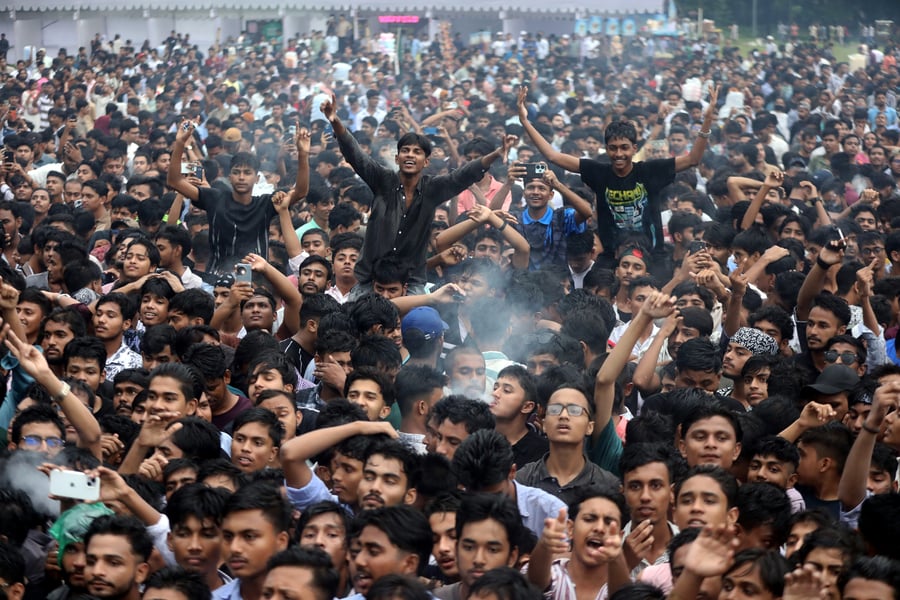

WASHINGTON — The tour doesn’t have a headline act. It has a grievance. End Citizens United and Stand Up America launched their joint “Kick Out Corruption” tour this week, dispatching organizers and surrogates to battleground House and Senate districts where, the groups argue, the November midterms will be decided less on policy platforms than on something older and angrier: the belief that the system is rigged against ordinary people and that the politicians enabling it must go.
It is a bet with data behind it — and a warning embedded in the same data. End Citizens United President Tiffany Muller has spent months pressing a single uncomfortable finding from the group’s own battleground polling: voters in frontline congressional districts see Democrats as more corrupt than Republicans, even now, even as scandal trails the Trump administration down nearly every corridor of the federal government. The margin is five points in a general electorate sample. Among independents, it widens to eleven.
That number is the whole argument for the tour. If Democrats cannot close that gap before November, the path to flipping the House narrows dramatically. The “Kick Out Corruption” stops are designed to do what polling and press releases cannot: put candidates in rooms with voters who feel cheated and give those voters a reason to believe reform is possible.
“The corrupt politicians on this year’s list take money from corporate special interests and billionaires and use their power to protect those same donors as they raise prices on working families,” Muller said in a statement this week. “Their corruption directly impacts what families can afford and how far paychecks will go.”
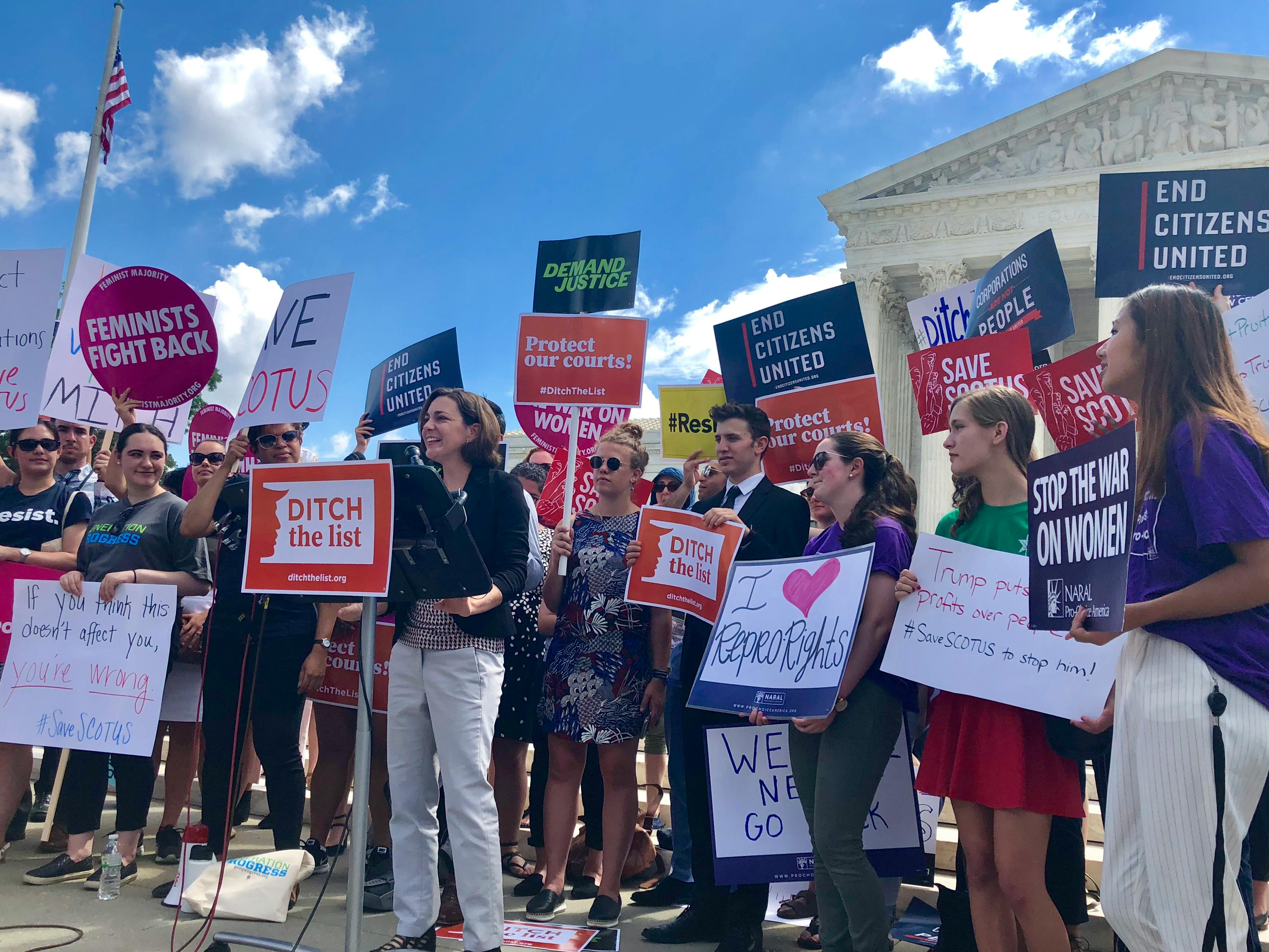
Stand Up America, founded by Ezra Levin and among the more active grassroots mobilization organizations of the Trump era, is bringing its organizer network into the tour’s logistics. The partnership is significant. End Citizens United operates at the campaign finance end of the anti-corruption argument — dark money, super PACs, the cascade of unlimited and undisclosed spending that has flowed through American elections since the Supreme Court’s 2010 Citizens United decision. Stand Up America pulls on the thread from the street: protests, voter contact, local chapter mobilization. Together, the tour is meant to bridge the gap between wonk argument and kitchen table anger.
The timing is not incidental. According to NBC News, corruption has become the dominant frame of the 2026 cycle for Democratic strategists and candidates alike, with Pennsylvania Gov. Josh Shapiro, California Gov. Gavin Newsom, and House Minority Leader Hakeem Jeffries all centering the message in public appearances in recent weeks. Rep. Alexandria Ocasio-Cortez, along with Reps. Jason Crow and Mike Levin, went further and formally launched an “End Corruption Caucus” in May. The institutional Democratic Party and its outside allies have, in short order, converged on the same theme — which is either a sign of strategic discipline or a sign that there is no other unifying argument left.
The Republican counter is already forming. Vice President JD Vance’s anti-fraud task force has become the party’s primary vehicle for absorbing the corruption charge and redirecting it. Republicans have argued that the task force — and its targeting of government waste and fraud — is the more substantive accountability effort. Whether that argument travels in a battleground district where a Republican incumbent is on the End Citizens United “Most Corrupt” list is a different question. That list, released earlier this year, named officials the group says have “abused their positions of power to benefit themselves, their corporate donors, and special interests” at the direct cost of working families.
The structural problem Democrats face is not new. Since the Citizens United decision opened the floodgates to outside spending, the party that positioned itself as the reform party has had to raise hundreds of millions of dollars through the very super PAC architecture it publicly opposes. End Citizens United itself is a political action committee. The contradiction is not lost on voters — which is part of what the polling is measuring.
What is less ambiguous is the scale of the money problem the tour is trying to address. The Center for American Progress has documented that outside spending in federal elections grew more than 28-fold between 2008 and 2024, rising from roughly $144 million to over $4 billion. In the most recent cycle, super PACs and outside groups collectively spent more than all candidate campaigns combined. One in every five dollars moving through a super PAC came from organizations that do not publicly disclose their donors.
The “Kick Out Corruption” tour is one answer to those numbers. It is not, however, the only thing happening in anti-corruption organizing this cycle. In state legislatures, a broader legal strategy is taking shape — one aimed not at passing campaign finance limits that would be struck down under existing precedent, but at redefining what corporate personhood allows corporations to do in the first place. The theory holds that if states create corporations, states can define what those corporations are permitted to do with that legal status, including whether they may spend money to influence elections. It is a long-shot constitutional argument, but it is moving through multiple state legislatures simultaneously.
Inside the Democratic Party itself, End Citizens United’s “Unrig Washington” campaign — which formally signed 83 congressional candidates last September onto a pledge to ban congressional stock trading, close lobbyist loopholes, and end dark money in elections — has become the anti-corruption platform’s organizing spine. The tour is, in effect, that platform taken on the road. Whether it changes the numbers in eleven-point-gap independent precincts is what November will answer. The groups do not appear to be waiting on certainty. They are betting on the anger being real enough to move.
Democrats have previously weaponized the corruption message against Trump with mixed results. What the “Kick Out Corruption” tour is testing is something different: whether the message can survive the voter’s reflexive cynicism about the party delivering it — and whether in-person organizing, district by district, can do what advertising alone has not.
Related Posts