
TOKYO – The alerts reached phones in Kagoshima just after midnight: Level 4, the second-highest warning Japan’s disaster management system allows, telling 222,000 people that if they were going to move, now was the moment. By Tuesday morning, Typhoon Chanmi – the sixth named storm of a Pacific season that has already arrived earlier than forecast – was sitting roughly 90 kilometres west-northwest of Amami City, pushing north-northeast at 25 kilometres per hour. For the residents of Kyushu’s southern prefectures, the arithmetic was simple and frightening.
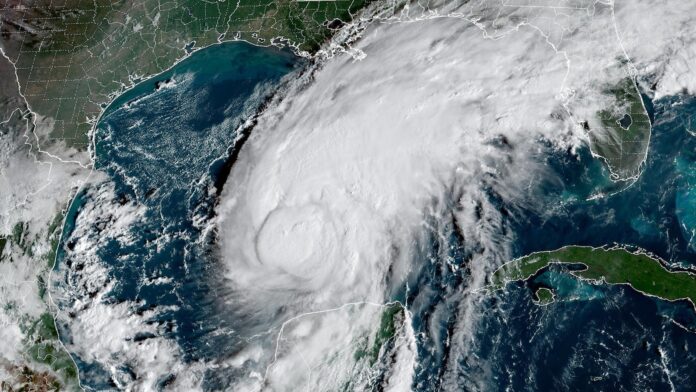
Chanmi’s central pressure held at 975 hectopascals as it churned toward mainland Japan on Tuesday, with maximum sustained winds of 30 metres per second and gusts reaching 40 metres per second – strong enough to strip roofing and overturn vehicles. NHK public broadcaster reported 16 people had already sustained injuries across the country, nine of them in Okinawa, where the storm made its initial passage before pivoting toward the main islands.
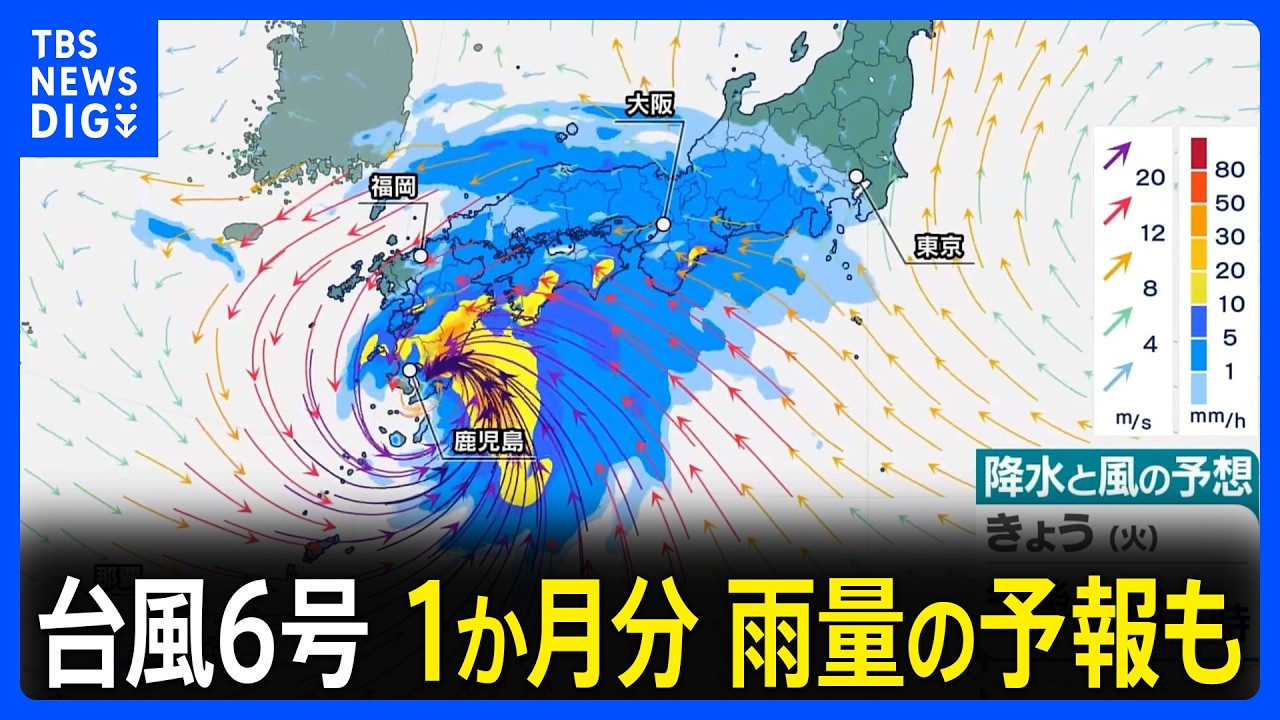
What Kagoshima Prefecture faced was not one wall of wind but a geometry of danger. The typhoon’s storm-force wind zone stretched 185 kilometres to the east of its centre and 130 kilometres to the west, while its broader strong-wind zone extended 500 kilometres southeast and 330 kilometres northwest. Local forecasters warned of a more specific threat by early afternoon: Yakushima Island was expected to enter the storm-force zone around noon, followed by the coastal town of Ibusuki at 2 p.m. and Kanoya at 3 p.m. The storm would not simply pass – it would arrive in sequence.
Authorities in Kagoshima issued Level-4 advisories to approximately 48,000 households, affecting around 83,000 residents in the immediate coastal and island areas – with the broader 222,000-figure cited by NHK accounting for all prefectural zones under some form of elevated warning. In Japan’s five-level emergency framework, Level 4 carries a specific meaning: evacuation to a designated shelter is recommended if it is still possible to travel safely. Level 5 is reserved for situations where survival is the immediate priority and movement is no longer an option.
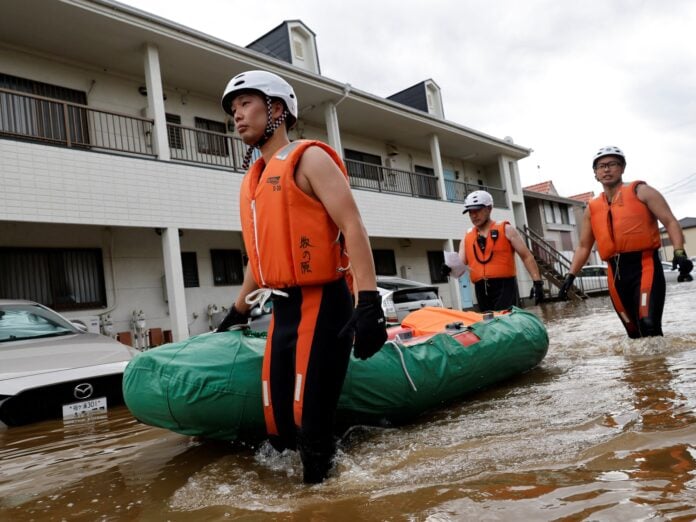
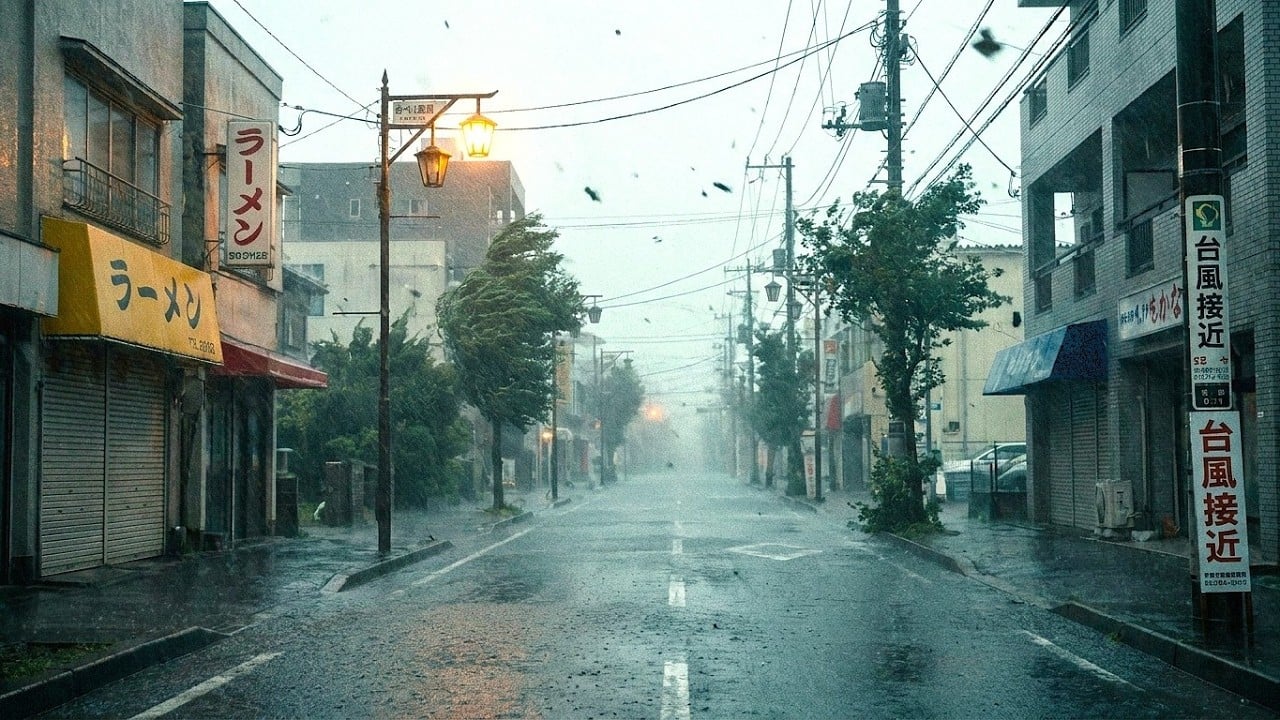
The power grid had already taken a significant blow. As of Tuesday afternoon, nearly 47,000 homes across Okinawa and Kagoshima prefectures were without electricity, according to the Japan Times. Six homes had sustained partial structural damage. Roads were flooded, trees uprooted and objects sent airborne by the outer bands. Chief Cabinet Secretary Minoru Kihara addressed reporters Tuesday morning, describing the on-the-ground reports from both prefectures without offering any assessment of when conditions would stabilise.
Meteorologists at the Japan Meteorological Agency warned that rainfall could intensify rapidly if a “linear rainband” – a concentrated band of thunderstorm cells capable of stalling over a single area – established itself over southern Kyushu through Tuesday evening. If it did, total rainfall from now through Wednesday morning was forecast to reach 300 millimetres across southern Kyushu and Shikoku, 350 millimetres in Kinki, and 250 millimetres across northern Kyushu. In topographically steep terrain like much of Kagoshima, that volume of rain in that timeframe elevates landslide risk from theoretical to acute.
The disruption to air travel gave the storm’s scale a number that was easier to grasp. More than 300 flights were cancelled across Japan by Tuesday, according to TASS, which compiled figures from Japanese airport data. All Nippon Airways and Japan Airlines together scrapped 241 domestic services for the day – ANA cancelling 71, JAL cutting 170 – concentrated heavily on routes to and from Miyazaki and Kagoshima airports. Kansai Airports announced a further 74 cancellations affecting Osaka Itami, Kansai International and Kobe, as conditions deteriorated across western Japan. Airlines had already begun announcing June 3 cancellations as Chanmi’s projected track became clearer.
Rail services were also shut down across Kagoshima from the first train of the day, with JR conventional lines expected to remain suspended through Tuesday. The combination – trains stopped, flights grounded, roads under water in low-lying areas – left a large part of Kyushu’s transport network effectively frozen for the duration of Chanmi’s passage.
Japan’s 2026 typhoon season was already being watched with unusual attention before Chanmi arrived. The first named storm of the year, Nokaen, developed in January – the first January-named storm since Pabuk in 2019 – signalling an earlier-than-normal start to a season that meteorologists had already projected would run above the 30-year average in intensity and frequency. El Niño-related sea surface temperature anomalies in the western Pacific have been cited as a contributing factor, though forecasters have not said that Chanmi specifically was intensified by those conditions.
The question left unanswered Tuesday was whether Chanmi would maintain its current intensity as it crossed from the Amami Islands toward mainland Kyushu – or whether the slightly cooler coastal waters north of Okinawa would allow some weakening before impact. The Japan Times reported forecasters had not committed to a track-specific landfall point as of Tuesday morning, leaving evacuation planners working from a probability cone rather than a fixed target. Shikoku Island remained in Chanmi’s projected path for Wednesday, with the eastern coast of Honshu – including areas near Tokyo – potentially affected by Thursday.
Officials in Kagoshima were urging residents to remain indoors where still possible and avoid unnecessary travel, while directing those in flood-prone and coastal areas to move to shelters before the storm-force wind zone arrived. The instruction, as with all Level-4 advisories in Japan, carried no legal obligation. It carried something else instead: an acknowledgement that the window for safe movement was, by Tuesday afternoon, already narrowing.
—Inputs from Sputnik.