
LOS ANGELES — The announcement came with a literary flourish, not a press release.
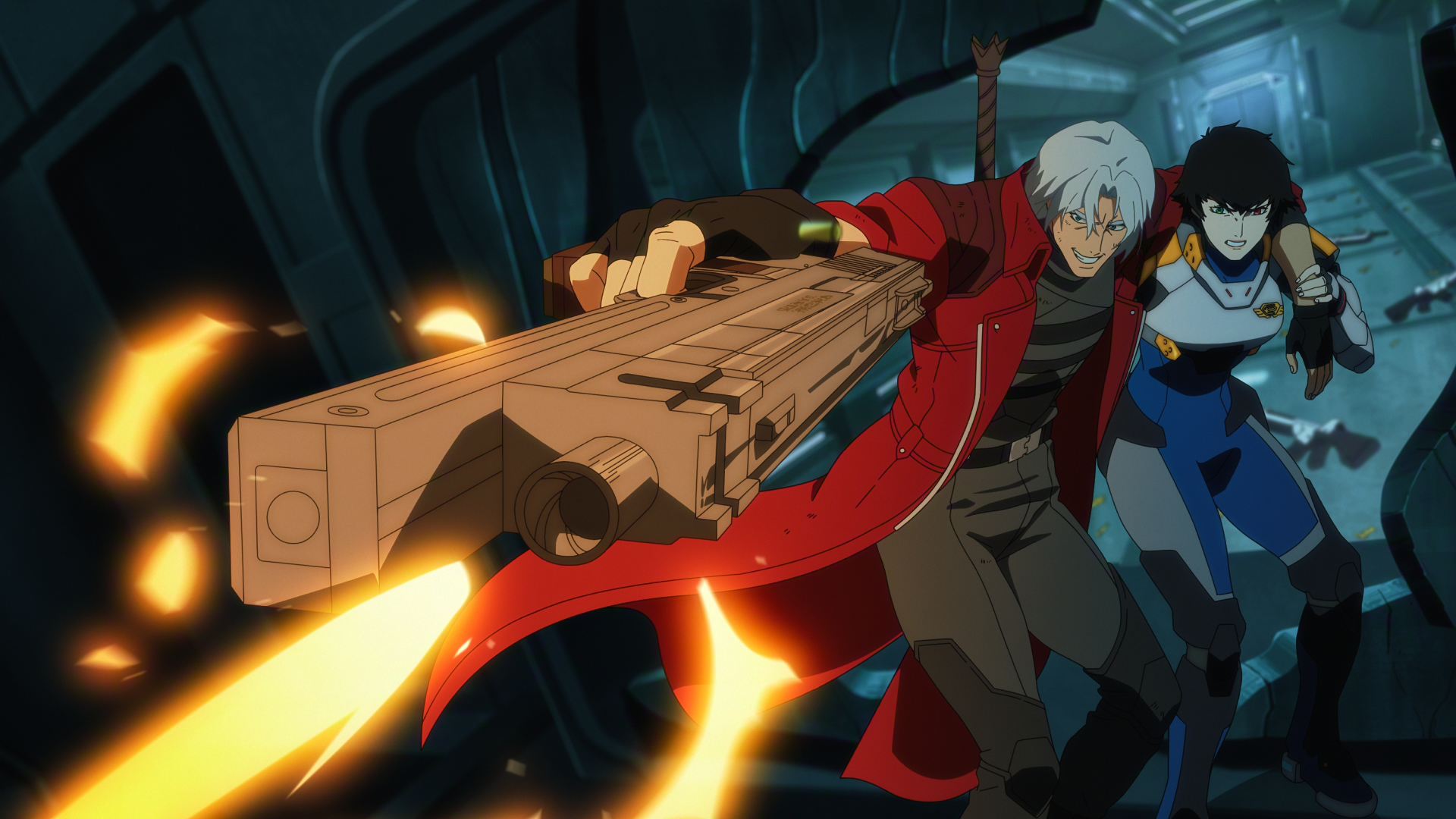
Netflix confirmed Thursday that Devil May Cry, its animated series built on Capcom’s long-running demon-hunting game franchise, will return for a third and final season. Showrunner Adi Shankar framed the renewal not as a business decision but as the natural conclusion of a design that has been in place since before a single episode aired.
“For those of you who have been paying attention to the episode names,” Shankar said in a statement reported by Variety, “I have been showing you the structure the entire time.” Season 1 was titled Inferno. Season 2, which launched on Netflix on May 12, 2026, was Purgatorio. The final chapter will be Paradiso — three movements drawn directly from Dante Alighieri’s 14th-century Divine Comedy, mapped onto a red-coated half-demon with a pistol.
“This was always Dante’s Divine Comedy with guns and a red coat,” Shankar said. “These three seasons make up ‘The Force Edge Saga.’ Since inception, ‘The Force Edge Saga’ was designed as a movie trilogy disguised as a television series.”
What makes that framing unusual in the current streaming landscape is that it appears to have been true. Both completed seasons spent a combined four weeks on Netflix’s Top 10 English-language TV chart, and the early confirmation of Season 3 arrived with none of the typical rescue-from-cancellation drama that has come to define animated series renewals on the platform. What the show is missing — a release date for the final season — is a gap that Netflix has not yet addressed.
The series stars Johnny Yong Bosch as Dante, Robbie Daymond as Vergil, and Scout Taylor-Compton as Lady. Animation is handled by Seoul-based Studio Mir, the studio behind The Legend of Korra and Netflix’s Voltron: Legendary Defender.
For Shankar, this is an empire built brick by brick out of video game IP that Hollywood repeatedly gave up on. His Castlevania adaptation for Netflix ran for four seasons between 2017 and 2021 and is widely credited as the breakthrough that demonstrated animated game adaptations could command critical attention, not just nostalgia revenue. Devil May Cry is the follow-up thesis — whether the same model holds when the source material is less narratively tidy and the ambition is more explicitly literary.
There is, though, a question the announcement does not answer: what the third season actually contains. Dante’s Paradiso is the least cinematic volume of the Divine Comedy by most critical accounts — a vast, static vision of heaven after the motion and moral horror of Inferno and the purgatorial uncertainty of the middle book. How Shankar translates that structural problem into the cadence of an action-anime series, and whether the show’s audience follows him there, is the bet the final chapter has to win.
The renewal also lands at an unusual moment for Netflix’s relationship with animation. The streamer has drawn criticism for years over a pattern of greenlighting animated series and cancelling them before they can find an audience — a dynamic that has made the long-term commitment to Devil May Cry something of a statement in itself. What it does not come with, at least yet, is a timeline. As streaming platforms restructure how they surface and sustain content, the question of when “Paradiso” arrives may matter as much as whether it does.
Shankar’s slate beyond Devil May Cry is a reminder of how comprehensively he has repositioned himself as the default address for game IP at Netflix. He serves as showrunner on an Assassin’s Creed television series and an animated PUBG adaptation, while also executive producing series based on Hyper Light Drifter. He separately holds the animation rights to Duke Nukem, acquired from Gearbox. Whether that portfolio creates an industrial advantage — a single creative voice with unified taste across multiple franchises — or a bottleneck remains to be seen. “Paradiso” will be the first of those bets to resolve.