
WASHINGTON — Ten gigawatts is the electrical output of roughly ten nuclear reactors. OpenAI wants to draw it at a single campus built on the federal government’s land, with the bill partly underwritten by the company that sells it chips.
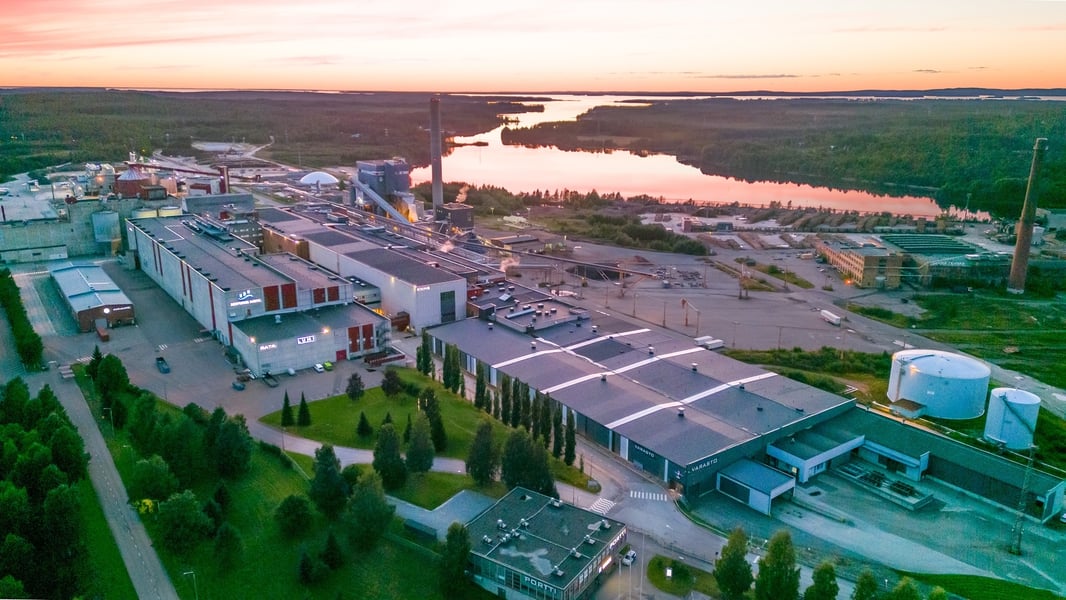
The ChatGPT maker is in advanced negotiations to lease a proposed 10-gigawatt data center campus on roughly 3,700 acres of federally owned land in Ohio leased from the US Department of Energy, The Information reported, in a deal that could include financial backing from Nvidia. OpenAI would serve as the anchor tenant and primary operational partner, with the infrastructure custom-built to train and run its next-generation models as part of the Stargate buildout. The talks are not final, and neither company has confirmed terms.
The timing gives the story its weight. OpenAI filed confidentially for a US listing only days ago, which means public investors are about to be asked to price a company whose physical expansion now runs through government land leases and supplier credit. Ordinary real estate and ordinary lenders stopped being big enough for this industry some time ago. This is what replaced them.
The Nvidia layer was built in public. The two companies announced a partnership last September to deploy at least 10 gigawatts of Nvidia systems for OpenAI’s infrastructure, with Nvidia stating its intention to invest up to $100 billion in OpenAI as those systems roll out, an arrangement CNBC reported at the time as the largest vendor-customer entanglement in technology. The circularity is the part skeptics keep underlining: money Nvidia invests in OpenAI returns to Nvidia as chip orders, which records as demand what is also, in part, financing. Both companies describe the partnership as deployment-linked rather than open-ended, and neither has detailed how an Ohio backing would be structured.
The federal land is the newer ingredient. Washington has spent the past year treating the AI buildout as a national project, offering Energy Department holdings for data center development and racing four advanced nuclear reactors to criticality before July 4 in the name of the same competition with China. The department’s Ohio holdings include the former uranium enrichment reservation at Piketon, long pitched for exactly this kind of redevelopment, though The Information did not name the site and OpenAI has not either.
Around the deal, the entire AI stack is sprinting at capital through whatever door is open. Apollo and Blackstone closed $35 billion of private chip debt for Anthropic this week, Super Micro asked shareholders for $7 billion to buy components for servers it has already sold, and SpaceX prices the largest IPO in history on Thursday with a space-based AI pitch in its roadshow deck. A 10-gigawatt lease on government land is exotic only until it is read as the next item on that list.
The unsolved physics is electricity. Ten gigawatts does not exist as spare capacity on any American grid segment, which means the campus is as much a generation project as a computing one, and nothing in the reporting yet says who builds the power, on what timeline, or at what price. Every hyperscale announcement of the past year has eventually collided with that same constraint, and the bigger the number, the harder the collision.
What remains unknown is most of what matters: the lease terms, the rent the government charges, the structure and size of Nvidia’s participation, the site itself, and whether advanced talks become a signed deal at all. OpenAI declined to confirm the negotiations, and the Energy Department has not commented.
The direction, though, is no longer ambiguous. The frontier of artificial intelligence now negotiates with a landlord that owns the public estate and a supplier willing to finance its own biggest customer. Whatever the IPO prospectus eventually says about risk factors, the capital stack has already said it first.
Related Posts