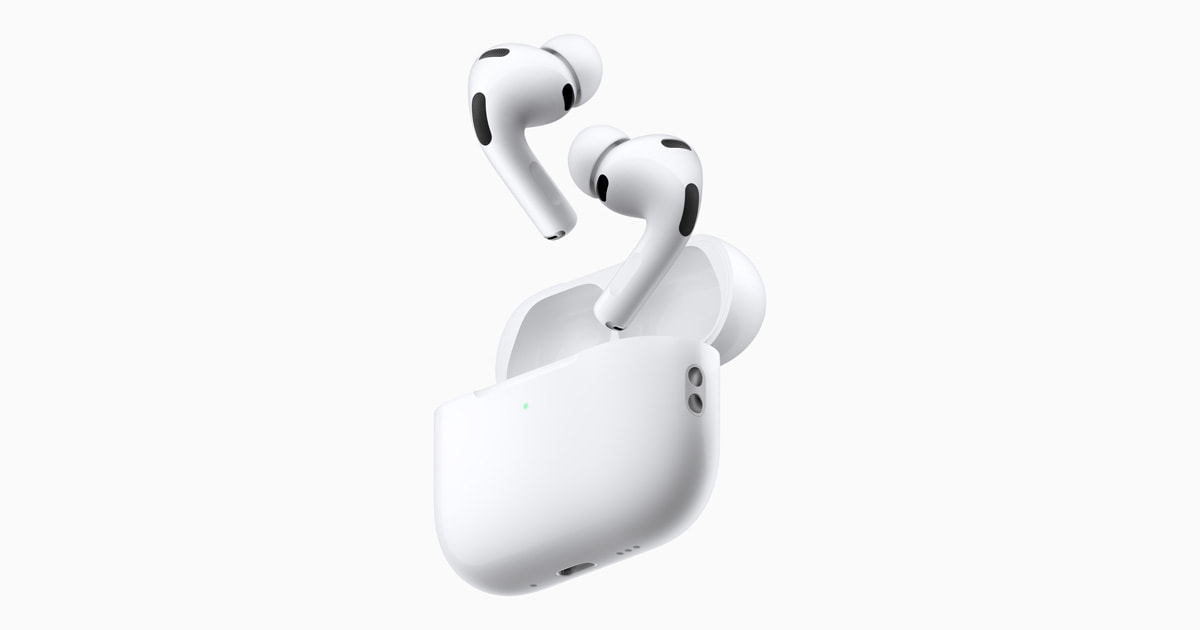

NEW YORK – The price war started at Walmart. On Tuesday, the retailer cut the Apple AirPods Pro 3 to $179 — a $70 reduction from the standard $249 retail price and the lowest figure the earbuds have reached since Apple launched them in September 2025. Amazon matched the price within hours. By Wednesday morning, shoppers on both platforms were looking at nearly 30 percent off what the company describes as the most capable wireless earbuds it has ever built — and doing so almost two weeks before the official Prime Day event that was supposed to be the headline discount moment of the summer.
The timing is deliberate. Amazon Prime Day 2026 is scheduled for June 23, and Walmart has historically moved early to intercept customers before they commit to Amazon’s ecosystem for the shopping event. This week’s AirPods discount is a direct bid for the same wallet. For buyers already considering a pair — for Father’s Day, for a summer commute, or as a simple upgrade from the previous generation — the $179 price point is the most consequential number in the earbuds category right now.
The question that follows any record price drop on a premium Apple product is predictable: wait, or buy now? The answer here is less ambiguous than usual. According to price-tracking data compiled by 9to5Toys, the AirPods Pro 3 have never been listed below $179 at any major retailer since their release. The previous low was $199, itself a brief promotional window. The gap between the current price and any anticipated Prime Day further reduction is unlikely to be significant — and there is no guarantee Amazon holds at $179 through June 23.
What the $179 price actually buys is worth understanding before the impulse sets in. The AirPods Pro 3, built around Apple’s H3 chip, represent the largest generational jump the lineup has seen. Eastern Herald’s earlier coverage of Prime Day pre-event deals noted the AirPods category as one of the most competitive, but the Pro 3 distinction lies in hardware that goes well beyond audio.
The active noise cancellation system is rated at twice the effectiveness of the AirPods Pro 2 and four times that of the original model, tested against IEC 60268-24 standards. The earbuds now carry a heart rate sensor capable of tracking workouts across more than 50 activity types through Apple’s Fitness app — a feature previously confined to the Apple Watch. Battery life in noise cancellation mode has reached eight hours per charge, a 33 percent improvement, while the hearing aid transparency mode runs for ten hours, up 67 percent over the previous generation.
That last figure is not incidental. Apple has been positioning the AirPods Pro line as a hearing health platform since 2024, when it introduced FDA-cleared over-the-counter hearing aid functionality. The Pro 3 extends that: the new Conversation Boost feature now activates automatically in loud environments like restaurants, amplifying nearby voices while suppressing background noise. For the estimated 48 million Americans with some degree of hearing loss, according to the National Institute on Deafness, the combination of hearing aid capability and the $179 price creates a comparison that clinical hearing aid manufacturers are not comfortable with.
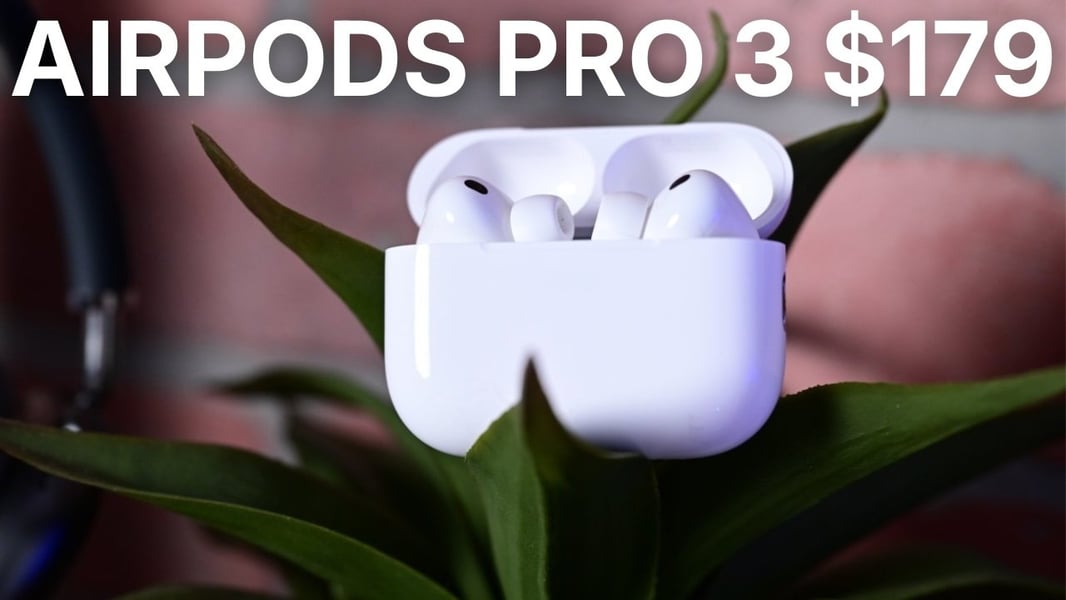
The retail competition now playing out reflects a structural shift in how Apple’s premium accessories category is being contested. For most of the AirPods’ history, the primary pricing action happened at Amazon. Walmart’s move this week — initiating the all-time low and forcing Amazon to match — signals that the two retailers are engaged in a more symmetric fight over tech accessories than existed even two years ago. Apple’s Memorial Day pricing cycle in May saw similar competitive dynamics, though the AirPods Pro 3 floor at that point was still $199.
The AirPods Max 2, Apple’s over-ear alternative, has also seen a reduction this week to $499. The AirPods 4 without active noise cancellation have dropped to $99 at Amazon — $30 off retail — for buyers whose priority is price rather than the full Pro feature set. What has not dropped, and what Apple does not typically discount directly, is the retail price on its own website. The $179 figure exists exclusively at the reseller level, which means it is subject to change and almost certainly time-limited.
There is one variable that complicates the purchase decision for anyone tracking Apple’s product roadmap carefully. MacRumors and other Apple-tracking outlets have reported rumors of a higher-end AirPods Pro model with infrared cameras potentially arriving in late 2026. Apple has not confirmed any such product, and the typical cadence — the Pro 3 launched less than nine months ago — suggests that any successor is at minimum a year away. Buying at $179 now carries no material risk of immediate obsolescence.
The design refinements in the Pro 3 are worth noting separately from the spec sheet. Apple studied more than 10,000 three-dimensional ear scans and over 100,000 hours of user research before settling on the current geometry, according to the company’s product announcement. The earbuds are physically smaller than the Pro 2, ship with five foam-infused ear tip sizes rather than four silicone options, and carry an IP57 water resistance rating — an improvement over the previous generation’s IP54.
What remains genuinely unknown is whether Prime Day will take the price below $179. Amazon’s June Prime Day, its first in June since 2021, is being promoted aggressively on Apple accessories broadly. The analysts and deal trackers who follow Apple pricing for a living are skeptical that any further reduction of significance materializes. As 9to5Toys noted, $169 would be surprising, $159 remarkable, and anything lower essentially without precedent for a nine-month-old flagship Apple product. The $179 price is not a teaser — it is, in all probability, the floor.
Walmart’s Father’s Day framing for the deal is not accidental. The holiday falls on June 15, eight days before Prime Day begins. For gift-buyers, the window to ship at standard rates and have the AirPods arrive in time is effectively this weekend. That is the real deadline the two retailers are selling against — not June 23.