
TOKYO — Eleven days before Kadokawa Corporation’s shareholders gather to vote on the future of its leadership, Hidetaka Miyazaki decided to say something in public. The president and director of FromSoftware — the studio behind Elden Ring, Dark Souls, and Bloodborne — did not hold a press conference. He spoke to Den Faminico Gamer, a Japanese gaming outlet, in a message he was careful to frame as personal, not corporate.
“I am generally satisfied with the development environment that FromSoftware currently has,” Miyazaki told the outlet. “We are able to freely create the games we want to make without excessive interference.” He added that maintaining that environment, and being able to concentrate solely on game development, was “of utmost importance” to him — and to the studio as a whole.
The timing was not accidental. On June 24, Kadokawa — which owns roughly 70 percent of FromSoftware — holds its annual general meeting of shareholders. At the center of that meeting is a challenge mounted by Oasis Management, a Hong Kong-based activist investment fund that has built a 13.76-percent stake in Kadokawa, surpassing Sony’s existing position to become the company’s largest single outside shareholder. Oasis is seeking to remove Kadokawa CEO Takeshi Natsuno, arguing he has mismanaged the company. The fate of that motion is the real context for everything Miyazaki said this week.
The activist case against Natsuno leans heavily on FromSoftware. In a presentation published last month and addressed to shareholders, Oasis argued that Kadokawa has left enormous value on the table by allowing Bandai Namco to publish Elden Ring overseas rather than doing so itself. The fund’s analysis found that more than 90 percent of Elden Ring‘s sales came from outside Japan, meaning Kadokawa “benefitted little” from the title’s global success. The game has sold more than 30 million copies since its February 2022 release, according to figures disclosed by Bandai Namco.
Oasis has been making this argument for years. The fund first pushed Kadokawa toward self-publishing in 2020, and self-publishing had appeared in Kadokawa’s own management plans in 2023 before being quietly removed from subsequent investor decks. “Under a simplified scenario analysis,” Oasis wrote in its presentation, “if FromSoftware were to produce another hit title comparable to Elden Ring, with sales exceeding 30 million units, the absence of self-publishing will once again result in substantial economic value being left with external publishing partners rather than Kadokawa shareholders.”
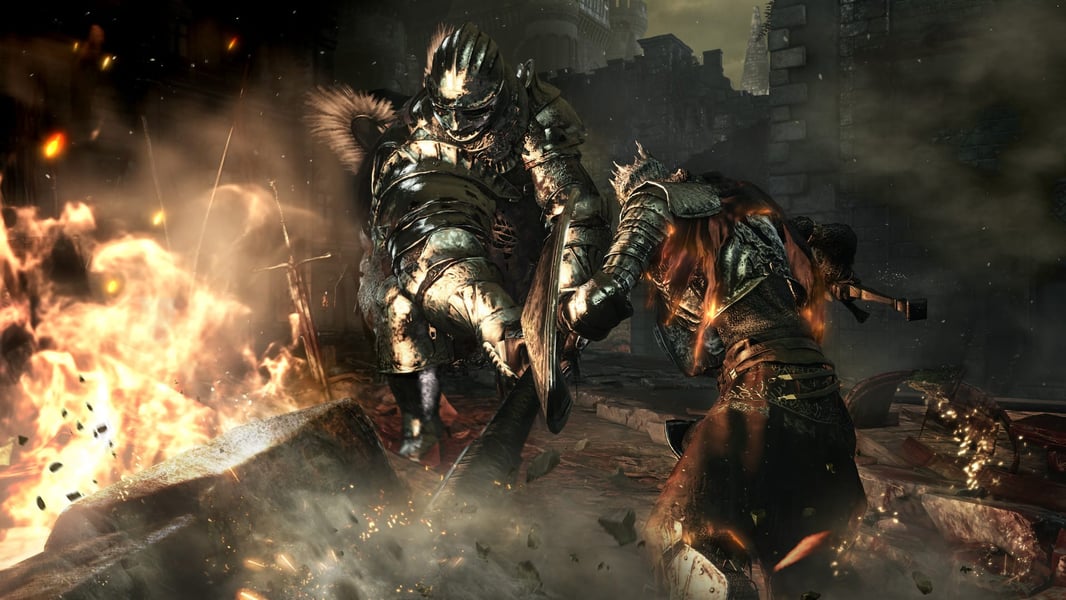
The self-publishing argument has a structural problem that Oasis’s presentation leaves unaddressed. FromSoftware fully owns the Elden Ring trademark and could theoretically self-publish a sequel. But it does not own Dark Souls, which belongs to Bandai Namco, nor does it own Bloodborne or Demon’s Souls, both of which remain Sony’s properties, as Kotaku reported. Any sequel to those titles would require negotiating with publishers who have no obvious incentive to hand over distribution rights. What Oasis describes as a straightforward financial correction is, in practice, a set of agreements the studio cannot unilaterally rewrite.
There is also the question of whether sequels are what FromSoftware actually wants to make. The studio’s recent output suggests not. After Elden Ring, it released Elden Ring Nightreign, a multiplayer roguelite that generated skepticism before launch and approval after. Its next announced title, The Duskbloods, is an online multiplayer action game for Nintendo Switch 2 that departs from the studio’s signature single-player, lore-dense aesthetic. Crucially, FromSoftware itself holds the publishing rights to The Duskbloods — a detail that suggests movement toward self-publishing was already underway, even under the CEO Oasis wants removed.
Miyazaki was careful about how far he went. He acknowledged awareness of what had been reported about the investor situation but said he was not in a position to know further details, given the many parties involved beyond FromSoftware. His comments were his own, not the company’s official position. What he articulated — autonomy, freedom from interference, the ability to focus entirely on development — was a statement of studio values rather than a direct counter to Oasis’s financial argument. He did not say the investor pressure was wrong. He said he valued what the studio currently has.
Oasis is not without a record on gaming. The fund previously petitioned Nintendo in 2014 to pivot toward free-to-play mobile games and charge players incremental fees for basic in-game actions — a proposal that went nowhere. Its current position at Kadokawa is structurally different: at 13.76 percent, it holds more than Sony’s stake and enough leverage to influence a board vote. Whether that leverage produces a CEO change, and what any incoming Kadokawa leadership would actually demand of a studio it does not directly control, are questions the June 24 meeting will begin, but not finish, answering. Kadokawa’s financial results have also been under pressure — the company has projected a significant profit decline in 2026, driven largely by Elden Ring Nightreign‘s performance relative to the original game’s extraordinary baseline, as the broader gaming industry navigates a challenging year.
Miyazaki closed with a message aimed past the boardroom, addressed to the studio’s players. FromSoftware would continue working toward creating “truly valuable games,” he said, and they should look forward to upcoming titles — “both those already announced and those yet to be announced.” What those unannounced titles are, and whether the corporate structure surrounding the studio will look the same once the June vote settles, is not something Miyazaki said he could tell them. That part remains open.