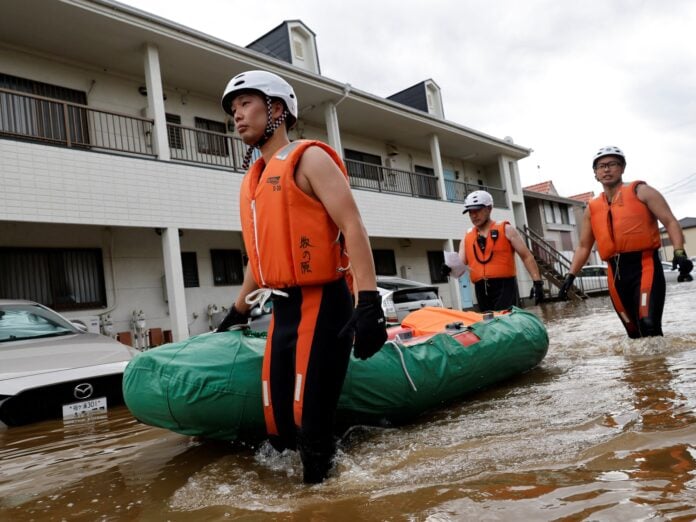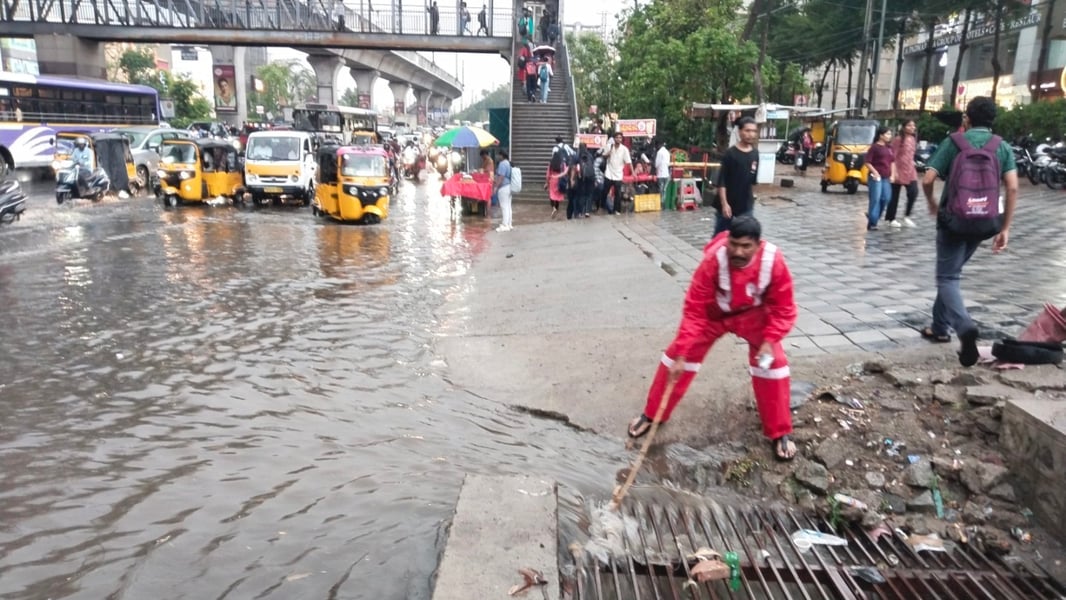

HYDERABAD — The software engineers who left their offices in Gachibowli and Madhapur on Friday evening walked into a cityscape that looked nothing like the one they had entered that morning. Water stood knee-deep across stretches of the Information Technology corridor, the district that houses campuses for Microsoft, Google, Amazon and dozens of domestic software firms, after a burst of rainfall dumped close to 100 millimetres on parts of the city in a matter of hours.
Vinayak Nagar recorded 98.5 millimetres of rain, while RTC X Roads, closer to the city centre, received between 60 and 70 millimetres, according to the Telangana State Development Planning Society’s automated weather stations. The rain came in the concentrated, violent pattern that Hyderabad’s monsoon onset tends to produce: long enough to overwhelm a drainage system designed for lower volumes, short enough to leave the sky clear by morning.
Chief Minister Revanth Reddy discovered the scale of the disruption from the air. His IndiGo flight from Delhi, scheduled to land at Rajiv Gandhi International Airport at 9:15 p.m. on Friday, was denied clearance and diverted to Bengaluru, Telangana Today reported. When the state’s top elected official cannot reach his own capital by air, the event has crossed from inconvenience into something that demands an accounting.
The IT corridor bore the worst of it. The Financial District, Hi-Tech City, and the arterial roads connecting them turned into wading pools that stopped buses and autorickshaws in their tracks. The Nayani Narsimha Reddy Steel Bridge between Domalguda and Musheerabad was submerged under knee-deep water, severing a critical north-south link through the old city. Metro services ran behind schedule, MMTS suburban trains were delayed, and Telangana State Road Transport Corporation buses on several routes were pulled back to depots.
Power failed across at least seven neighbourhoods. Chanchalguda, Malakpet, Kukatpalli, Chandanagar, Gachibowli, Narayanguda and RTC X Roads all went dark at various points during Friday night, the result of both waterlogged substations and preventive shutdowns ordered to avoid a repeat of the electrocution deaths that struck the city earlier this week. Those deaths, two people killed when a live wire snapped over a flooded street, had already demonstrated what happens when Hyderabad’s aging electrical grid meets standing water.
The Greater Hyderabad Municipal Corporation reported 76 tree-uprooting incidents across the city, a number that suggests the wind accompanying the rain was stronger than the rainfall totals alone would indicate. Fallen trees blocked roads in Jubilee Hills, Banjara Hills and Secunderabad, and clearing crews worked through the night.
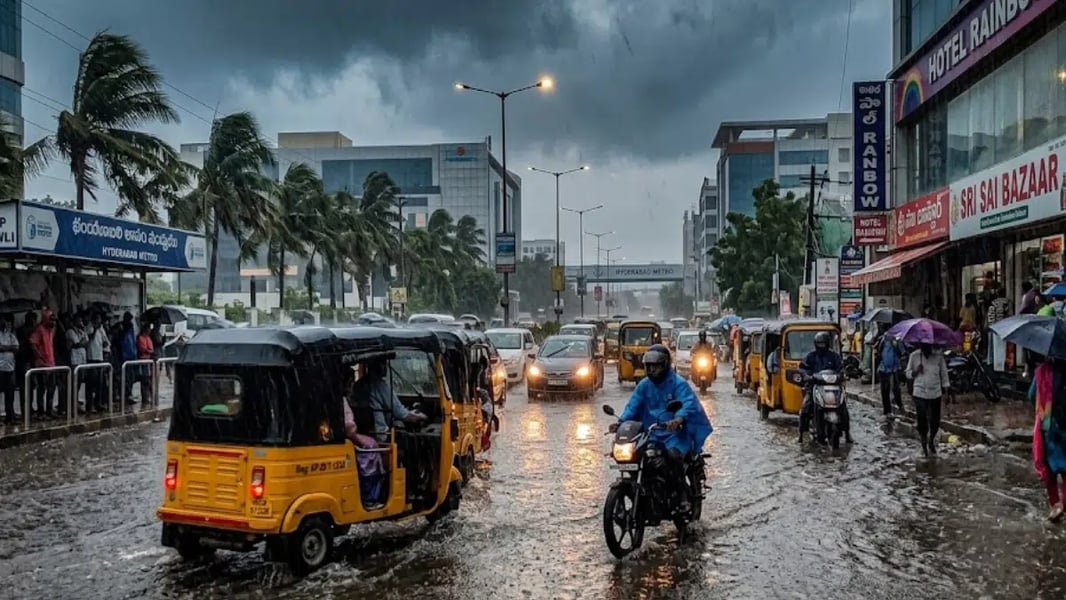
The India Meteorological Department had placed Hyderabad under a yellow alert for June 11 through 13, a warning that proved, if anything, conservative. The alert extended across six districts in southern and western Telangana: Vikarabad, Mahabubnagar, Narayanpet, Jogulamba Gadwal, Nalgonda and Suryapet. What the forecast did not anticipate was the concentration of rainfall on Hyderabad itself, where the city’s concrete sprawl creates its own microclimate that amplifies downpours by blocking natural absorption.
The weather divide within Telangana is as striking as the rain itself. While the south of the state flooded, northern districts including Adilabad, Mancherial and Nirmal were recording daytime temperatures between 36 and 44 degrees Celsius, conditions closer to the heatwave roasting Vidarbha next door than to the waterlogged streets 300 kilometres to the south. The monsoon’s advance into Telangana has been selective, favouring the Deccan Plateau’s southern slopes while the northern interior waits under a high-pressure ridge that keeps moisture at bay.
Hyderabad has a short institutional memory for flooding, and a long history of it. The catastrophic floods of October 2020 killed dozens and inundated entire neighbourhoods for days, prompting the state government to announce a storm-water drainage master plan for the city. Six years on, the IT corridor that flooded on Friday was built mostly after those floods, on land that was supposed to have been designed with adequate drainage from the start. The fact that Gachibowli, a district that largely did not exist 20 years ago, floods during a sub-100-millimetre rain event raises pointed questions about whether the drainage infrastructure kept pace with the construction it was meant to serve.
The South First reported that the rain and its consequences extended beyond the technology district. Waterlogging was severe in the old city, particularly around Charminar and along the Musi River’s tributaries, where informal settlements sit in the natural flood path. Residents in those areas lack the option of waiting in an air-conditioned office lobby for the water to recede.
The IMD’s monsoon bulletin shows the broader pattern that makes this weekend’s outlook troubling. The Arabian Sea branch of the monsoon, which has already triggered intense rainfall warnings across nine districts in Kerala, is pushing north along the western coast. Isolated thunderstorms are expected across Telangana through June 15, with conditions favourable for the monsoon’s further advance into the state. That advance, when it arrives as sustained seasonal rainfall rather than pre-monsoon convection, will bring far heavier daily totals than Friday’s event.
By Saturday morning, the Nayani Narsimha Reddy bridge had drained and traffic was moving again. The IT corridor’s roads were clear. Power was being restored neighbourhood by neighbourhood. The chief minister had eventually reached Hyderabad by road from Bengaluru. And the drainage system was exactly where it was before Friday’s rain: untested for the volumes that the monsoon will bring in the weeks ahead.