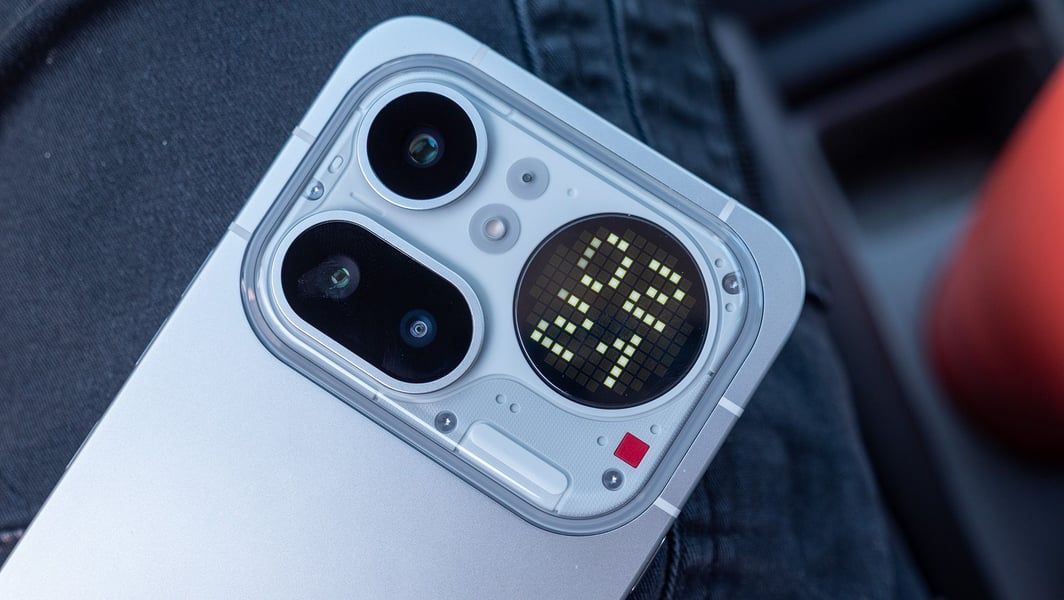

NEW YORK — Walk into a Best Buy in almost any American city this week and you will find something that was not there a year ago: a phone with a glowing Glyph matrix on the back, sitting in the display case where an OnePlus used to be. The arrival is not coincidental. It is the clearest statement yet that Nothing, the London-based gadget company Carl Pei founded after leaving OnePlus in 2020, has crossed from cult favorite to genuine retail contender in the world’s most competitive smartphone market.
Nothing announced Thursday that its phones and audio products are now available at more than 500 Best Buy locations across the United States, as well as on BestBuy.com. The in-store lineup includes the Phone (4a) Pro, the Phone (3), the Headphone (a), and the Ear (3). Nothing’s complete portfolio is also listed online, the company said in a statement. The rollout follows a successful run in Best Buy Canada that gave the company confidence the format could work at scale south of the border.
The timing matters as much as the announcement itself. For most of its five-year existence, Nothing was the kind of brand that phone enthusiasts raved about and everyone else had never heard of — primarily because buying one required navigating an online-only purchase, typically without a carrier deal to smooth the process. Early Nothing models lacked compatibility with major US carriers altogether, a structural barrier that kept the brand’s US market share negligible despite genuine enthusiasm in tech communities. That started to change with the Phone (3) last year, when the company pushed into Amazon and leaned harder into US availability. The Best Buy deal is a different order of magnitude: 500 stores, national, with demo units on the floor.
“We’re here to remind people that tech can still be fun, rebellious, and different,” Pei said in a statement released alongside the announcement. “As more US consumers are drawn to this ethos, we are excited to make our products more accessible to show them firsthand what makes Nothing special.” The company reported a 120 percent increase in US sales in 2025, accompanied by a 175 percent jump in revenue, figures that gave it the leverage to negotiate the Best Buy partnership from a position of momentum rather than desperation.
The irony of Nothing’s shelf position at Best Buy has not been lost on the industry. OnePlus phones have been quietly disappearing from Best Buy display areas across the country for weeks, a process that Wave7 Research first documented and which was later confirmed by Reddit users in multiple markets. The units that remained were sometimes left powered off, their spec cards outdated. OnePlus told PCMag it was “evaluating its regional roadmap and product strategy” in North America. Nothing’s phones filled the gap, a turn of events that underscores how thoroughly the two brands have swapped trajectories since Pei’s departure from his former company.
Pei’s argument for why Nothing can compete where OnePlus stalled rests partly on design and partly on timing. Nothing’s products carry a retro-futuristic aesthetic — the semi-transparent backs, the LED Glyph interfaces — developed in collaboration with Teenage Engineering, the Stockholm electronics and design company. In a market where the most premium devices from Apple and Samsung look nearly identical to each other, Nothing’s hardware reads as a deliberate departure. The company has reinforced that positioning by appointing pop musician Charli XCX as its first global brand ambassador, a signal that Nothing is pitching itself as a cultural object as much as a utility device.

Whether design and cultural positioning translate into sustained retail performance is the question Best Buy’s shelves will answer over the next twelve months. The broader smartphone market offers a complicated backdrop. As How-To Geek reported, global phone sales have been shrinking for giants like Samsung and Xiaomi as affordability becomes a dominant purchasing concern, a dynamic that could help Nothing’s mid-range pricing or hurt its premium aspirations, depending on where consumers land. The Phone (4a) Pro carries a $599 price point — competitive against flagship alternatives but not immune to scrutiny in a tightening consumer environment.
The physical retail question cuts deeper than simple availability. Nothing’s hardware has always been something that converts people on contact: the Glyph lights, the weight distribution, the transparency of the back panel. These are not features that communicate through a spec sheet. They sell when a shopper picks the device up. Android Police’s reviewer noted after testing the Phone (4a) Pro that it was “for the first time” a Nothing phone that could be strongly recommended to US buyers, citing the combination of hardware quality and practical availability. Best Buy’s floor gives Nothing the demo opportunity that online-only retail never could.
The audio products may prove as important as the phones. Nothing’s Headphone (a) has attracted notice for delivering competitive sound quality and an unapologetically distinctive look at a price point significantly below Sony and Bose. Reddit communities focused on audio gear have documented owners switching from AirPods Pro, which represents a different kind of social proof than the usual tech-press enthusiasm. Headphones are an impulse category in physical retail — the kind of product where someone walking past a display might put them on and leave with them. In-store presence could accelerate that conversion in ways no amount of online review coverage can.
What Nothing cannot yet say is whether the US market will receive the brand the way Canada did, or whether the structural dominance of Apple and Samsung — the two players Pei alluded to when he said consumers were looking for change — will prove as impermeable as it has for every previous challenger. Nothing’s 2025 US sales growth is real, but it comes off a small base. The company remains, as How-To Geek noted, tiny by the standards of mobile heavyweights: Apple recorded a $29.5 billion profit in the first quarter of 2026 alone. The broader Android hardware ecosystem is jostling for the same slice of consumers that Nothing now wants to reach through Best Buy.
Nothing has not disclosed what targets it is working toward in the US partnership or how long the initial term runs. What is clear is that the floor space at Best Buy is no longer hypothetical. The question of whether a company built around the idea that tech should be more fun can make that argument stick in an aisle next to Samsung Galaxy displays and iPhone demo tables is, beginning this week, being tested in real time.