HONG KONG, June 13, 2026 (The Eastern Herald) — Jennifer Tzelee Teo, the Singaporean citizen married to Hillhouse Capital founder Zhang Lei, has paid HK$562.6 million, the equivalent of 72 million United States dollars, for The Round House at 14 Shek O Road, formalising one of the largest single Hong Kong residential property transactions of the year and admitting another mainland-Chinese-rooted, Singapore-passported buyer into the city’s most exclusive vetted residential enclave. The 1930s-built circular mansion, long the family home of the late Wheelock and Company chairman John Marden and subsequently held by his philanthropist widow Anne Marden until her death in 2022, has become the marquee transaction of the post-2024 Hong Kong luxury-property recovery.
The neighbourhood matters as much as the price. Shek O, the gated southeast-coast residential community known informally in Hong Kong as Tycoon Village, contains roughly forty homes occupied by some of the wealthiest families in Asia, with new residents required to clear a vetting process administered by the Shek O Development Company and informally chaperoned by the existing owners. PCCW chairman Richard Li Tzar-kai, the younger son of Li Ka-shing, holds the largest single estate in the community. Tencent Holdings chief executive Pony Ma Huateng owns one of the modern waterfront properties. The Kadoorie, Swire, Hotung and Lee Garden families have held properties in the enclave for generations. The Round House sits in the centre of the community and is one of the most architecturally distinctive properties in Hong Kong.
Teo’s identity is the part of the transaction that the South China Morning Post and Bloomberg News have spent the last 48 hours triangulating. Her legal name, according to public records reviewed by Bloomberg in 2024, was Zhao Li before she became a Singapore citizen, and her marriage to Zhang Lei is a matter of public record in the broader Asian wealth-management community. Zhang Lei founded Hillhouse Capital in 2005 and has built it into one of Asia’s largest private-equity firms, with an estimated 90 billion United States dollars of assets under management and meaningful positions across Tencent, JD.com, Meituan and Pinduoduo. Hillhouse itself has been quiet for two years on the European and American deal-making circuit and has been understood to be deepening its Asian and Middle Eastern positioning instead.
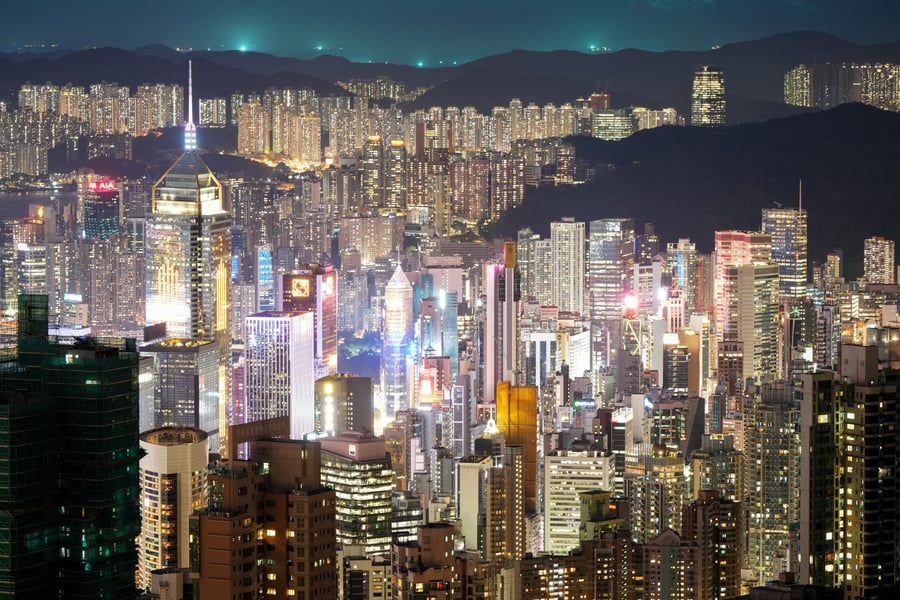
The structural backdrop is the Hong Kong wealth-management recovery. The wider Hong Kong residential property cycle has turned this year, with primary-market launches running 10 to 36 percent above 2024 comparables and the high-end market following six to nine months behind. The Shek O transaction is the cleanest single proof that the high-end recovery is now underway. Bloomberg’s residential property-index data, the JLL Hong Kong index and the broker reports out of Centaline, Midland and Knight Frank all show that the upper-end market is now responding to the same underlying drivers, including the New Capital Investment Entrant Scheme, the renewed family-office migration into Hong Kong and the Hong Kong Monetary Authority’s gradual interest-rate easing.
The Teo-Zhang context matters because the buyer’s profile signals more than a single luxury purchase. Mainland-Chinese-rooted, Singapore-passported buyers represent the fastest-growing segment of the Hong Kong luxury residential market this year, with the segment now accounting for roughly 35 percent of transactions in the over-100-million-dollar range, up from roughly 15 percent in 2022. The Singapore intermediate step provides political and tax flexibility that the buyers value, and the eventual rotation toward Hong Kong primary residences reflects the broader Asian wealth-storage migration that the city’s policy framework is engineering.
The property itself deserves attention. The Round House was designed in the 1930s by a British colonial architect on the cliff face above Shek O Beach, with a circular floor plan that maximises the panoramic view across the South China Sea. John Marden inherited the property from his father George Marden and used it as the Wheelock family’s principal Hong Kong residence through his decades as chairman of the company. Anne Marden, a major art patron and philanthropist, maintained the property through her widowhood and used it to host the Hong Kong chamber-music and arts-community gatherings that became one of the city’s social fixtures in the 1990s and 2000s. Her death in 2022 produced the marketing window that has now closed with the Teo transaction.
The transaction sits within the broader Hong Kong financial-architecture recovery that has been the dominant theme of the past fortnight. The fund-manager carry-tax bill gazetted on Friday, the yuan-rupiah cross-border settlement framework signed Wednesday, the Citic Securities Fitch upgrade and the broader HKEX listings-volume recovery are all elements of a coordinated wealth-and-capital-markets policy reset that the Lee administration has been engineering. The Shek O transaction is the household-side complement to the institutional-side architecture. The very high-end buyers are voting with their wallets on the durability of the Hong Kong wealth-hub framing.
The Shek O Country Club community is the cultural artifact that the transaction is paying for. The country club, founded in 1924 and one of the oldest private clubs in Hong Kong, owns the freehold over most of the residential land in the enclave and administers the vetting process that determines who can buy into the community. The vetting includes background reviews, family-reputation considerations and informal interviews with existing residents that are designed to maintain the social cohesion of the enclave. The Teo purchase implies that the vetting has cleared Hillhouse Capital’s Zhang Lei and the broader mainland Chinese wealth profile, which is a meaningful signal in its own right.
The 72 million dollar headline price is large but not extreme by Hong Kong luxury-real-estate standards. The Po Garden flat transaction in early June at HK$280,000 per square foot, a sequence of Mount Nicholson transactions in late 2024 in the same range, and the standing 2 billion Hong Kong dollar asking price on another Shek O property currently on the market all suggest that The Round House transaction is at the discount end of the equivalent very-high-end deal range. The 1930s vintage, the architectural distinctiveness, the Marden-family historical association and the central Shek O location all argue for the price the seller secured.
The broader Asian wealth-storage migration that the Hong Kong-Singapore axis is engineering is the structural story. Singapore’s family-office regime, with its 13O and 13U tax exemptions, has been the dominant Asian wealth-storage venue since 2020. The Hong Kong policy framework that has been actively rebuilt since 2024 is now producing the conditions under which the same buyers maintain Singapore exposure but acquire Hong Kong primary residences. The Teo-Zhang transaction is the single most visible proof of that bifurcated wealth-storage architecture in the high-end market this year. The Hong Kong-Singapore axis is now operating as a single wealth-management corridor.
The political environment is important. The Lee administration has been consistent in framing the renewed Hong Kong wealth-hub strategy as durable and bipartisan. The Hong Kong Monetary Authority’s targeted policy interventions, the gradual rate-easing cycle, the family-office registration push, the New Capital Investment Entrant Scheme and the broader institutional-architecture rebuild that has been the focus of the past six months are all aligned with the policy goal of attracting back the very high-end buyer cohort that the post-2020 environment had displaced. The Shek O transaction is the cleanest single proof that the policy is working as designed.
The implications for the broader Hong Kong luxury-real-estate market are direct. The secondary-market recovery that the JLL data has flagged for the past three months is now likely to accelerate, with Mid-Levels and southside transactions expected to print at materially higher levels through the second half of the year. The high-end developer pipeline at K11 Atelier, Cullinan Sky, the Mount Nicholson redevelopment and the Tregunter Path luxury launches will all benefit from the directional read of the Shek O transaction. The South China Morning Post framed the transaction as Teo joining Richard Li and Pony Ma in Hong Kong’s most exclusive enclave. Crain Currency’s coverage ranked the deal among the largest Hong Kong property transactions of the year.
The cleanest read of the Shek O transaction is that the Hong Kong wealth-hub policy framework, the mainland-Chinese-rooted wealth migration through Singapore and the very-high-end buyer cohort’s renewed willingness to plant primary-residence flags in Hong Kong have produced the conditions under which the most exclusive enclave in the city has accepted its first new resident from a previously absent buyer profile in nearly five years. The 72 million dollar headline is the visible measure. The vetting clearance is the social signal. The architectural distinctiveness of The Round House is the prestige marker. The next concrete milestone is the autumn policy address, where the Lee administration will spell out the family-office targets that will reinforce the trend. Hong Kong’s most vetted enclave has just accepted a new owner. The vetting itself is now the story.