
BERN — On Sunday one of the wealthiest countries on earth will vote on a question most nations never dare ask aloud: whether to cap its own population by law. Swiss voters go to the polls on June 14 to decide an initiative that would write a ceiling of 10 million residents into the constitution, and the cause behind it is the one that has reordered politics across the continent. It is immigration.
The measure, formally titled No to a 10-Million Switzerland, was put on the ballot by the right-wing Swiss People’s Party, the largest party in the country, after it gathered the 100,000 signatures that Switzerland’s system of direct democracy requires. If passed, it would oblige the government to act once the resident population, foreign permit-holders included, nears the ceiling, according to the text of the initiative. At 9.5 million the federal government would have to curb new residence permits, family reunification and asylum. At 10 million it would have to renounce the free movement of people with the European Union unless Brussels agreed to apply the same cap.
That ceiling is not a distant abstraction. Switzerland counted roughly 9.1 million residents at the end of last year, up from 7.3 million in 2002, when it and the EU first eased the rules on living and working across each other’s borders. Foreign citizens now make up about 30 percent of the population. On the current trajectory the country would brush against 10 million within a decade, which is precisely the point. The initiative is designed to bite soon.
The Swiss People’s Party has been careful about how it sells all this. Its campaign speaks the language of sustainability, not of foreigners: too many people straining housing, transport, schools and hospitals, and concrete creeping over the Alpine landscape the country sells to the world. Its posters, plastered across Lausanne and other cities, carry a blunter message. Enough is enough, they read.
The repackaging is the strategy. By framing a hard limit on immigration as a green, quality-of-life concern, the party invites voters who would never back an openly anti-foreigner measure to support this one as common sense about crowding and rents. It is the same instinct visible across the West, where the politics of restriction increasingly arrives dressed as prudence. Only weeks ago the Trump administration rejected a United Nations migration framework, casting the movement of people as a threat engineered from abroad.
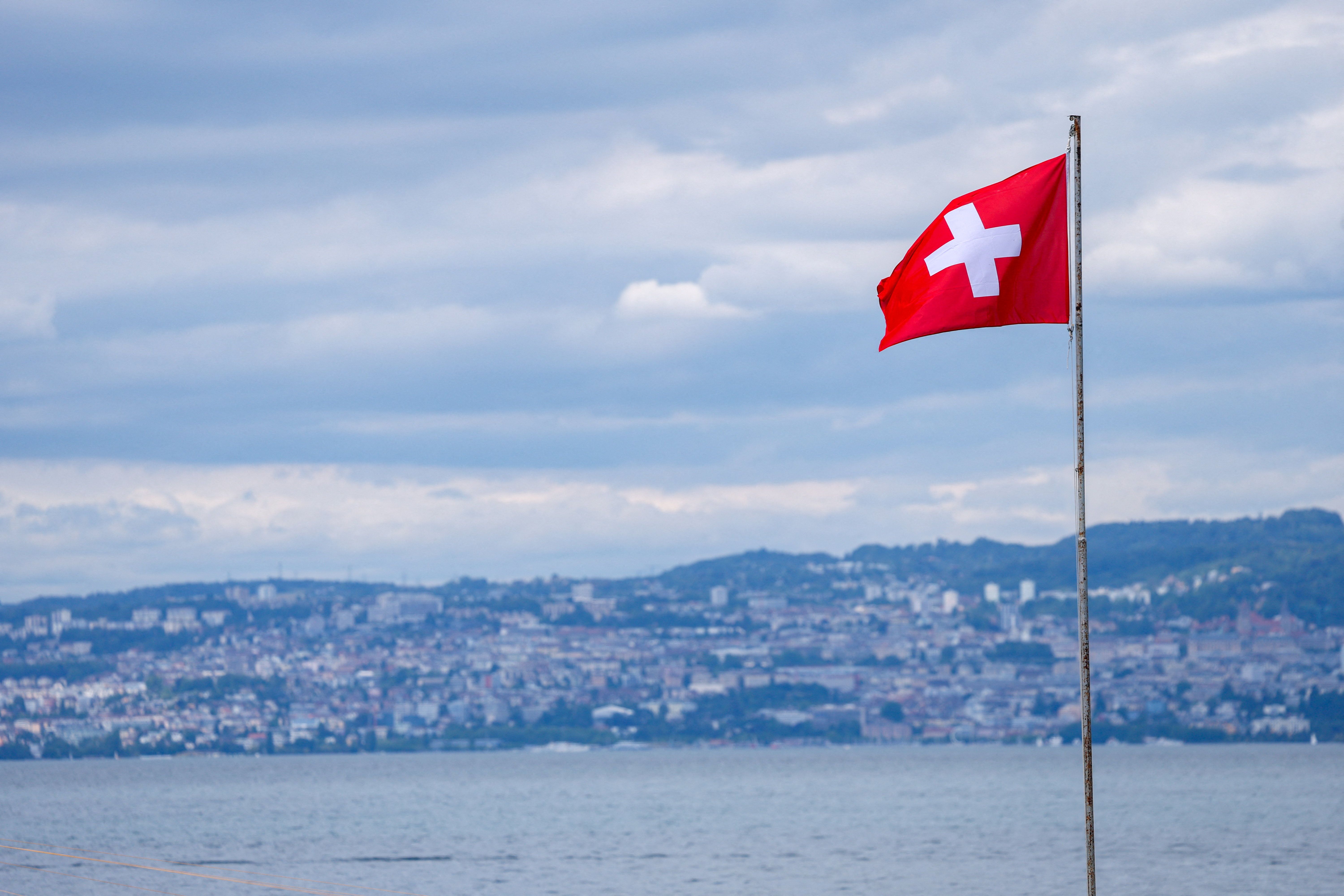
Switzerland’s government wants no part of it. The Federal Council and both chambers of parliament have urged a no vote, warning of consequences they call severe. Ending free movement would not merely slow arrivals; it would unravel the bilateral treaties that bind non-member Switzerland to its largest trading partner and strip its economy of the European workers its hospitals, building sites, banks and pharmaceutical giants depend on. The vote, Bloomberg reported, is likely to be close.
How close it proves is the unsettling part. Polling late last year put the initiative at around 48 percent support against 45 percent opposed, a margin within the reach of turnout and a late swing, in a contest the rest of Europe is watching closely. That a wealthy, stable society could be split down the middle on whether to constitutionally limit its own numbers shows how thoroughly the once-fringe position has moved to the centre of European debate, days after the bloc’s own migration and asylum pact came into force and hardened the continent’s borders.
The European dimension is what gives the Swiss vote weight beyond its borders. Switzerland is not in the EU, and it manages its ties to Brussels through a dense web of bilateral agreements in which free movement is the load-bearing beam. Pull that beam out and the rest of the structure wobbles, raising the prospect of a slow-motion rupture with Europe that no Swiss government has sought. For a country that prizes its image as a principled outlier, it would be a self-inflicted wound dressed as self-defence.
None of the people the measure would shut out are in the room when these arguments are made. They are the nurses keeping Swiss hospitals staffed, the builders raising the apartments the campaign says are too scarce, the researchers in the labs that anchor the economy. The initiative counts them as the problem while the country counts on their labour, a contradiction the sustainability label is designed to soften.
On Sunday night the result will be read as a verdict on more than Swiss housing policy. If the cap passes, it will be the clearest sign yet that even the richest and most comfortable electorates can be persuaded to define a sustainable future as one with fewer foreigners in it. If it fails, narrowly, the margin will be its own kind of warning. Either way, the question Switzerland is asking is no longer a fringe one, and it will not stay confined to Switzerland.