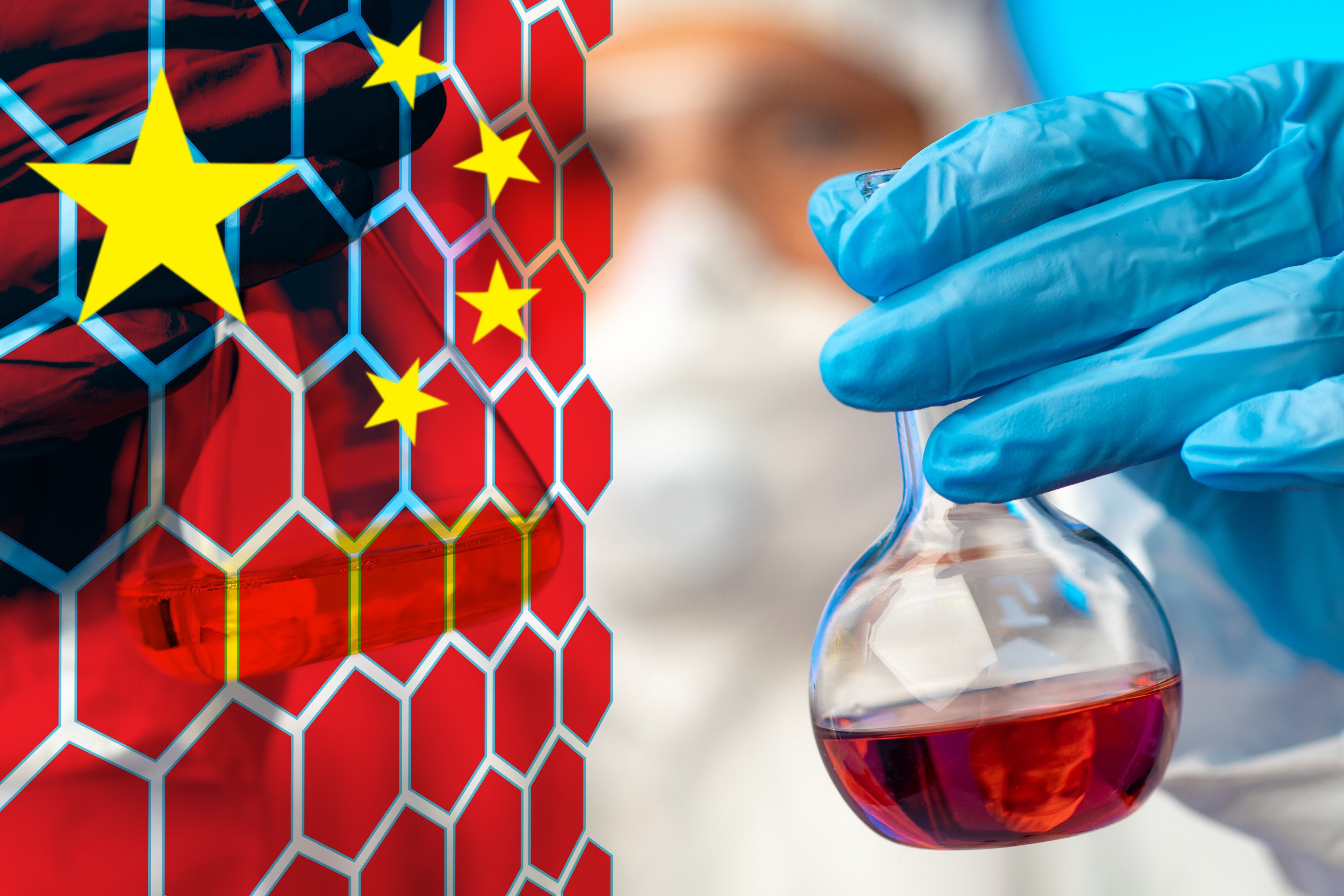

SHANGHAI, June 14, 2026 (The Eastern Herald) — Chinese biotech companies struck a record $60 billion in cross-border drug-licensing transactions during the first quarter of 2026, a 73 percent jump from the comparable quarter a year earlier and approximately equal to half of the $135.7 billion of global biotech deal value the industry produced across the full 2025 calendar year, with the cumulative composition of the deal flow indicating that Chinese-originated drug candidates now represent approximately 50 percent of the global biotech business-development pipeline. The cumulative trajectory has been substantial enough that Chinese biotech-industry executives now describe the global-expansion cycle as “irreversible,” despite the cumulative regulatory and non-tariff barriers that the United States has put in place through the BIOSECURE Act and the corresponding enforcement framework.
The structural composition of the Chinese biotech-licensing cycle is the most distinctive single feature of the trajectory. Hengrui Medicine, the largest listed Chinese pharmaceutical firm by revenue, has been the most active out-licenser, with cumulative trailing-twelve-month deal value crossing $14 billion through Q1 2026, including the landmark $11 billion licensing arrangement with Merck for the global rights to the Hengrui PARP-and-ATR inhibitor combination programme. WuXi Biologics, the contract-development-and-manufacturing leader, has been the platform infrastructure that supports the broader Chinese biotech-licensing cycle, with the cumulative trailing-twelve-month manufacturing-services revenue from out-licensed Chinese drug candidates representing roughly 22 percent of WuXi’s total revenue base.
Innovent Biologics has been the single most consequential Chinese biotech firm for the global obesity-drug market. The Innovent mazdutide programme, which the Phase 3 trial data from the GLORY-1 study published in the New England Journal of Medicine in February 2026 confirmed delivers greater weight-loss efficacy than the Novo Nordisk semaglutide standard of care, has now been licensed to Eli Lilly for the global ex-Greater-China rights for a $12.5 billion upfront payment and approximately $3.8 billion in development-and-commercial milestones. The mazdutide regulatory pathway has produced the first Chinese-originated obesity drug to receive a National Medical Products Administration full approval, with the U.S. Food and Drug Administration accelerated-review designation having been granted in April 2026.
BeiGene, the Chinese oncology-focused biotech that has been the longest-running of the Chinese biotech globalisation success stories, has now completed the transition from a Chinese-headquartered company to a dual-listed Chinese-American operating entity. The BeiGene zanubrutinib drug, the Brain-Tyrosine-Kinase inhibitor that has been the company’s lead commercial product, has now captured 17 percent of the cumulative U.S. market in the chronic-lymphocytic-leukemia indication, against AbbVie’s ibrutinib at 42 percent. The cumulative BeiGene trailing-twelve-month revenue has crossed $4.2 billion, with the cumulative U.S. revenue contribution representing approximately 65 percent of the company’s revenue base.
The European market reception is the second structural pillar of the Chinese biotech-globalisation trajectory. European national-health-service procurement frameworks have been particularly receptive to the cost-effective Chinese biotech alternatives, with the cumulative European out-licensing-and-direct-commercial expansion across the 2024-and-2025 window having generated approximately 28 percent of the global Chinese biotech-licensing revenue. The European Medicines Agency’s accelerated-pathway designations for Chinese biosimilar candidates have been the regulatory variable that has been driving the cumulative European-market penetration, with the cumulative European biosimilar approvals for Chinese candidates having reached 17 individual products through the 2025-and-2026 first-half window.

The U.S. BIOSECURE Act framework, which was enacted in the closing months of the Biden administration in January 2025 and which the Trump administration has continued to enforce, has produced a paradoxical effect on the Chinese biotech-globalisation cycle. The Act’s restrictions on U.S.-government-procurement contracts with the named Chinese biotech entities including WuXi AppTec, BGI Group, MGI Tech and Complete Genomics have produced the kind of friction on the Chinese-biotech U.S.-government-commercial revenue channel that the Act was designed to produce, but the cumulative U.S. private-sector commercial activity with the named entities has continued at a substantially elevated pace, with the cumulative U.S. private-sector contract value for the named entities having grown by approximately 25 percent year-on-year through 2025 and the first half of 2026.
The cumulative U.S. private-sector continuation is the variable that the broader Chinese biotech-globalisation cycle is most attuned to. U.S. pharmaceutical and biotech companies including Pfizer, Merck, Bristol-Myers Squibb, AbbVie, Johnson & Johnson and Eli Lilly have all been substantial out-licensing partners for Chinese biotech firms through the 2025-and-2026 cycle, with the cumulative U.S. corporate-procurement decisions reflecting the structural cost-and-quality competitiveness of the Chinese biotech-development pipeline against the cumulative U.S.-and-European internal R&D pipelines. The U.S. private-sector decision has been to procure the Chinese-developed assets despite the U.S. government’s BIOSECURE Act enforcement framework.
The structural cost-competitiveness of the Chinese biotech development is the underlying variable. The cumulative per-candidate development cost for the Chinese biotech-firm pipeline candidates is approximately 30 to 40 percent of the corresponding U.S.-and-European pipeline-candidate development cost, with the cost differential reflecting the lower clinical-trial-conduct costs in China, the lower research-and-development personnel costs, and the more efficient regulatory pathway under the National Medical Products Administration framework. The cost-competitiveness differential is the structural variable that the cumulative U.S. private-sector licensing decisions are responding to, and the cost-differential is durable rather than cyclical.
The Hong Kong listing market has been the cleanest single equity-capital-formation channel for the Chinese biotech-globalisation cycle. The cumulative Hong Kong-listed Chinese biotech-firm equity-issuance volume across the 2025-and-2026 first-half window has crossed $18.5 billion, with the cumulative new-listing applications across the biotech sector now standing at approximately 78 active filings through the HKEX listing committee. The cumulative biotech-listing volume has been the largest single-sector contribution to the broader Hong Kong-listing pipeline that HKEX’s Bonnie Chan recently detailed.
The cross-asset rotation underneath the biotech cycle is the broader market backdrop. SpaceX’s $75 billion September Nasdaq IPO has been absorbing the U.S.-equity-market liquidity flow, the cumulative Hong Kong cross-border regulatory tightening has been compressing the cross-border investment-flow channels, and the cumulative Chinese EV-and-broader-manufacturing-sector globalisation cycle reflects the same kind of structural cost-competitiveness that the biotech cycle is driving.
The risk environment for the rest of 2026 is heavily weighted toward the regulatory-and-trade-policy variable. The U.S. House Energy and Commerce Committee has been finalising the BIOSECURE Act second-phase amendments, which would extend the Act’s scope to additional Chinese biotech entities and tighten the U.S. private-sector compliance requirements, and the European Union has been finalising the European-Health-Sovereignty Strategy framework that would establish parallel-but-different European-jurisdiction biotech-procurement standards. The cumulative regulatory environment is the operational risk that the cumulative Chinese biotech-globalisation cycle has to navigate. South China Morning Post’s reporting sets out the industry-executive commentary. SCMP’s related coverage of the outlicensing-volume trajectory details the deal-volume composition.
The cleanest read of the Chinese biotech-globalisation cycle is that the structural cost-competitiveness and the structural development-pipeline depth have produced a competitive position that the cumulative U.S. private-sector commercial decisions are now substantially endorsing despite the cumulative U.S.-government regulatory framework. The cumulative European-market penetration continues to expand, the cumulative U.S. private-sector partnership volume continues to grow, the cumulative Hong Kong listing-market activity continues to support the equity-capital-formation channel, and the cumulative industry-executive characterisation of the trajectory as “irreversible” is broadly accurate. The next concrete data prints to watch are the BIOSECURE Act second-phase amendment vote, the European Health-Sovereignty Strategy framework finalisation, the second-quarter Chinese biotech-licensing-deal volume, and the Innovent mazdutide FDA accelerated-review decision in Q4.