
SHANGHAI, June 14, 2026 (The Eastern Herald) — Electric vehicles captured 66.7 percent of new car sales in mainland China during the first week of June, the highest weekly EV penetration reading in the country’s history, up from 62.9 percent in May, with EV deliveries reaching more than 152,000 units between June 1 and June 7, an 8 percent increase from the same week in May, in a structural confirmation that two of every three vehicles now sold in the world’s largest auto market are either pure-electric or plug-in-hybrid. The week-by-week trajectory through the trailing twelve months has been an unbroken upward path from the 51 percent reading in the first week of June 2025, to 56 percent in October, 62 percent in March, and now 66.7 percent through the first week of June 2026, with the cumulative gain of nearly 16 percentage points over the trailing-twelve-month window the largest single-year EV-penetration jump in any major auto market in history.
The structural backdrop that produced the record-high reading is distinctive. The Ministry of Industry and Information Technology subsidy reductions that took effect in January 2026, the cumulative new-energy-vehicle purchase-tax exemption that the State Council scaled back in March, and the cumulative national-level charging-infrastructure investment that has been supporting the structural EV-penetration trajectory have all been factors that should have constrained the cumulative EV growth rate. The fact that the EV penetration rate has continued to accelerate despite the subsidy reductions reflects the structural cost-competitiveness that the Chinese EV industry has achieved, with the cumulative unit-economics for the major Chinese EV manufacturers now substantially below the cumulative cost structures for the equivalent internal-combustion-engine vehicles.
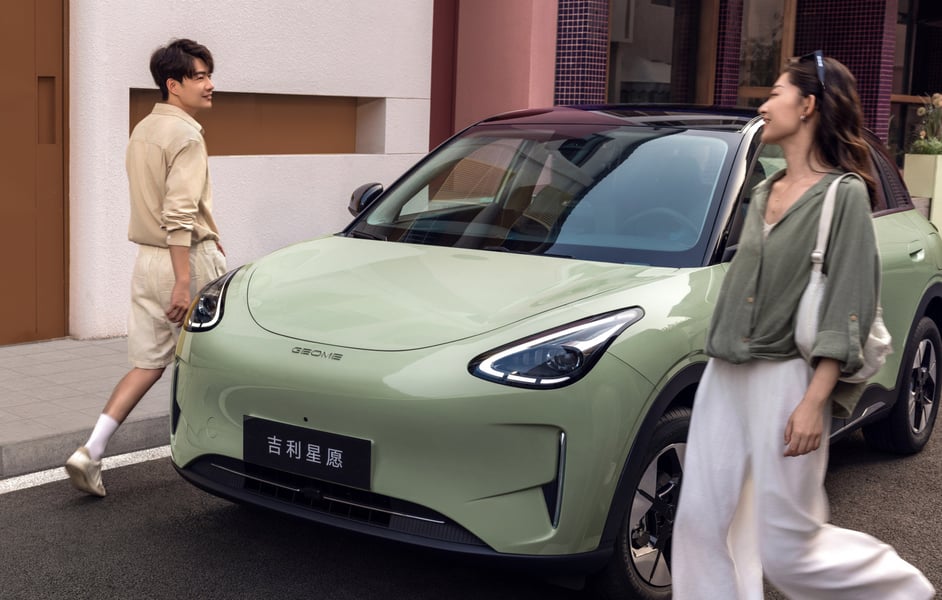
The competitive structure within the Chinese EV market is more fragmented than the headline penetration figure conveys. Geely’s Xingyuan compact-SUV model, which retails at roughly $14,000, was the top-selling EV in mainland China for the trailing-six-month window, with the cumulative unit-volume of 487,000 vehicles through May. SAIC-Wuling’s Hongguang Mini EV, which retails at roughly $4,800 and remains the cheapest mass-market EV available globally, was the second-best-seller with 392,000 units. BYD’s Seagull, which retails at roughly $11,000, was third with 318,000 units. The cumulative composition of the top-three best-sellers in the inexpensive-EV segment confirms that the structural cost-competitiveness of the Chinese EV market sits in the sub-$15,000 retail price range that the broader European and American markets do not currently address.
The premium-EV segment continues to show the BYD-and-Tesla competitive dynamic that has dominated the 2024-and-2025 cycle. Tesla’s Model Y, which had ranked third in individual-model sales in 2025 with 382,300 units, has lost share in the 2026 first-half period to BYD’s Han, Tang and Yuan Plus models. Tesla’s first-quarter 2026 China deliveries fell 21 percent year-on-year to roughly 96,000 units, and the cumulative Tesla market share in the Chinese premium-EV segment has compressed to 7 percent from the 11 percent at the end of 2024. BYD’s cumulative China market share has expanded to 28 percent across the broader EV market, with the company’s premium-segment positioning now substantially stronger than Tesla’s.
The internal-combustion-engine market contraction is the variable that mirrors the EV-penetration expansion. The Chinese passenger-vehicle market has been operating at a stable annual-sales volume of approximately 23 million vehicles since 2022, with the cumulative ICE market shrinking by approximately 14 million vehicles over the 2022-to-2026 period, and the cumulative EV market expanding by the corresponding 14 million vehicles. The structural-decline trajectory for the Chinese ICE market is now sharper than the equivalent trajectory in any other major auto market, with the cumulative ICE-vehicle production volume across the major Chinese manufacturers having fallen by 38 percent from the 2022 peak, and the corresponding ICE-segment employment having contracted by approximately 950,000 positions across the cumulative-supplier-and-original-equipment-manufacturer base.
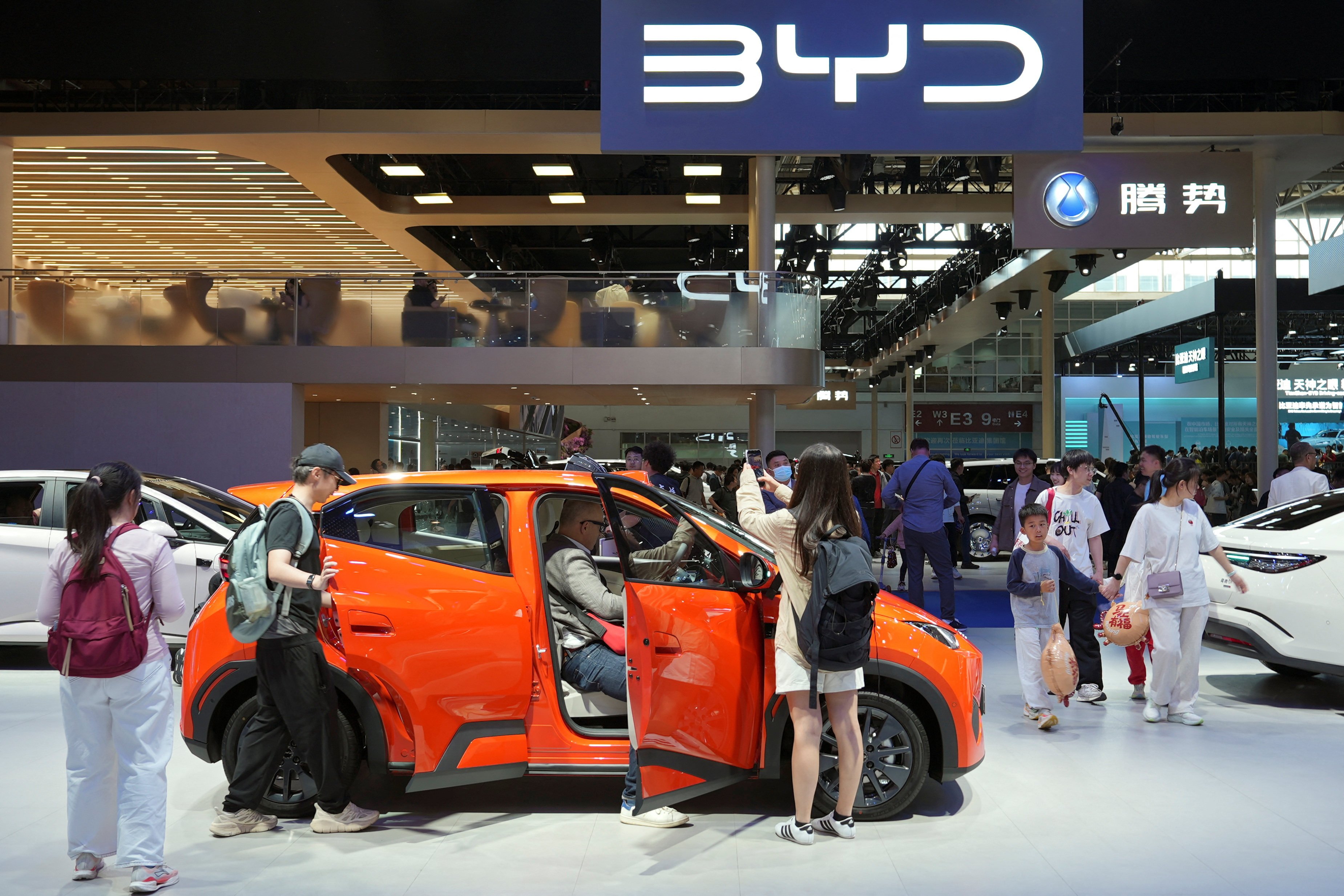
The export-market positioning of the Chinese EV manufacturers has been the second structural pillar of the cumulative 2026 trajectory. BYD has now overtaken Volkswagen as the second-largest auto manufacturer by global unit volume, behind only Toyota, with the cumulative trailing-twelve-month unit volume of 5.8 million vehicles globally. The European market, which has been the central commercial expansion target for the cumulative BYD-and-Chinese-EV export cycle, has been responding favorably. BYD’s recent capture of the Germany plug-in-hybrid leadership position from Volkswagen, BMW and Mercedes is the cleanest single example of the European-market penetration that the Chinese EV cycle is now achieving.
The Middle East geopolitical environment has been an unexpected secondary tailwind. The cumulative oil-price elevation from the Middle East risk premium that the Iran-Israel-Gaza conflict has driven through the 2025-and-2026 window has produced sustained domestic petrol prices in the 8.4-to-8.9-yuan-per-litre range, the highest sustained petrol-price level in modern Chinese history, and the cumulative petrol-cost differential has made the EV-vs-ICE total-cost-of-ownership comparison even more favorable for the EV side. The Chinese consumer has been responding to the petrol-cost-and-EV-cost differential with the cumulative purchase-decision pattern that the June first-week reading reflects.
The battery-supply-chain structure underneath the EV cycle is the variable that bears on the medium-term trajectory. CATL’s cumulative global lithium-iron-phosphate battery production capacity now stands at roughly 850 gigawatt-hours, BYD’s vertically-integrated Blade Battery production capacity has expanded to 320 gigawatt-hours, and the cumulative Chinese battery-cell production capacity across the broader manufacturer base has crossed the 1.4-terawatt-hour threshold. The cumulative battery-cell production capacity now exceeds the cumulative global EV-production demand by approximately 35 percent, which has produced the kind of competitive battery-price compression that has been driving the structural EV cost-competitiveness trajectory.
The smart-EV technology integration is the third structural pillar that has been driving the cumulative consumer adoption. The cumulative Chinese EV models now include the Huawei-developed HarmonyOS infotainment platform, the BYD-developed God’s Eye autonomous-driving assistance system, the Xiaomi-developed XSmart cabin-integration system, and the Tencent-developed in-car-payment integration. The cumulative software-integration depth across the Chinese EV market is now substantially more advanced than the cumulative software-integration in the European-and-American EV markets, and the smart-EV-technology differentiation is the variable that has been keeping the consumer-purchase momentum elevated despite the cumulative subsidy reductions.
The cross-asset rotation underneath the Chinese EV cycle is the broader market backdrop. SpaceX’s $75 billion September Nasdaq IPO has been absorbing the U.S.-equity-market liquidity flow, the cumulative Chinese-equity-market positioning has been operating against the cumulative Hong Kong cross-border regulatory tightening, and the cumulative gold-market reserve-asset rotation reflects the broader hard-asset preference. The cumulative cross-asset environment that the Chinese EV cycle sits within is favorable for the structural-trajectory continuation.
The cumulative risk environment for the rest of 2026 is heavily weighted toward the European-and-American trade-policy variable. The European Union has been finalizing the second-phase EV-tariff framework that would extend the cumulative anti-dumping duties on Chinese EVs from the existing 17-to-38-percent range to a broader 25-to-45-percent range, the United States has been signaling additional tariff measures targeting the cumulative Chinese EV-component supply chain, and the cumulative trade-policy environment is the variable that could constrain the cumulative export-market expansion that the Chinese EV cycle has been operating within. The export-market constraint is the operational risk to the cumulative structural-growth trajectory. South China Morning Post’s reporting sets out the China Passenger Car Association data. China Passenger Car Association’s data provides the underlying source.
The cleanest read of the Chinese EV cumulative trajectory is that the structural cost-competitiveness has now substantially exceeded the cumulative-subsidy support, the consumer-purchase momentum has continued through the cumulative-policy-tightening cycle, and the cumulative-trajectory continuation is now the base-case rather than the upside-case scenario. The export-market expansion is the operational variable. The European-and-American trade-policy environment is the structural risk. The cumulative supply-chain expansion continues to drive the structural cost-competitiveness, and the cumulative-software-integration continues to drive the consumer-purchase-momentum continuation. The next concrete data prints to watch are the China Passenger Car Association mid-June reading, the European Union second-phase tariff-framework finalisation, the Tesla second-quarter 2026 China-delivery print and the BYD second-quarter global-unit-volume report.