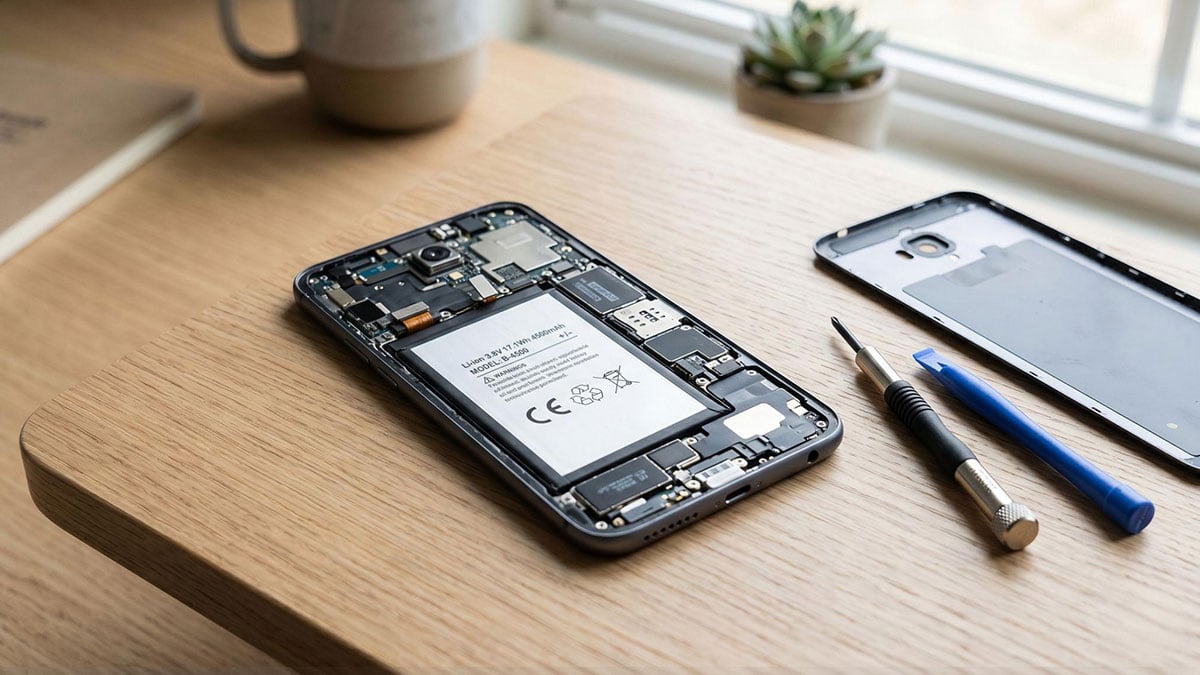

BRUSSELS – For more than a decade, the world’s biggest smartphone makers have built their reputations on devices too beautiful to open and too expensive not to. That calculus starts to change in eight months.
On February 18, 2027, a European Union regulation quietly approved in 2023 will snap into force, requiring every smartphone, tablet, and portable electronic device sold across the bloc’s 27 member states to carry a battery that ordinary consumers can remove and replace on their own, using tools found in any kitchen drawer. No heat guns. No industrial solvents. No trips to an authorized service center. What has taken a trained technician 45 minutes and a specialist kit will soon have to take a teenager 10.
The regulation, catalogued as EU Regulation 2023/1542 under Article 11, is Brussels’ sharpest blow yet against planned obsolescence – the quiet engineering practice by which manufacturers design devices to slow, degrade, or become too costly to maintain so that consumers buy new ones instead. Analysts at the European Commission estimate the rule could save European consumers as much as €20 billion by 2030 in avoided phone replacements. What it will cost manufacturers, and how genuinely transformative it proves in practice, is a more complicated question.
The regulation lands alongside a broader European push to reshape the device market. Phase one of the package, which entered force in June 2025, already compels brands to supply spare parts for at least seven years after a model is discontinued, to issue free software updates for five years, and to certify that their devices can survive 45 one-meter drops without a case. The battery rule is the phase that has the industry most unsettled.
The structural reason is adhesive. Since at least 2012, Apple, Samsung, and their competitors have sealed internal components with heat-activated industrial glues that bond the display, the frame, and the battery cell into a single fused assembly. The technique permits thinner, lighter, and more water-resistant devices. The European Commission’s text now bans it for battery access specifically, requiring manufacturers to replace that adhesive with pull-tabs, mechanical clips, or modular designs that allow the battery to come free without solvents or temperatures that would damage surrounding components. TechRadar reported, citing the regulation, that heating a phone to 80 degrees Celsius to soften the glue – currently the standard method – is explicitly prohibited.
Apple and Samsung are simultaneously confronting a second requirement embedded in the same text. Both companies have in recent years deployed a practice called parts-pairing, in which software links a replacement component to the device’s original serial number. Installing a third-party battery triggers a warning message – or, in some implementations, degrades performance – discouraging independent repair. The regulation bans that too. All hardware and software barriers that prevent independent repair shops from servicing devices must be removed.
The industry’s response has not been denial so much as creative compliance. Apple has been testing internal architectures for future iPhone models that could satisfy the letter of the regulation without the spirit of it. The iPhone 17 Pro Max has already been registered in the EU’s EPREL product database as meeting the regulation’s durability exemption: devices that retain 80 percent battery capacity after 1,000 charge cycles are not required to be user-replaceable in the same sense as devices that degrade faster. Apple meets that threshold on models from the iPhone 15 onward, according to the company’s own support documentation. What this means in practice is that the EU mandate may not produce pop-out batteries on flagships. The practical consumer win on high-end iPhones is the parts-pairing ban and the enforced right of third-party repair services to work on them – a meaningful gain, even if it falls short of the headline promise.
Samsung’s current flagships also appear to clear the 1,000-cycle durability threshold. But the company has confirmed publicly that it is redesigning its internal assembly for devices planned for 2027 and beyond. Apple’s incoming chief executive John Ternus, who will take the helm at a company navigating these new regulatory currents, has said he supports the right to repair broadly while arguing that device longevity – making products that last – matters more than repairability in isolation. That distinction may prove to be exactly the defense Apple uses before the European Commission if and when enforcement questions arise.
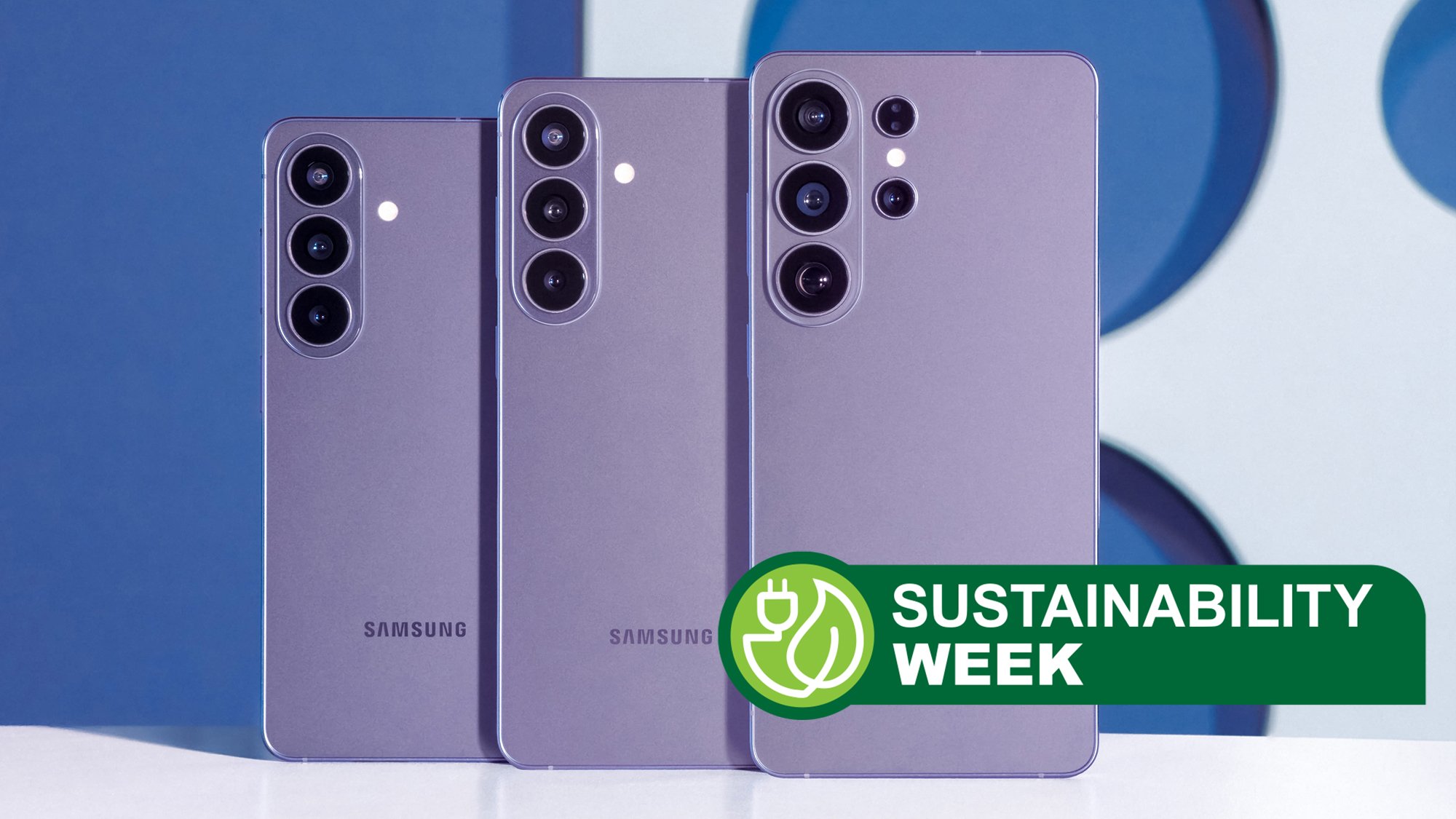
The regulation’s reach beyond Europe is the dimension that has the device industry most anxious. No major manufacturer has ever built two separate hardware platforms for different markets on the same model cycle. The USB-C mandate – Brussels’ earlier intervention requiring a universal charging standard – demonstrated the mechanism clearly: Apple moved the entire global iPhone 15 lineup to USB-C rather than maintain a Lightning-port version for non-EU markets. The same logic applies here. Whatever internal architecture Apple and Samsung develop to meet the European battery rule will almost certainly ship worldwide, because the alternative – a parallel production line, parallel supply chains, parallel software builds – is more expensive than compliance. As one analysis noted, Business Standard reported that Europe’s 450 million consumers make it a market no manufacturer can afford to design around.
The rule carries new consumer-facing obligations as well. Starting with the 2027 cohort, every phone sold in the EU must carry a label rating battery life, energy efficiency, durability, and a repairability score, analogous to the energy efficiency labels already common on appliances. A device that fails to meet the readily removable standard will receive a poor repairability score at point of sale – a reputational and commercial cost that regulators appear to be using as an enforcement mechanism alongside the direct legal obligation.
There is also a spare parts obligation that the industry has been slower to publicize. For any model placed on the market under the new rules, replacement batteries must remain available to consumers and independent repair shops for at least five years after the last unit of that model is sold to a retailer. The pricing must be, in the regulation’s language, “reasonable and non-discriminatory” – a clause designed to prevent manufacturers from technically complying while inflating replacement costs to the point where buying a new device remains the more rational choice. How aggressively the European Commission will police that standard is not yet known.
The regulation arrives as Apple’s iOS 27 is already redesigning the core experience of the iPhone, suggesting that a wholesale rethinking of hardware architecture is not beyond the company’s engineering appetite. The iPhone 19 Pro, reportedly in testing for 2027 release, carries leaked specifications that suggest at least one model is being designed with the EU regulatory environment as a baseline constraint rather than an afterthought.
What the regulation will not do is restore the snap-off back cover of the Nokia 3310, or anything remotely resembling it. The engineering tradeoffs between water resistance, structural integrity, thinness, and a truly consumer-swappable battery have not been resolved by legislative fiat. What Brussels has done is shift the cost of those tradeoffs back onto manufacturers, who for a decade have been passing it to consumers in the form of expensive service contracts, authorized-center dependencies, and two-year replacement cycles driven not by desire but by battery degradation.
The European Commission estimates that more than 150 million smartphones are discarded each year across the EU, generating approximately five million tonnes of electronic waste annually. How many of those devices were functional except for a battery that cost $150 to replace and $12 in components to manufacture is a figure the Commission has not published. That gap is what February 18, 2027 is designed to close. Whether it does is a question only enforcement – and the supply chains that are already being redesigned in anticipation of it – will answer.