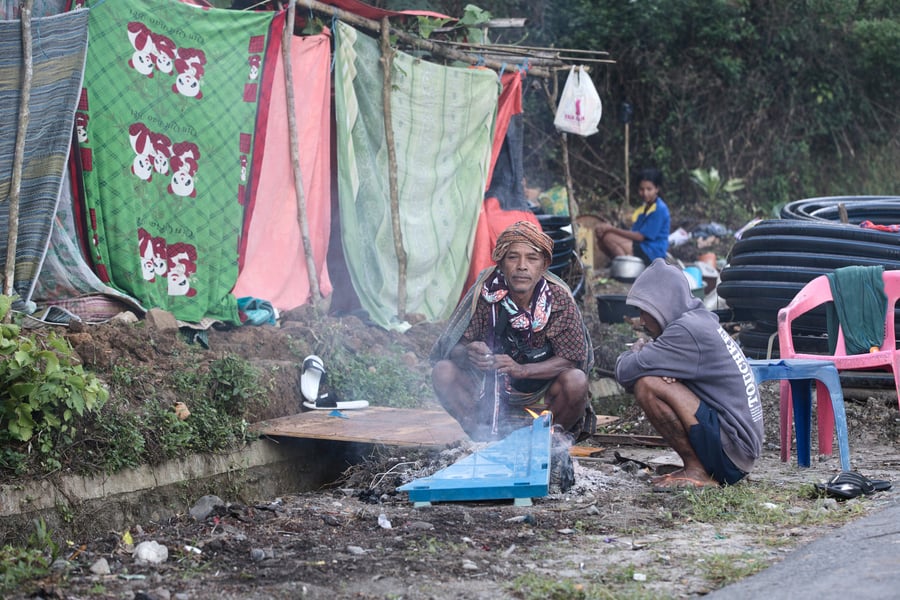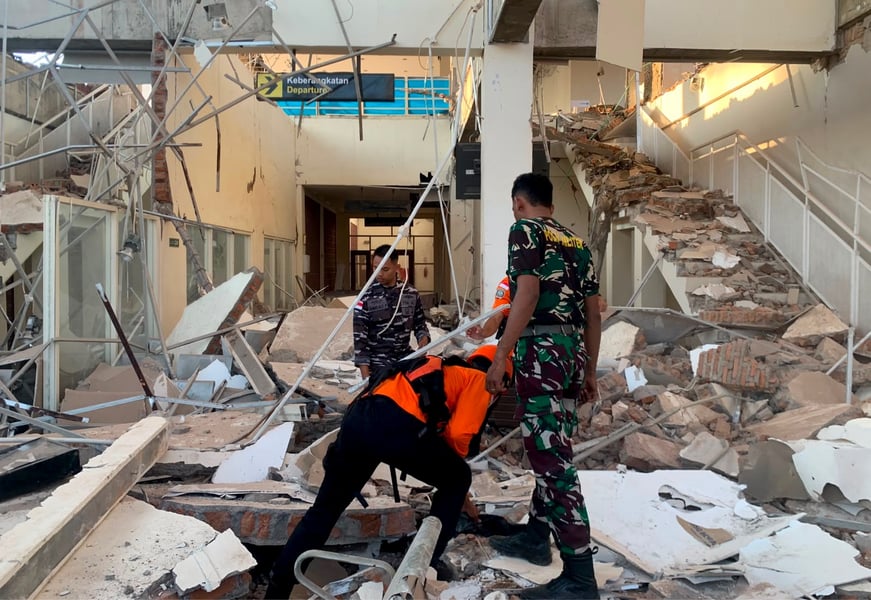

ISTANBUL – For most apartment owners in Istanbul’s aging western districts, urban renewal begins with a knock on the door and a contractor’s promise. What happens after that has, for years, been largely invisible. Payments flow, scaffolding goes up, and owners living in temporary housing hope for the best. The 2023 earthquakes, which killed more than 59,000 people across southeastern Turkey and exposed decades of unchecked construction, made that opacity feel like a liability that the country could no longer afford.
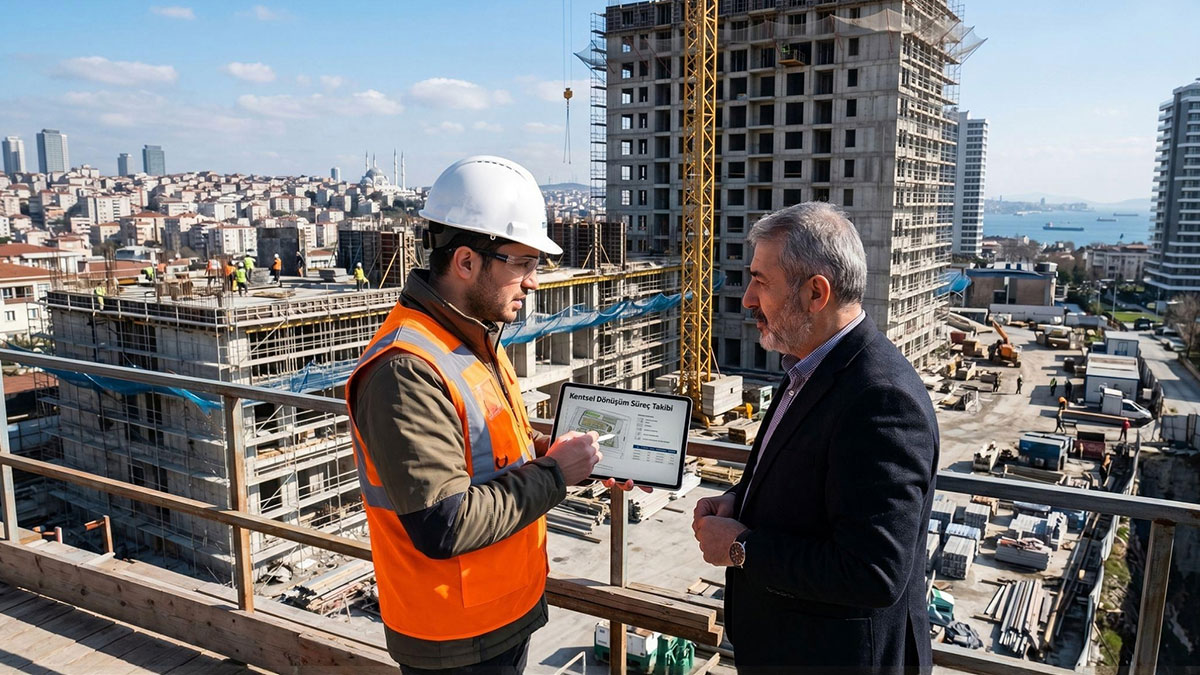
That is the problem a six-person startup called Evveko is trying to solve. Founded in Istanbul by civil engineers Yusuf Kara and M. Ebubekir Balkanlıoğlu and software developer Metehan Memişoğlu, the platform puts every stage of a building’s renewal process – zoning analysis, contractor vetting, construction milestones – into a single dashboard that apartment owners can monitor from a smartphone. The contractor logs each step; the owner sees it in real time; Evveko keeps the record. That three-part structure, which the company describes as its operating principle, is the company’s answer to the information asymmetry that has long defined Turkey’s urban renewal market.
Turkey enacted Law No. 6306 in 2012 to accelerate the replacement of seismically unsafe buildings, granting the Environment and Urbanization Ministry sweeping powers to identify risky structures and oversee their demolition and reconstruction. Enhanced after the 2023 Kahramanmaraş disaster, DWF Group’s January 2026 construction law review notes that the law now mandates stricter seismic assessments and offers expanded financing through the government’s Yarısı Bizden – or “Half From Us” – subsidy scheme, which covers a portion of construction costs for qualifying property owners. On paper, the framework is among the most ambitious urban resilience programs in the world. In practice, disputes between owners and contractors have stalled project after project, a pattern so persistent that a 2019 amendment empowered the ministry to intervene in stalled renewals directly.
Kara and Balkanlıoğlu each spent more than a decade working on urban transformation projects for local municipalities before converting their combined field experience into software in 2025. That background shapes what Evveko is and is not. It is not a property listings platform or a contractor directory; it is an end-to-end process manager that begins before a single building permit is filed. The platform offers apartment owners a free zoning analysis – calculating the floor-area ratio and footprint coefficients known in Turkish planning law as KAKS and TAKS – along with a feasibility study and, critically, a contractor screening. Contractors admitted to the platform must pass credit scoring through Indeks, Turkey’s commercial credit bureau, plus tax and trade registry checks and bank reference verification.
The owners pay nothing. Evveko charges contractors a monthly subscription fee and takes a commission of between 3 percent and 5 percent on completed projects. The company also sells regional franchise packages. Whether that revenue model can sustain a national rollout is an open question; the company has so far declined outside investment and is operating on its founders’ capital while enrolled in the Emlak Konut PropTech and Contech accelerator program, the BTM Istanbul incubator, and the Bilişim Vadisi technology zone – the Turkish government’s designated research-and-development corridor in Kocaeli.
Right now Evveko is active in seven districts of Istanbul: Bağcılar, Güngören, Bakırköy, Bahçelievler, Zeytinburnu, Esenler and Sultangazi. These are not the waterfront neighborhoods that attract global real estate capital. They are dense, middle-income residential areas built mostly in the 1970s and 1980s, exactly the kind of aging stock that seismic engineers have warned for years is disproportionately vulnerable to the overdue major earthquake that Istanbul is broadly expected to face. Engineers at Istanbul Technical University have previously estimated that more than 90,000 buildings in the city could collapse in a magnitude-7-plus event.

In Bağcılar’s Yıldıztepe neighborhood, Evveko is tracking a live renewal project on a 656-square-meter plot, with 55 percent of construction completed. Whether that single live project will scale to the thousands of buildings that Turkey’s law was designed to address remains the essential test. The company says it has no direct competitors – a claim that is largely accurate in the narrow sense that no other platform combines zoning analysis, feasibility modeling, contractor vetting and real-time construction tracking in one interface for the Turkish urban renewal market specifically. Listing portals and contractor directories exist in abundance; none of them were built to handle the legal and technical workflow of a Law No. 6306 renewal.
The technical build reflects the founders’ decision to write custom calculation engines for every sector-specific mechanism rather than adapting generic software. The backend runs on Flask and PostgreSQL; the frontend on React. A mobile application is available on Google Play, with PayTR payment integration, NetGSM messaging and Firebase push notifications built in. The Yarısı Bizden subsidy calculations – which require matching each property against current regulations that have changed multiple times since 2012 – are processed through a purpose-built engine rather than a static template, which the company says is necessary because the underlying rules shift with each ministerial update.
Early traffic data suggest the platform is finding an audience, if not yet at scale. Between January 27 and April 26, 2026, Evveko recorded 143,297 search impressions and 3,903 organic clicks, according to figures the company disclosed publicly. The platform’s brand search click-through rate of 32.4 percent, against an average ranking position of 1.05 for its own name, indicates strong intent among people who already know what they are looking for. The broader traffic numbers – a 2.72 percent click-through rate on 143,000 impressions – are consistent with a platform that ranks for high-intent informational queries without yet commanding brand-level recognition at scale. A transparency-focused content post published on April 20 drew 100,000 views within 24 hours and was saved 161 times, driving a 47 percent single-day spike in organic traffic.
The medium-term roadmap includes an AI-powered lead qualification system and a browser-based 3D simulation tool called YapıSim, designed to let owners visualize what a renewed building would look like before agreeing to demolition. That vision is considerably more ambitious than the current product. What Evveko has built so far is more modest – and more immediately useful: a structured accountability mechanism for a process that Turkey’s urban renewal law mandated but never technically equipped. As the government has committed to subsidizing half the cost of Istanbul’s most vulnerable buildings, the gap between legislative intent and street-level execution is exactly where a platform like Evveko finds its opening.
Whether a bootstrapped six-person team operating in seven districts can bridge that gap nationally is not yet knowable. Daily Sabah reported in November 2025 that Istanbul had completed the transformation of over 924,000 housing units, with another 263,000 under active construction or project work – figures that underscore the scale of the task and how far short any single platform must fall. Turkey has hundreds of thousands of buildings that meet the legal definition of seismic risk. The accountability layer they need exists, for now, in one small corner of one city. Istanbul’s window for meaningful building-stock renewal before the next major seismic event is not a comfortable one.