
BERLIN – The soldiers who would eventually crew the tank that France and Germany set out to build together in 2017 have not yet enlisted in their respective armies. By the time that tank — or its substitute — rolls off a production line, some of them may have retired. That timeline, already straining the patience of every defense contractor involved, came under fresh pressure this week when Armin Papperger, the chief executive of German defense group Rheinmetall AG, said publicly what insiders had been murmuring for months: France may simply walk away.
“There is always a risk, but nothing has been decided yet,” Papperger told the Welt am Sonntag newspaper in an interview published Saturday, speaking about the prospect of a French withdrawal from the Main Ground Combat System, or MGCS — the long-delayed Franco-German program to replace the German Leopard 2 and the French Leclerc battle tanks. His words landed within days of a separate announcement that Berlin and Paris had agreed to terminate their joint Future Combat Air System fighter jet project, a program conceived at the same moment and now definitively dead.
Two flagship defense partnerships, born from the same political ambition in 2017, now share the same cloud of doubt. The question moving through European defense circles is no longer whether these bilateral projects face difficulty — it is whether the Franco-German partnership, as a vehicle for delivering actual military hardware, is functionally broken.
The financial picture Papperger described is striking in its inadequacy. Over nearly a decade since the MGCS program launched, the four companies involved — Rheinmetall, Franco-German armor group KNDS, and French electronics giant Thales — have collectively received just 25 million euros, or roughly $29 million. For a program notionally targeting a combat system to carry European armies into the 2040s, that figure suggests less a development program than a holding pattern. Germany’s Chancellor Friedrich Merz, who announced the FCAS termination with French President Emmanuel Macron last week, has yet to say publicly what Berlin expects to do about MGCS.
France, according to Papperger, is preparing to cut its funding contribution by more than half from original projections — though he acknowledged no final budget decision has been made. The consequence of such cuts, he said, would be further delay in a program already moving at a crawl. “If you have less money available, you don’t get any faster, and we are already very slow,” he told Welt am Sonntag. The MGCS is not expected to reach operational status until the 2040s — a timeline Papperger described as “an incredibly long timeframe.”
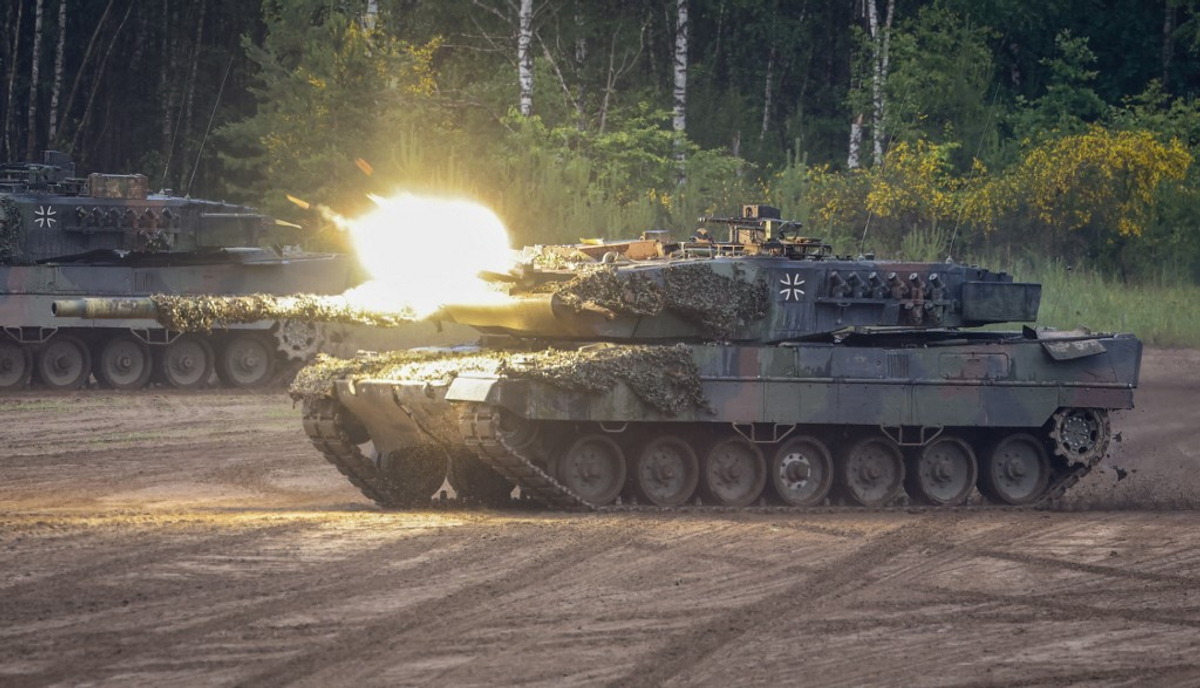
Rheinmetall has not waited for a resolution. Working alongside KNDS Deutschland — the German arm of the Franco-German joint venture — the company has spent approximately a year developing what the defense press informally calls the Leopard 3, an interim successor to the aging Leopard 2. The first units are expected to enter service in the early 2030s, a full decade before MGCS is scheduled to arrive. The implicit message is industrial: if the political partnership cannot deliver, the industry will work around it.
That parallel track reflects a broader anxiety within European defense industry circles about the cost of bilateral bureaucracy. The FCAS and MGCS programs were both conceived as political symbols as much as military requirements — expressions of a Franco-German “axis” that would anchor European strategic autonomy. A German industry consortium led by Airbus has already submitted a post-FCAS fighter jet proposal to Berlin, underscoring how quickly national industrial alternatives emerge when bilateral frameworks collapse.
The MGCS governance structure has separately generated its own tensions. KNDS, the joint Franco-German defense group that sits at the center of the ground program, has faced internal disagreements between its French and German components — disputes that sources familiar with the negotiations described to Reuters as a recurring source of friction. Whether those governance disputes can be resolved before France makes its final budget decision remains unclear.
What is clear is that Europe’s largest bilateral defense relationship is producing a pattern. FCAS collapsed after years of disputes between Airbus, Dassault, and their respective governments over work-share arrangements and intellectual property rights. MGCS has moved so slowly, and received so little funding, that its own industrial participants cannot say with confidence whether it will survive. Papperger, asked directly whether the program would exist at all, offered no reassurance: “Today I cannot say whether MGCS will even happen.”
The stakes extend beyond the two countries. Germany and France together account for a substantial share of NATO’s European land forces, and the Leopard 2 and Leclerc fleets they rely on are aging. A generation of European armor modernization, already delayed, now faces the prospect of its primary framework dissolving into national programs — or a scramble for alternative multilateral arrangements. Whether that scramble produces something faster or merely something different is a question neither Paris nor Berlin has yet answered publicly.
France, for its part, has not confirmed the funding cut figures Papperger cited or stated its position on the program’s future. The absence of a French government response leaves Rheinmetall’s warning as the clearest signal yet — from inside the program itself — that MGCS may be heading for the same exit as the jet that was supposed to fly alongside it.