
YAKIMA COUNTY, Wash. – The campers at Rimrock Lake noticed the smoke before anyone told them to leave. By early afternoon Saturday, the Naches Fire Department was already on the scene, and the road system along the south side of the lake had been shut down — a Marine Corps F/A-18 Hornet had just slammed into the forested mountains above them.
The pilot, whose identity the Marine Corps has not released, ejected before impact and survived with minor injuries, the Yakima County Sheriff’s Office confirmed. He was recovered by sheriff’s personnel and transported to a nearby hospital. What the Marine Corps left unsaid — in a terse three-sentence statement — was almost everything else.
Marine Aircraft Group 11, 3rd Marine Aircraft Wing, described the midday incident as a “non-fatal aviation mishap” involving an F/A-18 Hornet that was conducting routine training approximately 55 miles southeast of Seattle, CBS News reported. The wing is based at Marine Corps Air Station Miramar in San Diego, California. The cause of the crash is under investigation, the Corps said, a process that typically takes months. “To preserve the integrity of the investigation, no additional details are available at this time,” it added.
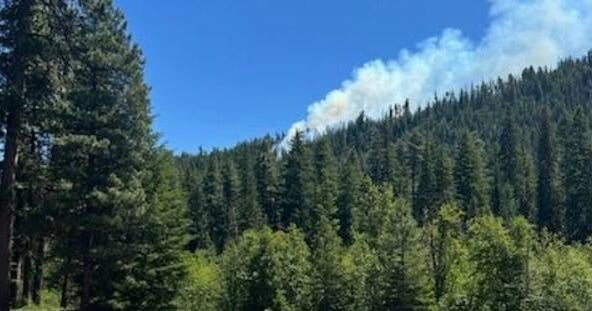
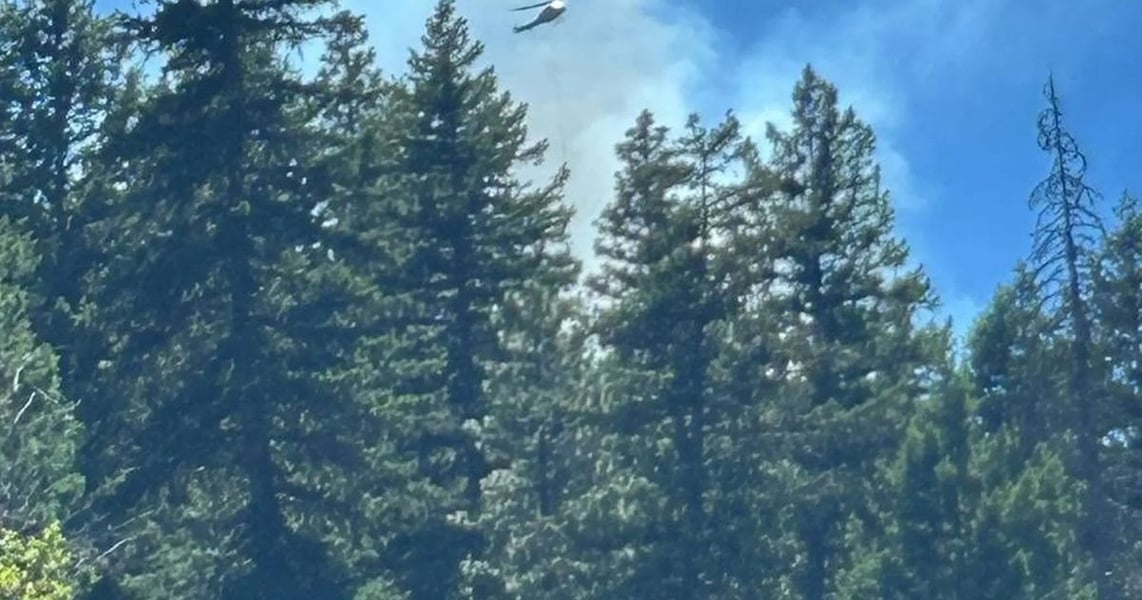
The wreckage ignited what authorities designated the Pine Tree Fire, which the National Interagency Fire Center measured at two acres as of Saturday evening, with containment at 30 percent. It burned just off Forest Road 1241 inside the Okanogan-Wenatchee National Forest, a 4-million-acre expanse that stretches across north-central Washington. Helicopters from the U.S. Forest Service joined Naches Fire Department engines in suppressing the blaze, and department crews worked to protect the Bear Creek cabins before clearing the scene. A water tender was left on site and was expected to return Sunday for mop-up operations.
The Rimrock Lake area sits along Highway 12, roughly ten miles east of White Pass. On a June weekend, the lake draws campers, hikers, and backpackers — the Pacific Crest Trail crosses White Pass a few miles from the crash site. First responders evacuated a campsite. Law enforcement closed several roads. By late afternoon, the human emergency had been contained; the ecological one was still smoldering.
What the Marine Corps did not explain was why an F/A-18 from a San Diego-based wing was conducting training flights over the mountains of Yakima County. The Hornet is a supersonic carrier-based multirole fighter, designed for naval operations and built for combat. Routine training over national forest terrain is not unusual for Marine aviation units — the Pacific Northwest offers uncontrolled airspace and varied terrain that ground-based ranges cannot replicate — but the proximity to a popular recreation area will almost certainly be part of any inquiry.
The accident comes at a moment when the U.S. military’s relationship with the forests of the American West is drawing sharper attention. Congress has been debating measures that would open roadless sections of the national forest system to new development, a move that forest researchers and fire scientists warned could accelerate wildfire risk in the very terrain where crews were now fighting a Marine-ignited blaze. At the same time, wildfires have already erased four years of clean-air progress across the United States, and the summer fire season had barely begun when the Hornet went down.
Saturday’s crash is not the first time the mountains east of White Pass have swallowed a military aircraft. In October 2024, two Navy aviators based at Whidbey Island were killed when their EA-18G Growler — a radar-jamming variant of the F/A-18 — went down on a routine training flight in the same general area, the Spokesman-Review reported. The two crash sites are approximately 15 miles apart. Whether that prior incident had any bearing on Saturday’s flight path is not something the Marine Corps addressed.
There is no indication at this stage that anyone on the ground was injured. The Marine Corps did not say whether the pilot had declared an emergency before ejecting, whether any ground contact was attempted, or whether the aircraft experienced a mechanical failure or something else entirely. Yakima County Sheriff’s Office dispatchers, reached by local reporters, referred inquiries to the military.
The 3rd Marine Aircraft Wing did not respond to requests for additional comment by Saturday evening. Whatever the investigation ultimately finds, the pilot’s ejection seat worked. That, for now, is what the Marine Corps is prepared to say — and what the Naches Fire Department’s water tender, parked overnight in the mountains above Rimrock Lake, suggests is not quite the end of it.