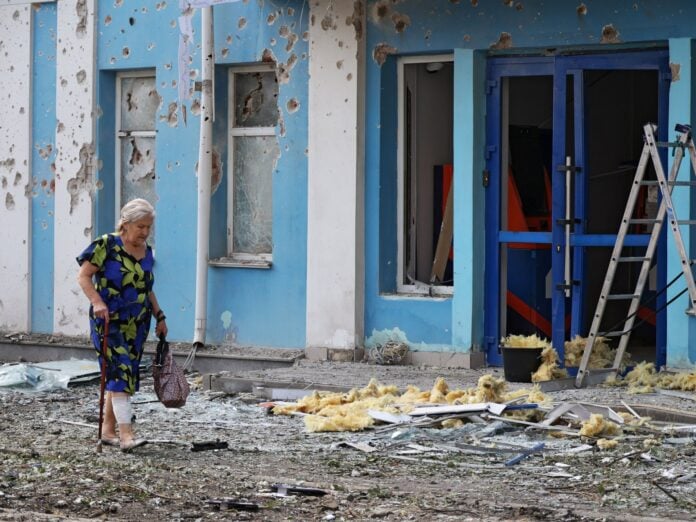

KYIV — The Ukrainian SBU security service, the Special Operations Forces (SSO) and Ukraine’s military-intelligence directorate (HUR) announced on Saturday that a coordinated overnight drone raid had struck the Tamanneftegaz oil and gas terminal at the village of Volna in Russia’s Krasnodar Krai, on the eastern shore of the Kerch Strait. The terminal, which the Ukrainian services described as “the largest liquefied hydrocarbon transshipment complex in southern Russia,” lost five fuel storage tanks, two oil loading racks, an internal truck park, multiple warehouses and a Russian air-defence position that had been deployed to guard it. Krasnodar regional Governor Veniamin Kondratyev confirmed on Telegram that one person had been killed and three injured. The strike was reported the same day by Al Jazeera from Associated Press and Reuters wire copy.

The SBU’s published statement on Saturday delivered the strategic rationale in two sentences. “Oil revenues are turned into missiles, drones, and ammunition used to attack Ukrainian cities,” the service said. “Therefore, the SBU will continue systematically depriving the Russian war machine of resources to wage war.” The pattern the statement codified is the one Ukrainian deep-strike operations have been executing since the Kursk salient operation of August 2024 and that, in 2026, has accelerated. The Kotovo oil-processing complex in Russia’s Volgograd region, struck the Friday before, was the previous strike. The Tuapse refinery, the Slavyansk-on-Kuban hub and the Atlas Oil tank farm in Krasnodar Krai are the ones Ukrainian targeting cells have been observed studying in spring 2026 open-source imagery.
The economic context for the strikes is the part that has, on Brussels and Washington readings, shifted the calculus. Russia’s federal budget for 2026, ratified by the Duma in December 2025, is fifty-one percent financed by oil and gas revenues, the highest share since the 2014 sanctions began. The Druzhba pipeline to Hungary and Slovakia continues to flow. The Turkish Stream pipeline through the Black Sea to sürgil-1 in southeastern Turkey continues to flow. The maritime export route from Novorossiysk, Tuapse and the new LPG terminal at Volna is the one Ukrainian deep strikes have, since October 2024, deliberately concentrated on. The Kremlin’s revenue line, on the Russian Ministry of Finance’s own February 2026 numbers, is about $40 billion below the budget assumption for the year.
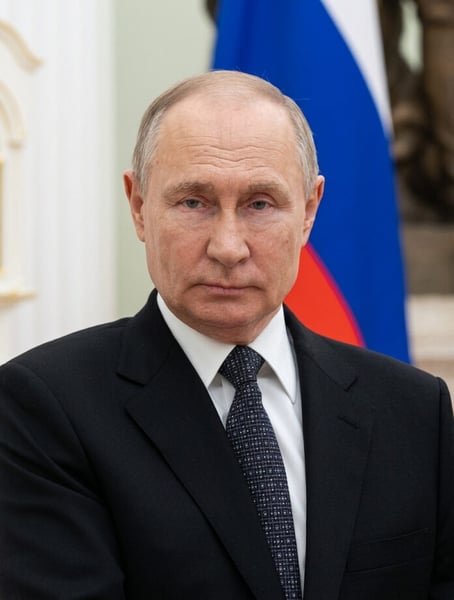
President Vladimir Putin, in a Saint Petersburg International Economic Forum address last week, acknowledged the campaign in his characteristic phrasing. “They are causing us damage,” he said. “We will recover quickly and escalate.” The recovery is the part the Tamanneftegaz operator, Atomenergoprom-affiliated Tamanneftegaz LLC, said on its Saturday afternoon Telegram channel was “under way.” Reconstruction of an oil loading rack, on Russian energy-industry estimates published Saturday by the Moscow business outlet Kommersant, takes between four and seven months. Reconstruction of the air-defence position struck alongside it takes considerably less. Whether the position will be re-staffed at full strength is, for the Russian armed forces in the Krasnodar military district, a separate question that the chief of staff in Rostov-on-Don has not, on Saturday, answered publicly.

The strikes also land inside a diplomatic week in which Russia’s energy revenues are the lever for two separate negotiations. The first is the G7 summit France hosts in Évian-les-Bains from June 15 to 17, at which Canadian Prime Minister Mark Carney told Trinity College Dublin on Saturday that the post-Cold War order was undergoing “a global rupture, not a quiet transition” and that Hungary’s withdrawal of its veto on Ukraine’s EU accession had now unblocked the European Council’s enlargement file. The second is the U.S.-Iran ceasefire framework that President Trump claimed Saturday on Truth Social would be signed Sunday and that, if it is, would reopen the Strait of Hormuz to commercial shipping. Both negotiations sit on top of a Brent crude price that the Tamanneftegaz strike, in Saturday afternoon trading, did not visibly move.
Hungary’s policy reversal under Prime Minister Péter Magyar’s centre-right Tisza government — the same government that has, in eight weeks, unfrozen €16.4 billion of Hungarian EU funds and dispatched the prime minister to Kyiv with €120 million in bilateral budget support — also closes one of the parallel revenue and political channels Moscow had counted on. The Hungarian withdrawal from Orbán-era Russian energy contracts (Paks II, Turán gas), still procedurally incomplete, has nonetheless changed the European Council’s voting arithmetic on enlargement. The Tamanneftegaz strike, on this reading, is the kinetic complement to the diplomatic one.
For Ukrainian President Volodymyr Zelensky, who travelled overnight from Kyiv to Brussels on Saturday for a pre-G7 NATO-Ukraine Council session, the deep-strike doctrine is the strategic pillar of the campaign that has, on his summer 2026 narrative, replaced the territorial counteroffensives that were the strategic pillar of 2023. The territorial line in the Donetsk salient and around Pokrovsk remains static. The economic line, in Krasnodar Krai, in Volgograd, and along the Volga refining belt, is the one Kyiv has decided it can move on.
For the Russian Black Sea Fleet, whose operational footprint at Novorossiysk has been forced steadily eastward since the 2024 destruction of the Crimean naval headquarters at Sevastopol, the Volna strike repeats a problem the fleet’s command in Rostov-on-Don has not been able to solve. The Russian air-defence umbrella over Krasnodar Krai has been augmented twice since the start of the year. The Tamanneftegaz position was the one most recently reinforced. It was the one struck.
The pattern Saturday’s SBU statement codified — the systematic deprivation of the Russian war machine of its export revenue — is the kind of strategic communication Western military analysts have, since the Ukrainian command’s October 2024 publication of its Donetsk Concept of Defence, identified as Kyiv’s most explicit theory of victory in 2026. The Kremlin’s response is escalation. The pattern’s first test will be whether Russian retaliation, in the form of the missile and drone barrages that have hit Kyiv, Dnipro and Kharkiv with rising frequency since May, is, in itself, financeable on a 51-percent oil-gas budget that the Ukrainian deep strikes are now methodically eroding. Saturday’s tanker farm at Volna is one of the answers in real time.