
SAN FRANCISCO – Four days in, Ziwen Xu had already blown through three-quarters of his weekly AI usage limit. Not in a week. In a day.
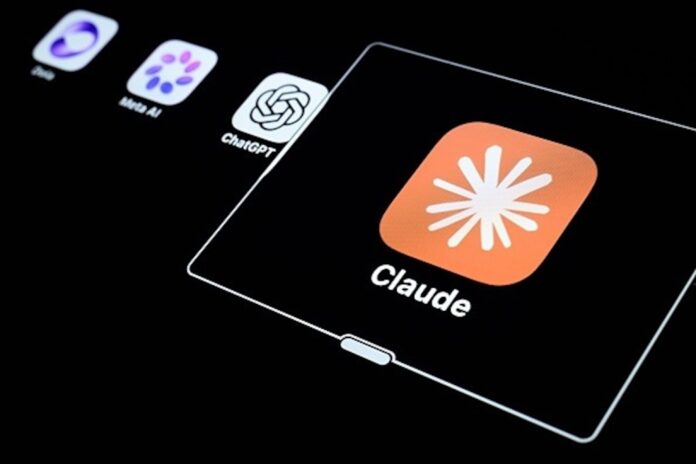
Xu, the 25-year-old founder of AI agent startup Hyperecho, announced on June 10 that he was attempting to vibe code his own version of Grand Theft Auto VI – the game Rockstar Games has spent roughly a decade and what credible estimates place at anywhere between $1 billion and $3 billion building. His tool of choice was Claude Max 20x, Anthropic’s most powerful AI model available to consumers. His deadline: beat the real GTA 6 to its projected November 19 PlayStation 5 launch. His honest assessment of the project: “Ambitious, probably stupid, doing it anyway.”
That last sentence has become something of a motto for the vibe coding movement. The term, coined by OpenAI co-founder Andrej Karpathy, describes a development approach where programmers offload the actual code generation to AI, steering the output through natural language prompts rather than manual syntax. The technique has its champions – Jack Dorsey vibe coded at least two apps last year – and its skeptics. Karpathy himself, in a striking self-qualification, has since said that using AI agents in this mode is “net unhelpful.” Xu’s experiment is now the most visible live test of who is right.
The stakes of that test are not trivial. Grand Theft Auto V, the game Xu is trying to approximate, sold more than 230 million copies worldwide and generated over $6 billion in revenue – making it the most profitable entertainment product ever made, ahead of any single Star Wars film or any individual Pokemon release, according to GamesIndustry biz. The sequel carries expectations commensurate with that legacy. Xu is not under any illusion that he will match it. What he is trying to establish is something narrower and, in its own way, more consequential: whether an AI model can compress years of specialized game development work into months of agentic iteration by a single founder with a credit card.
The answer, so far, is complicated.
The early footage Xu posted on X was exactly what you would expect from day one of an AI-assisted game: a 3D blue oval bouncing between gray geometric blocks on a featureless plane, running on the Godot engine. By day two, there was a recognizably human character moving through what approximated an urban landscape, populated by NPCs and rudimentary vehicles. Day four brought car models with actual traffic logic, basic weapons systems, and improved performance. The project’s code is public on GitHub, and Xu has invited anyone who can model, compose music, or design levels to contribute – an implicit acknowledgment that vibe coding, however capable, is not a solo instrument for a project of this scope.
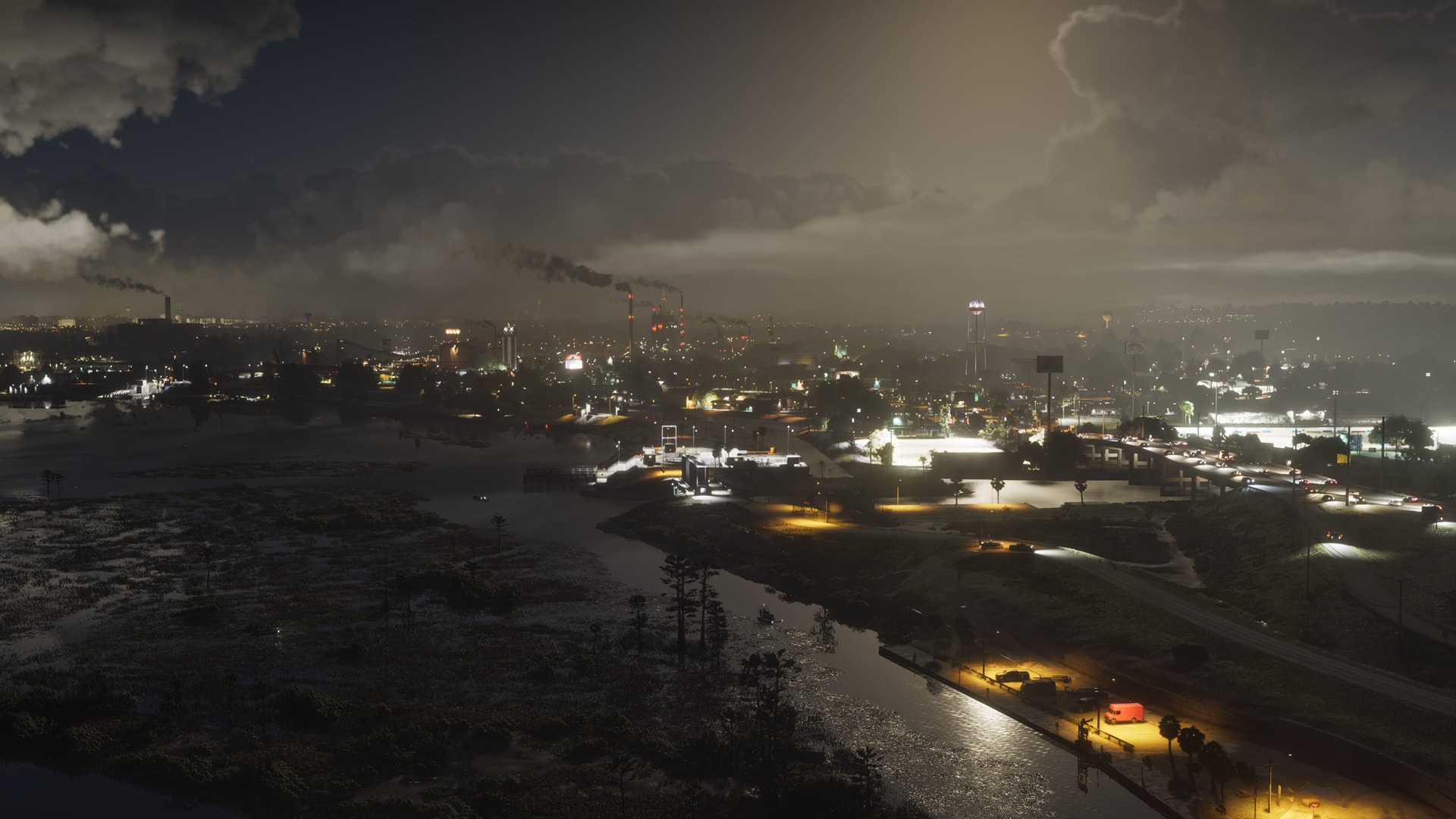
The AI also made some revealing errors. At one point, it generated Los Angeles-style high-rise skyscrapers for what is supposed to be a Vice City-inspired Florida setting. The model, in other words, defaulted to its training data’s most statistically common “American city” rather than the specific geography the prompt implied. That gap – between what a language model infers and what a human designer intends – is precisely where the vibe coding debate lives.
The project was inspired, at least in part, by a challenge floated by AI investor Matt Shumer, who suggested that someone set up a Claude run with the prompt: “loop until you’ve created a GTA-VI-caliber open-world game.” The framing was part provocation, part genuine thesis – a question about where the ceiling actually is when a capable AI model is pointed at a large, well-defined creative target and told not to stop. Xu took it seriously enough to upgrade to Claude Max 20x specifically for the task, burning through 75% of the weekly allotment in the first 24 hours before adjusting his usage to sustain the project over time.
That burn rate is the detail every AI researcher in the comments sections seems most interested in. Claude Max 20x is not a cheap subscription, and exhausting it at that pace raises questions about what the actual economics of AI-assisted game development look like at scale. Rockstar’s alleged $1 billion to $3 billion budget begins to seem less like excess and more like engineering reality when set against what Xu is consuming to produce a rudimentary open-world prototype.
Xu has called for human collaborators – modelers, composers, level designers, lore writers. That call is revealing in itself. The vision of vibe coding as a replacement for studios turns out, in practice, to look more like a small distributed team with an extremely fast intern. Which is still something, just not the thing the most ambitious claims in the AI coding space have suggested.
Meanwhile, Rockstar is in its own countdown. People familiar with development have said engineers have been working until 3 a.m. to finalize the title ahead of the November release. The company has reportedly deployed internal disinformation – sharing false details with select employees to trace the source of leaks – a strategy that appears to have worked. Significant leaks have dried up. Sources have told gaming outlets that Trailer 3 could arrive in late June or early July, with a pre-sale campaign following shortly after. A PC version, originally hinted for February 2027, remains unconfirmed.
There is also the legal dimension, which no one covering the story seems eager to address directly. Take-Two Interactive, Rockstar’s parent company, has a well-documented history of aggressive intellectual property enforcement. A project explicitly positioned as a GTA 6 clone, built on recognizable game mechanics, and sharing its code publicly on GitHub is not obviously safe from a cease-and-desist, The Verge has previously noted in similar cases. Xu has not disclosed whether he has received any legal communication from Take-Two.
As of this writing – day five – the project is still live. Whether it survives long enough to answer the question Xu started with may depend less on Claude’s capabilities than on a lawyer’s timeline. That uncertainty is, in the end, its own kind of answer about where AI-generated software and IP law currently stand relative to each other: two systems accelerating in the same direction, neither quite ready for the collision.