
CUPERTINO – Anyone waiting on an M6 Pro or M6 Max MacBook Pro just had their timeline extended by roughly a year. Apple is scrapping those chips entirely, pivoting to a next-generation M7 chip line it has been redesigning around on-device artificial intelligence. Bloomberg’s Mark Gurman reported the change Thursday, citing Apple pulling forward the M7 lineup to meet demand for more capable local AI models sooner than originally planned.
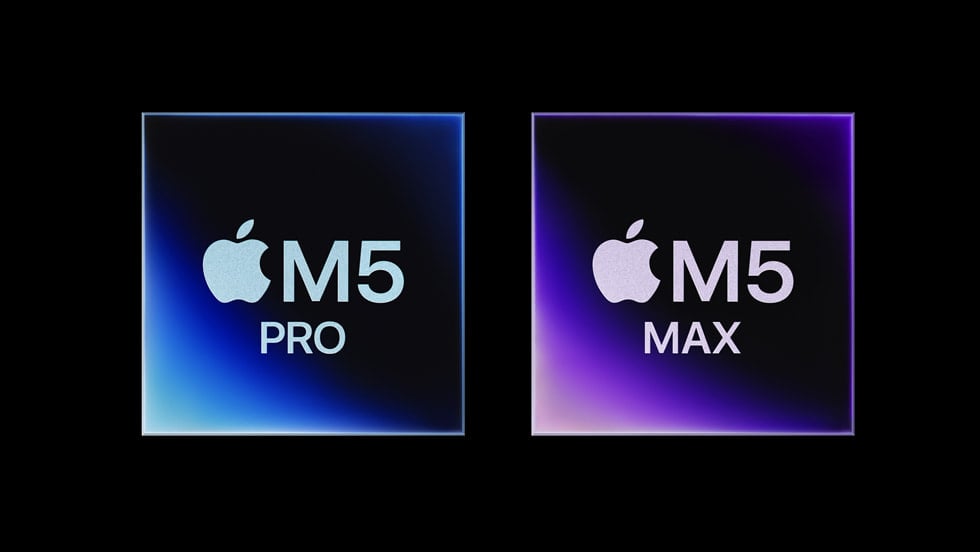
The cancellation covers the M6 Pro, M6 Max, and M6 Ultra chips. An entry-level M6 for base MacBook Pro models is still on track for this year, and Apple is also planning a Mac Studio refresh using the M5 Ultra before the M7 generation arrives. Higher-end MacBook Pro models, the Mac Studio with advanced chips, and the Mac Pro will now wait for M7 Pro, M7 Max, and M7 Ultra variants. The M7 Pro and M7 Max are targeting late 2027; the M7 Ultra is not expected until 2028.
That represents a notable departure from Apple’s chip cadence. The M4 Max landed in November 2024. If M7 Pro arrives in late 2027 as Bloomberg projects, the gap between M4 Max and the next Pro/Max chip generation for high-end Macs approaches three years. Apple Silicon has operated on an annual or near-annual schedule since 2020, and Apple has not explained why the M6 Pro was dropped rather than delayed.
The M5 Ultra Mac Studio, expected this year, is the most immediate alternative for Mac Studio users on M4 Ultra hardware. Bloomberg indicates it will carry around 36 CPU cores and 80 GPU cores, with unified memory potentially reaching 768 GB. That is a meaningful upgrade but does not carry the AI-specific architectural work Apple is building into the M7. Apple did not respond to Bloomberg’s request for comment.
What Apple appears to be signaling through this roadmap shift is that the next Mac cycle is an AI cycle, not a performance cycle. The M7 is projected to deliver 240 GB/s of memory bandwidth, up from 153 GB/s on the M5 Max, as Engadget reported. Memory bandwidth is the practical ceiling on how fast a chip can run large language models locally. A system at 240 GB/s can feed a model tokens meaningfully faster, allowing it to handle more capable models without offloading computation to a remote server. Whether that bandwidth figure required canceling the M6 Pro or merely accelerating the schedule, Apple has not confirmed.
The company has not specified what internal changes will deliver the M7’s AI gains. The Neural Engine in Apple Silicon scaled from 0.6 TOPS in 2017 to well above 38 TOPS in the M4 generation, according to Apple’s published figures. If the M7 requires a fundamental redesign of the Neural Engine, memory controller, or both, that would explain why Apple chose to skip an intermediate chip release rather than ship it alongside a standard update cycle. Apple’s chip announcements have historically withheld architectural detail until hardware is in production; what distinguishes the M7 from what an M6 Pro would have delivered, in concrete terms, will not be known until the chip ships.
The competitive context is readable. Qualcomm’s Snapdragon X Elite, which powers Microsoft’s Copilot+ laptops, made on-device AI processing the defining benchmark for premium Windows hardware. Microsoft’s Recall feature, real-time translation, and local image generation gave Windows a visible AI story that Apple’s M-series chips have technically outperformed on TOPS figures, but not yet translated into equivalent software availability. Alongside the OpenAI and Broadcom Jalapeño chip, which claimed to halve AI inference costs at scale, the market signal pointing toward on-device processing as the next hardware battleground is unmistakable. Pulling forward the M7 to outpace Qualcomm’s next generation before it ships would fit that competitive logic.
The TSMC dimension matters. The M6 was likely designed for TSMC’s N3E (3nm) process, the same node as the M4 family. The M7 is expected to move to TSMC’s N2 (2nm), which offers more transistor density and better performance per watt. Apple’s A22 Pro roadmap for 2028 iPhones already points to TSMC’s 1.4nm node, indicating Apple is sequencing its product lines around node transitions. If N2 yields at TSMC are healthy enough to support MacBook Pro-scale production by late 2027, skipping N3 in the Mac lineup gives Apple a larger architectural step than an M6 Pro would have provided.
The question Bloomberg’s report leaves open is the one most directly relevant to existing Mac users: which Apple Intelligence features, if any, will require M7 hardware to run. Apple has already gated certain capabilities by chip generation, and the gap between today’s M4-era machines and the M7 is about to be wider than usual. The MacBook price increases Apple implemented this week, attributed to AI-driven memory shortages, read differently in that frame. A forced upgrade cycle driven by AI feature gating would be a harder story for Apple to explain to customers who bought a premium Mac in 2024 or 2025.
Gurman’s report establishes the roadmap. What exactly the M7 will do that an M6 Pro could not, in specific architectural terms, Apple has not said. Two years is a long time to wait for that answer.