
WASHINGTON — When Senate Republicans filed into their party lunch Wednesday, four of them had voted the day before to direct the president to withdraw American forces from Iran. By the time they left, after a confrontation multiple senators described as a shouting match, two of those four had changed their minds. Hours later, the White House sent Congress a bill: $87.6 billion for the war those senators had just declined to limit.
The spending request, submitted by White House budget director Russell Vought in a letter to House Speaker Mike Johnson, asks Congress to appropriate $67 billion for the Defense Department’s Iran war costs, $11.1 billion in economic assistance for American farmers, $1.4 billion for the Ebola outbreak in Central Africa, and $500 million for construction projects in and around Washington, D.C. The Pentagon’s share covers what the administration described as “military personnel and readiness expenses, operational costs to rebuild stocks” for Operation Epic Fury, the U.S.-Israeli campaign that opened February 28.
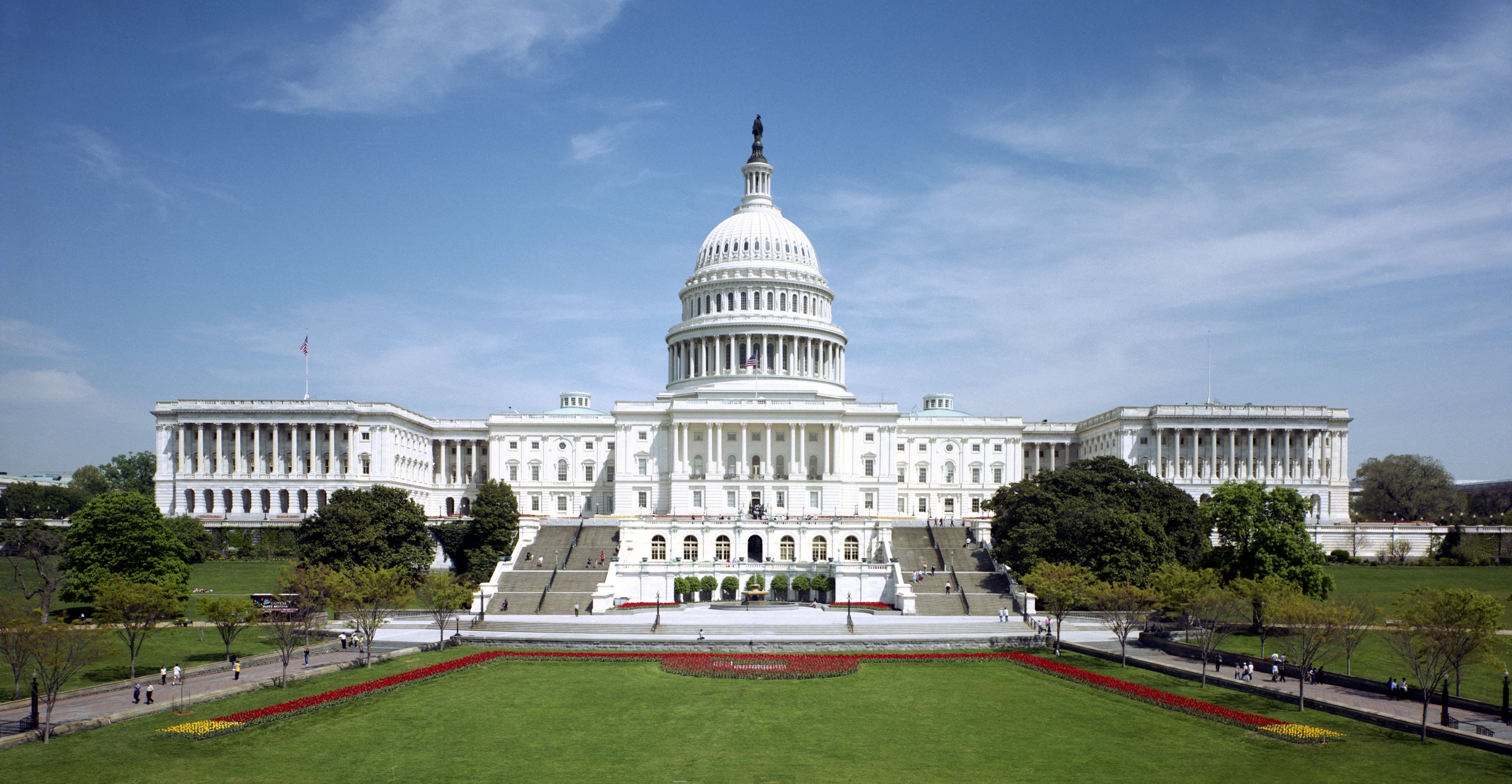
The timing was not coincidental. The same afternoon Trump was in the Capitol confronting his own caucus over the war powers vote, his budget office was preparing to formally ask that legislature for the largest single Iran war appropriation of the conflict.
Inside the lunch, Trump arrived visibly angry and singled out Louisiana Senator Bill Cassidy by name. The confrontation became loud enough that the senator sitting next to Cassidy had to pull him back into his seat. Cassidy told the president: “You have not told the American people what’s going on. It was supposed to last four weeks. It’s lasted four months. Our original objectives have not been achieved, and I want to know what’s going on.” By Wednesday evening, ABC News reported that Cassidy had posted on X that Vice President JD Vance and special envoy Steve Witkoff had given him a “thorough briefing” at the White House addressing many of his concerns. He did not say whether his position on limiting the president’s war authority had changed.
Two other Republicans who had supported the resolution changed their votes. Their reversal killed the measure, handing Trump the outcome he had already dismissed as “meaningless.” He then submitted a bill to pay for the thing those senators had tried to limit.

The cost figures inside Wednesday’s request tell a story the administration has not told publicly. Pentagon officials testified in April that the Iran war had cost $25 billion to that point. The Iran War Cost Tracker, which aggregates open-source disclosures, placed the total at $113.3 billion through June 16. A Fortune analysis incorporating personnel costs, equipment replacement, and debt service put the real figure approaching $200 billion. The administration’s $87.6 billion supplemental, for a war officially priced at $25 billion two months ago, implies either the April figure was understated or that another $62 billion in operational costs accumulated in under eight weeks. The White House has not reconciled those numbers, PBS News reported.
Congressional Democrats rejected the request as soon as it arrived. Senator Patty Murray, ranking member of the Senate Appropriations Committee, said Trump had launched “a reckless and costly war with Iran – without authorization from Congress.” Senate Minority Leader Chuck Schumer said Trump “now wants Congress to hand him tens of billions more to paper over the damage – while families are still paying higher prices.” Those higher prices are the Strait of Hormuz’s domestic legacy, the accumulated consequence of months of disruption to the shipping lane that handles roughly one-fifth of global oil supply, keeping gasoline costs above four dollars per gallon for American households that had no vote on whether the war started.
The war’s political liability had already surfaced before Wednesday’s lunch. The conflict entered its fourth month while South Carolina Republicans were deciding whether Lindsey Graham, the Senate’s most consistent advocate for striking Iran, deserved another term. Graham survived his primary by 59 percent after spending $27 million and holding Trump’s endorsement, but his opponents made the war the argument in the campaign’s final week and came closer to forcing a runoff than any Graham challenger in two decades. That a war hawk’s hawkishness threatened his own primary told Senate Republicans something about the political cost of association with the conflict. What Wednesday’s lunch confirmed is that the same association carries a price when the president delivers it personally, with volume.
The war’s oil shock has worked through the broader economy as well. Eastern Herald tracked the moment oil markets absorbed a fresh blow as US strikes on Iran jolted crude futures after a brief period of relative calm, resetting the commodity price level that feeds through to inflation data and monthly household energy costs. The Federal Reserve is watching the same channel.
What the $87.6 billion request cannot resolve is the question Cassidy raised in the room and then, under White House briefing, publicly softened: what are the objectives, and when does the United States plan to achieve them? The original framing was that strikes would neutralize Iran’s nuclear capability within weeks. That framing is four months old. A 60-day diplomatic framework was signed on June 17, but its terms remain unpublished, and the Geneva talks last week produced a public dispute between Iran and the United States over what the deal actually commits each party to. The $87.6 billion bill is the financial answer to the senator’s question. The strategic answer has not arrived.
Whether the supplemental clears a Senate floor vote is genuinely uncertain. Democrats will oppose it as a bloc. Eight Republicans supported limiting the president’s Iran authority this week, some holding that position through Wednesday’s lunch and some not. The margin for passage in a chamber where 60 votes are needed to advance appropriations is not obvious, and the White House has not said how it intends to assemble them. The war started without a congressional vote. Paying for it may require one the administration does not yet have.