
BOISE – Every artificial intelligence data center in the world is waiting for memory chips that Micron Technology cannot build fast enough. That scarcity just produced the most profitable quarter in the history of the memory industry.
Micron Technology Inc. (MU) reported fiscal third-quarter revenue of $41.46 billion on Tuesday, up 346 percent from $9.30 billion a year earlier and roughly $6.2 billion ahead of Wall Street consensus. Gross margins reached a record 84.9 percent. Earnings per share came in at $25.11, against a consensus estimate of $20.28. The numbers represented not just a beat against expectations but a discontinuity: no memory manufacturer has ever recorded margins or revenues at this scale in a single quarter.
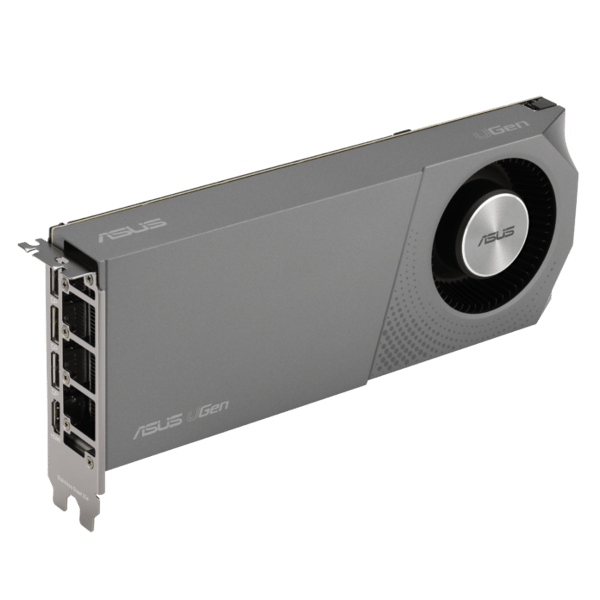
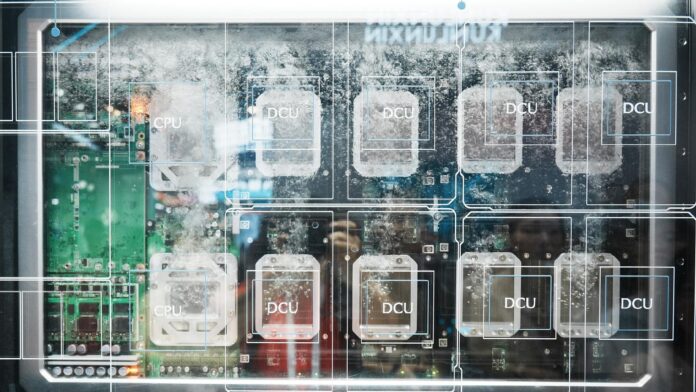
The product driving those figures is high-bandwidth memory, the specialized chip stack mounted directly onto Nvidia, AMD, and Google AI accelerators. Without it, the processor cannot access data at the speed modern artificial intelligence applications require. HBM is what makes a data center an AI data center rather than an ordinary server farm. Chief executive Sanjay Mehrotra told analysts on Tuesday’s call that Micron can currently fulfil only between half and two-thirds of customer demand for that product. The gap is not a production error. It is what the global buildout of AI infrastructure looks like from the supply side of the equation.
The shortfall is structural rather than temporary. Micron’s entire 2026 production of high-bandwidth memory was committed under fixed-price contracts before the quarter began. When analysts asked Mehrotra whether the company had a timeline for when supply would be able to catch up with demand, his answer was brief: “We have no line of sight on that.”
The contractual architecture locking in that demand is itself without precedent in the memory industry. Fourteen of 16 strategic customer agreements Micron has in place carry cumulative minimum revenue commitments totaling approximately $100 billion over their remaining terms, take-or-pay arrangements with pricing floors that guarantee margins above any level the company has previously recorded. Looking ahead, Micron guided for fiscal fourth-quarter revenue of approximately $50 billion, against analyst estimates of $43.58 billion and a year-earlier figure of $11.3 billion. Capital expenditure for the quarter is projected at roughly $10 billion, 12 percent above consensus, with incremental investment targeting HBM, advanced DRAM, and advanced packaging capacity.
Micron’s shares rose 15 percent in Thursday’s session, as CNBC reported, lifting the company’s market capitalization past $1 trillion. The move reflects something beyond a single earnings beat. The market appears to be repricing Micron from a cyclical memory manufacturer, the kind of company subject to boom-and-bust patterns that have defined the semiconductor industry for decades, into a contracted AI infrastructure supplier with demand locked in for years ahead. Those are different businesses, and Thursday’s session suggests investors have begun choosing between them.
The scale of what Micron is earning is intelligible only in contrast to what the same chip shortage is costing everyone else in the supply chain. Apple raised prices on its Mac and iPad lineup by up to $300 this week, with chief executive Tim Cook calling the memory situation a “hundred-year flood.” Xbox prices have risen three times in fourteen months at Microsoft, each increase citing the same component dynamics. The gap between what AI data centers are willing to pay for memory and what consumer hardware manufacturers can absorb is exactly the gap that produced Micron’s 84.9 percent gross margin. A shortage that costs a consumer $200 more for a laptop generates $300 per share in earnings for the company that makes the chip.
Micron, SK Hynix, and Samsung Electronics together control approximately 95 percent of global DRAM production and essentially all current high-bandwidth memory manufacturing capacity. China’s chipmakers have not entered the HBM market at scale, constrained by export controls limiting access to the extreme ultraviolet lithography equipment the manufacturing process requires. As Bloomberg noted, that constraint leaves the global AI industry dependent on three companies operating in two US-allied nations: a supply chain architecture that is, for the moment, both a Western strategic advantage and a concentrated point of fragility the industry has not had reason to stress-test.
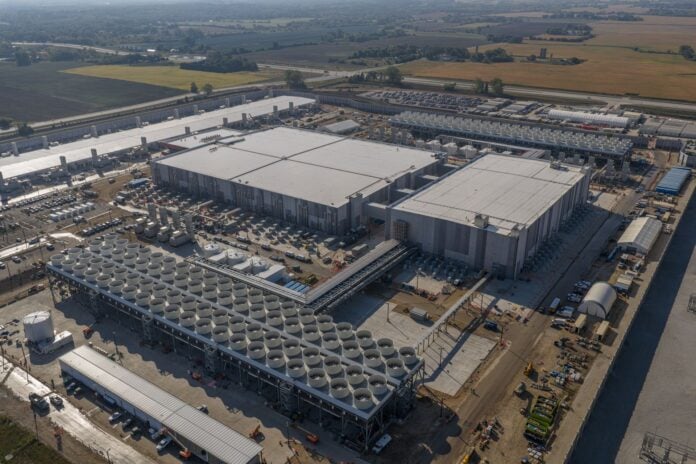
Micron has outlined roughly $200 billion in planned capacity expansion, with fabrication facilities under construction in Boise, Idaho, in Clay, New York, and at sites in Japan and Taiwan. Mehrotra told analysts those investments will not deliver meaningful high-bandwidth memory output until fiscal 2028. Whether the applications consuming memory at this rate today will require the same volume two years from now, or more, is a question the supply chain must bet on without being able to answer. The investment is a commitment to a trajectory, not a confirmed destination.
A year ago, Micron’s quarterly revenue was $9.30 billion. In the twelve months since, $32 billion in quarterly revenue was added to that baseline, an increase larger than the entire annual revenue most memory companies have ever reported in a full year. The CEO cannot say when the demand stabilizes. What Tuesday’s report makes clear is that, for now, stabilization is not the industry’s immediate problem.