
SAN JOSE — For years, the Netflix household worked like a shared folder: one account, one password, up to five named slots for whoever claimed them. Switching profiles was frictionless — tap a name, start watching. That dynamic quietly changed on June 15, when Netflix began rolling out a requirement that every adult profile be linked to its own unique email address.
The in-app prompts arrived without warning and, in most cases, without a skip button. An email tied to a profile that doesn’t have one yet. A new one-time passcode login flow for whoever claims it. Individual settings — language, audio, subtitles — that now belong to a specific person rather than a shared slot. Netflix frames the change as a security and personalization upgrade. The skeptical read is simpler: this is the next phase of the company’s long-running project to know exactly who is watching, and to have a direct line to every one of them.
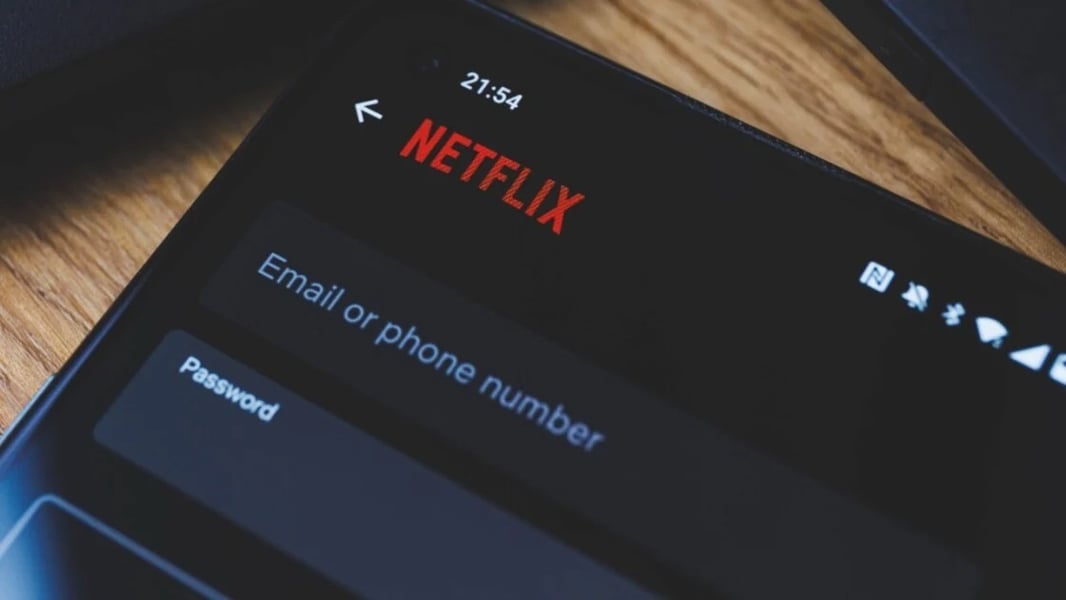
The rollout is global, phased, and gradual. Not every subscriber has seen the prompt yet — Netflix confirmed to Ars Technica that the update started June 15 and is “reaching more users over time.” Children’s profiles are explicitly exempt: kids profiles cannot have an email added and therefore cannot be signed into directly, which is presumably the point. For everyone else, the ask is the same. Add an email address and you can use that email plus a one-time passcode instead of the account password to get into your profile. Don’t add one, and — at some point — access to that profile may be restricted. What that enforcement looks like, or when it arrives, Netflix has not said publicly.
No grace period has been announced. No opt-out path exists.
The announced benefits are real enough, up to a point. Two-factor authentication now applies at the profile level. Account recovery becomes easier if someone forgets how to get in. Netflix says email-linked profiles also produce better personalized recommendations — though any streaming platform has enough watch-history data to build a recommendation engine without knowing your email address. The 2FA argument is stronger. The personalization pitch is a familiar frame for a data collection ask.
The part Netflix does not lead with is what the email addresses unlock on the company’s end. Netflix’s own privacy policy states that it may share users’ email addresses with marketing and advertising partners. A subscriber who signed up on an ad-supported tier already handed over certain data as part of that bargain; household members who were previously anonymous profile users — names only, no credentials — now become individually addressable contacts. That’s a meaningful expansion of Netflix’s direct audience, built quietly inside the existing subscriber base. The privacy implications were underscored earlier this month when a separate vulnerability exposed 14.2 million email accounts across Japanese internet providers, a reminder that any company holding email addresses at scale holds a target.
The move follows the same logic that drove Netflix’s password-sharing crackdown in May 2023, when the company rolled out household-only enforcement to more than 100 countries simultaneously. The results were striking: daily sign-ups in the United States jumped by 102 percent in the days immediately following the announcement, and Netflix added 50 million paying subscribers within 18 months. The 2023 crackdown converted people who had been using the service without paying into paying customers. The 2026 email requirement converts people who were sharing a household account into individually identified users — each with a data profile, an email address on file, and, potentially, a future prompt to upgrade to their own plan.
Netflix’s Extra Member feature already signals the destination. For $7.99 a month on the Standard plan — or two slots at that price on Premium — an account holder can bring someone outside the household into their subscription at a reduced rate. Ad-supported plan subscribers cannot add extra members at all, meaning anyone on the cheapest tier who wants to formalize sharing with a family member elsewhere must upgrade first. The email-per-profile requirement doesn’t change that calculus yet, but it creates the individual user records that would make future account disaggregation significantly easier to implement. The pattern mirrors what happened in subscription software, where platforms that began by linking individual email addresses to team seats eventually separated those seats into individual billing relationships.
Subscriber reaction has run predominantly negative, particularly in shared-household situations where the new friction is most visible. Families with members who don’t use email — young children, older relatives — find the system designed around a profile structure that excludes them. Others object to the data collection angle, or simply resent the added step. Some confusion has circulated online about whether the requirement signals immediate forced account separation; it does not, at least not yet. Profile-switching within a logged-in device remains seamless. The friction arrives at the login step, and only when a profile has not yet been assigned an email.
The change also raises a question that Android Central noted in its coverage: profile owners and account owners can now set their own language, audio, and display settings independently, which is genuinely useful for multilingual households. But that same separation — individual logins, individual settings, individual email addresses on file — is exactly what a company would need before it could offer those profile users their own standalone account. Whether Netflix intends to go there, and when, is the question it hasn’t answered.
What Netflix has not provided is a clear answer to what matters most to subscribers right now: what happens to a profile that never receives an email address? The company’s public documentation says users will “eventually” need to link profiles. The enforcement mechanism and the timeline remain undisclosed. That gap may be deliberate — the gradual rollout suggests Netflix is calibrating the pace of subscriber discomfort rather than setting a hard deadline that creates a defined decision moment. The 2023 crackdown worked in part because Netflix offered a lower-priced ad-supported tier as an exit ramp for affected users. No equivalent offer accompanies this one.