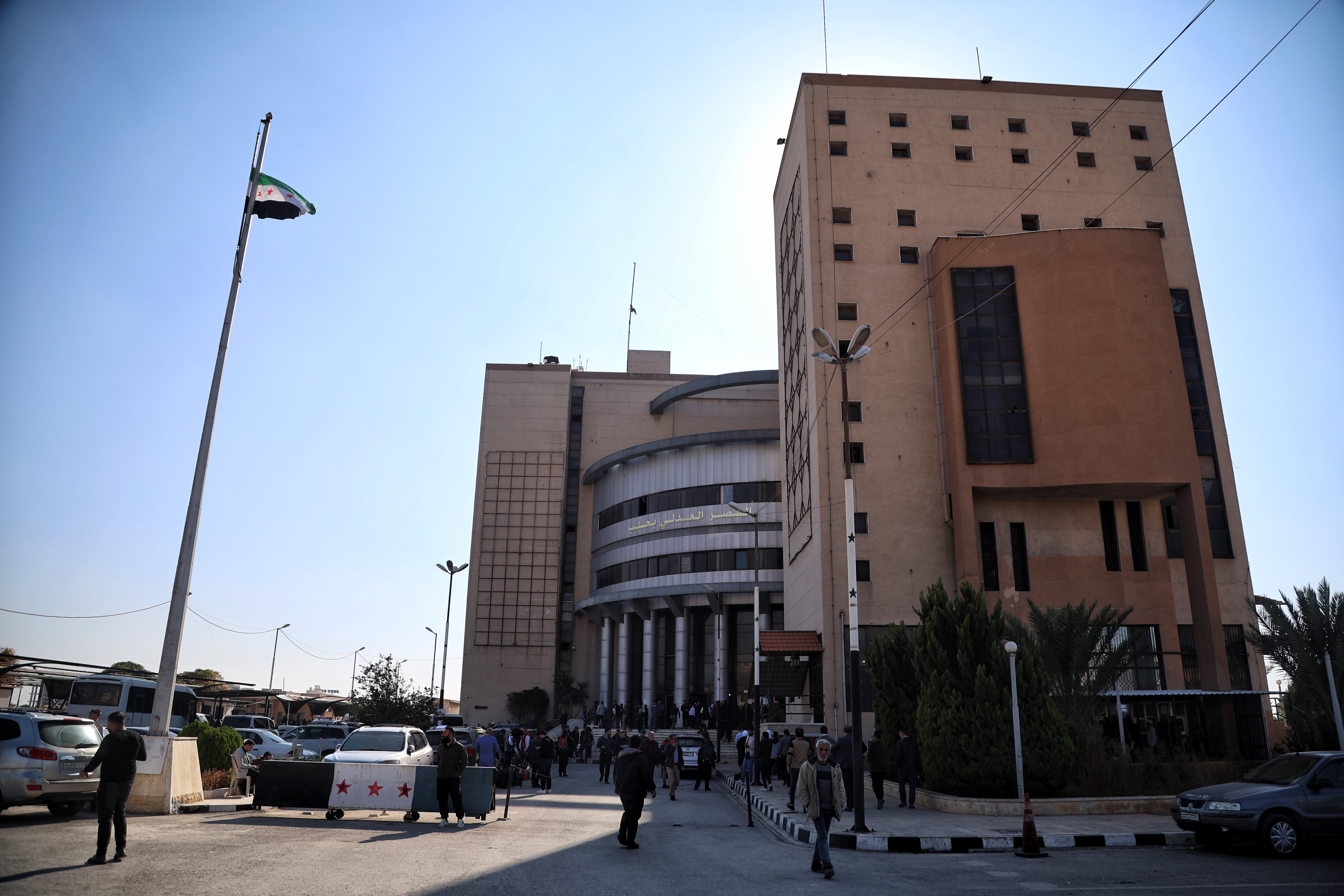

DAMASCUS — The blood was still on the pavement of al-Marjah when Governor Maher Marwan arrived to say that those responsible would pay. A bomb had detonated inside a crowded café on al-Nasser Street, 40 meters from the Palace of Justice, where, on that same afternoon, judges were processing the cases of men who had served Bashar al-Assad’s security apparatus. Six people were killed. Twenty-two were wounded.
No group claimed responsibility. Syrian authorities offered the phrase they reach for when the answer is inconvenient: sleeper cells. What that phrase does not address is the timing. Syria’s new government has staked a significant part of its legitimacy on the premise that it can provide security and deliver justice simultaneously. The attack tested both claims in a single afternoon.
Syrian state television attributed the blast to “an explosive device” without further specification. Security forces cordoned off the street immediately, concerned about secondary devices. Al Jazeera’s correspondent Milad Fadl reported from the scene that blood covered the ground and that residents had begun providing first aid before ambulances reached the area, a detail that said something about the density of the crowd at that hour.
The al-Marjah district sits at the administrative center of the Syrian capital. Its streets draw government workers, families attending court hearings, and merchants from the nearby markets. Al Jazeera’s Damascus correspondent Obaida Hitto noted the area was particularly crowded on Wednesday because of the ongoing trials at the Palace of Justice, hearings that have attracted Syrians who waited years to see former officials face formal accountability.
Governor Marwan appeared at the scene and addressed cameras directly. “Those who shed the blood of Syrians will pay,” he said, adding that Syria’s resilience had been tested before. His Interior Ministry launched an investigation using footage from government and private surveillance cameras installed throughout the district. Security forces said previous operations had broken up similar cells attempting to destabilize the government, with arrests made in the weeks before Wednesday’s attack.
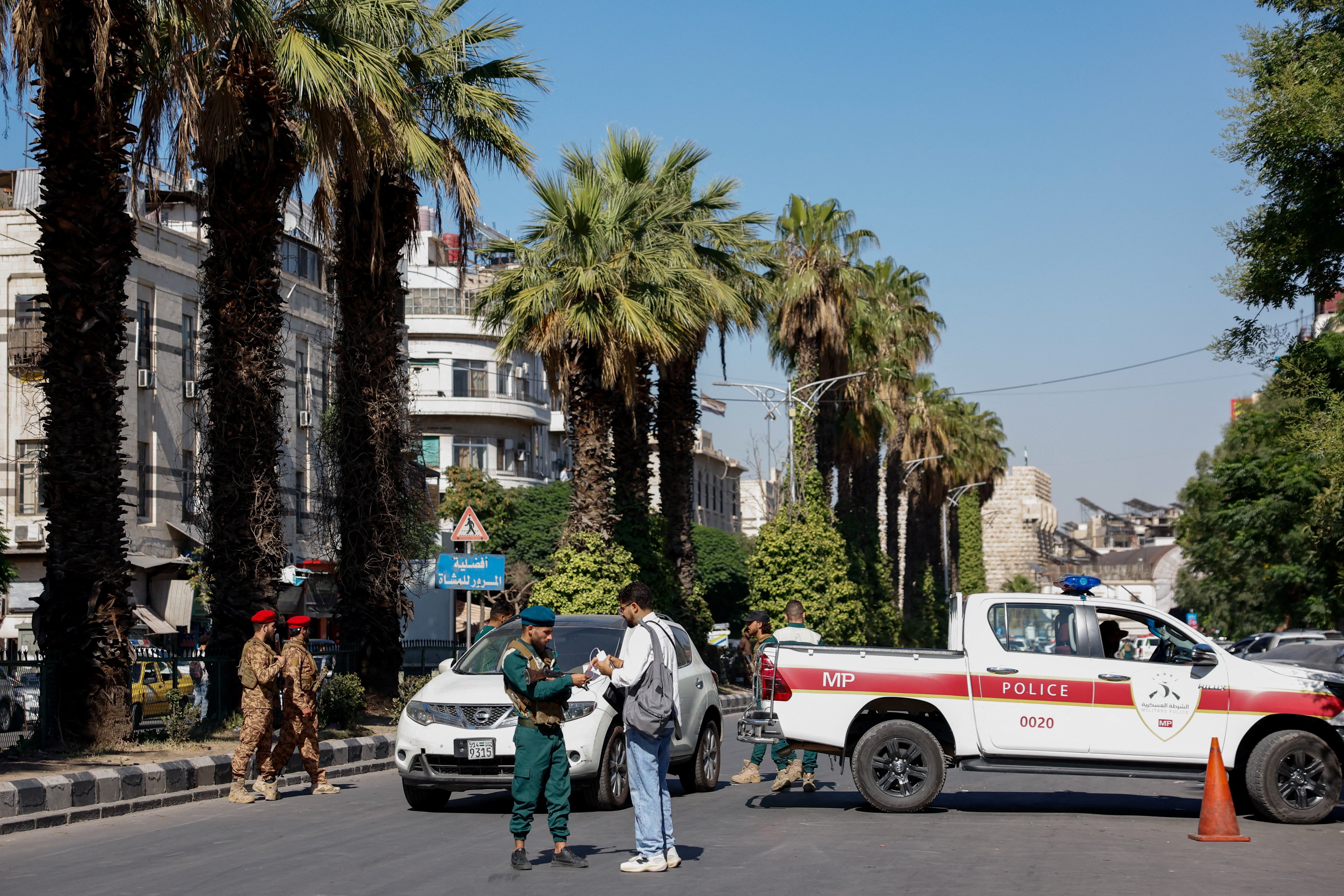
The proximity to the Palace of Justice is the detail that investigators and observers will struggle to treat as coincidence. The courthouse has become one of the most symbolically charged sites in post-Assad Syria: a place where people who disappeared into the security apparatus’s detention network, or whose family members never returned, come to watch the process of formal reckoning. Striking a café in its shadow, at the hour when its corridors are busiest, carries a message beyond the casualty count.
Syria’s new government has faced compound pressure on its security claims. Israeli Defence Minister Israel Katz declared this week that Israeli forces would remain in Lebanon, Syria and Gaza indefinitely, a posture that has complicated Damascus’s attempt to consolidate sovereignty over its own territory while simultaneously rebuilding state institutions. Wednesday’s attack adds a domestic dimension to that external pressure.
Who carried out the bombing remains unknown. Syrian authorities have pointed to sleeper cells, a term that covers several distinct possibilities: remnants of the former Assad security services seeking to prove the new order cannot hold, or cells affiliated with the Islamic State that have exploited instability in the Syrian east and sought to expand operations westward. The two explanations carry different implications for the investigation and for the government’s response.
The Islamic State carried out dozens of attacks across government-held Syrian territory during the Assad years, including in Damascus itself. Its operational capacity in the country has fluctuated since 2019 but has never been eliminated. Assad loyalists represent a different threat model, networked through former intelligence and military structures, with resources, safe houses, and a motive directly tied to disrupting the transitional process that the Palace of Justice embodies.
Neither explanation was confirmed as of Wednesday evening. Syrian security forces said the investigation was ongoing and declined to name a suspect or organization. The palace, according to officials, continued its proceedings after the blast, a decision that read less as indifference to the attack than as a deliberate refusal to let it serve its apparent purpose. Whether that posture holds through the investigation will say something about how durable Syria’s new institutions really are.
According to Al Jazeera’s reporting from Damascus, the death toll stood at six with 22 injured by late Wednesday, though those figures were preliminary and subject to revision as rescue workers continued to work through the scene.