
BERLIN – The political conversation in Europe runs one way. The corporate investment ledger runs the other.
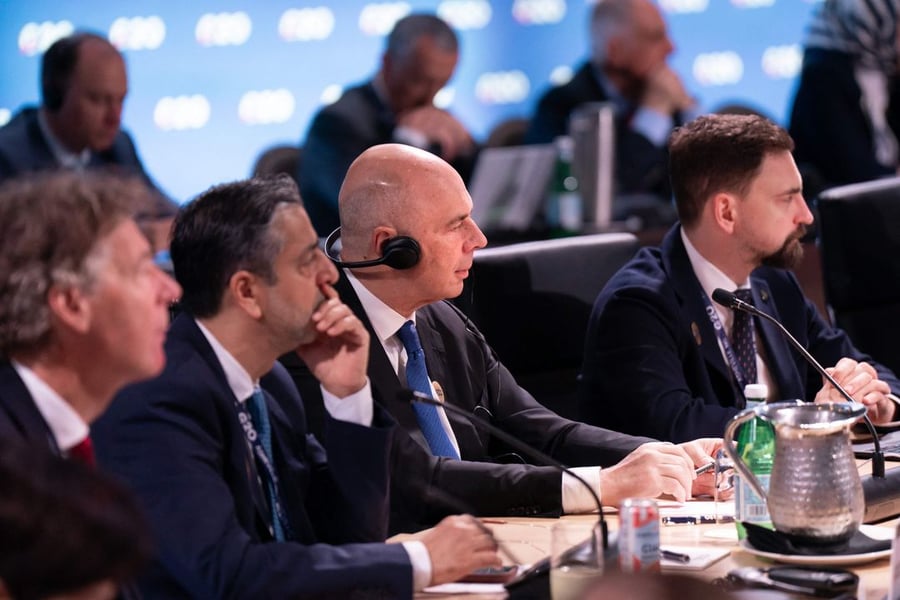
Fifty-six percent of European companies operating in China say they are increasing their onshoring of production within China, according to a survey of approximately 300 members of the European Union Chamber of Commerce in China conducted in January and February. Just 7 percent said they are increasing their offshoring out of the country. Those findings were presented Thursday at a two-day economics conference hosted by the Kiel Institute in Berlin, arriving one day after EU and Chinese trade officials concluded their latest round of discussions in Brussels.
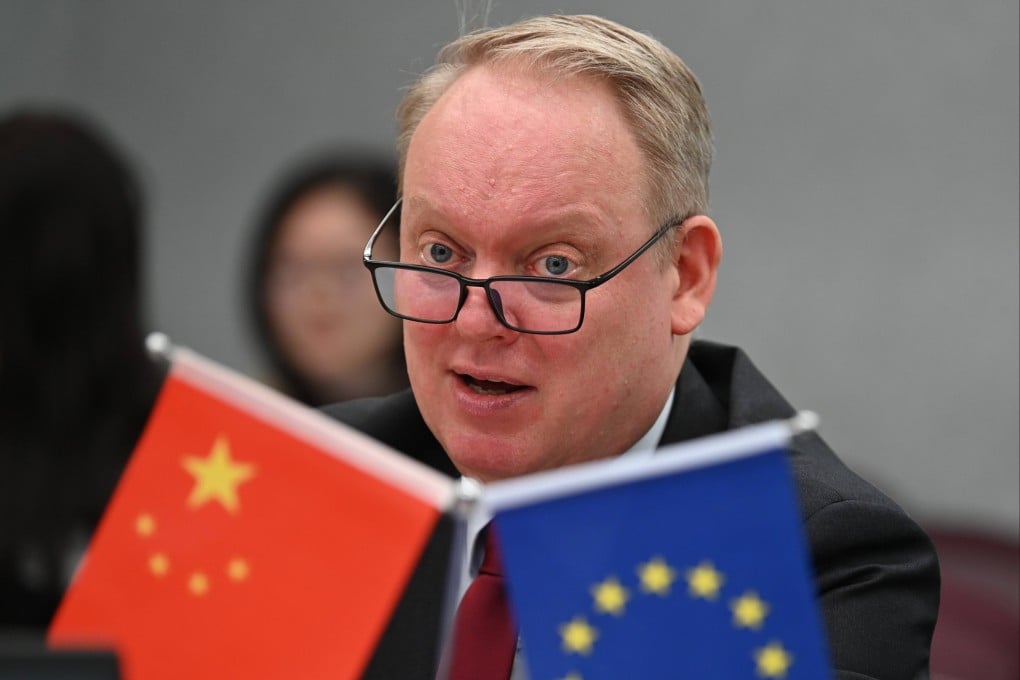
The person delivering that data, EU Chamber president Jens Eskelund, was not offering a celebration. “Europe is becoming more dependent on China, not less,” he told the conference audience. The framing was deliberate: Eskelund was not describing a choice European firms are making in ignorance of policy. He was describing a gap between what European governments have said they want and what European companies are quietly doing.
The data represents the widest divergence yet between the EU’s official de-risking framework and actual corporate behavior on the ground in China. Since 2023, the European Commission has made supply chain diversification a formal policy priority, launching anti-subsidy investigations into Chinese electric vehicles, tightening export controls on dual-use goods, and publishing guidance urging companies to reduce critical-sector exposure to Chinese suppliers. None of that has translated into a reduction in onshoring activity by European multinationals. On the contrary, the EU Chamber says the share of its members deepening their China manufacturing footprint is now the highest it has recorded.
The mechanism is cost. China retains manufacturing advantages in labor costs, logistics density, supplier networks, and energy pricing that European firms operating there say are not easily replicated elsewhere. When a company must choose between a cheaper, integrated Chinese supply chain and a more expensive alternative in Southeast Asia, India, or Eastern Europe, the margin arithmetic tends to win. The 56 percent increasing their China presence are not making an ideological statement. They are responding to the competitive economics of their own operations.
Eskelund put it plainly at the Kiel conference: Beijing retains the capacity to raise the costs of confrontation beyond what Europe is willing to sustain. That formulation describes a structural leverage condition as much as a threat. China holds enough economic weight in European corporate portfolios that coercive pressure carries a floor below which Europe is unlikely to push. The de-risking framework was designed to raise that floor. The EU Chamber survey suggests the framework has not reached it.

The Kiel Institute for the World Economy is among Germany’s most influential economic research bodies, and it has tracked the divergence between stated decoupling objectives and actual investment flows for several years. What the EU Chamber’s survey adds is a company-level reading from inside China, rather than aggregate bilateral trade data. The findings show not just that trade flows with China have remained robust, a trend visible in years of customs statistics, but that the firms on the ground are choosing to expand, not contract, their manufacturing exposure.
The conference timing sharpened the significance. EU-China trade talks concluded in Brussels on July 1, the day before the Kiel conference opened. Those discussions covered the ongoing dispute over Chinese EV subsidies, rare earth export controls, and procurement access. The South China Morning Post reported that the EU Chamber data presented the following morning amounted to an answer from the private sector to the public negotiating posture: whatever the governments agree in Brussels, the companies are quietly building in a different direction.
Elsewhere in Asia, Europe’s allies have been moving to create alternatives. Japan’s government concluded a suite of bilateral agreements with India last week that included new semiconductor supply chain partnerships and AI development frameworks, commitments partly designed to route investment toward manufacturing networks not dependent on China. While Japan’s industrial policy is actively building Chinese alternatives, EU corporations surveyed by the EU Chamber are making the opposite calculation.
The political discomfort for Brussels is compounded by what the survey does not capture. The EU Chamber’s members are large, established multinationals with significant existing operations in China. These are the firms with the clearest, most data-rich view of both sides of the ledger. If the most informed European operators are increasing their China investment, the survey implies that the pull of Chinese manufacturing economics is not weakening among the companies best positioned to judge it.
The European Commission’s response to the survey was not available before publication. Whether Brussels will revise its de-risking guidance, introduce stronger enforcement mechanisms, or acknowledge the gap between policy and corporate practice publicly is not addressed by the Kiel conference findings. Eskelund’s framing at the Kiel conference was descriptive, not prescriptive.
What the survey leaves open is the question neither side has answered: whether the integration of European manufacturing into Chinese supply networks has become structurally irreversible, and at what price, political or commercial, the ledger might begin to move.
Related Posts