
ARLINGTON — Three Ivory Coast defenders collapsed on Patrick Berg in the 86th minute, and the space they left behind was the only thing that still mattered at Dallas Stadium on Tuesday night. Berg slid the ball across to Erling Haaland. The finish required one touch. What it settled had been waiting a long time.
Norway beat Ivory Coast 2-1 to claim their first victory in a World Cup knockout match. They had reached the Round of 16 in 1998, where they lost to Italy. They had never won a knockout match before Tuesday, in 1998 or in any of the qualifying cycles since. Haaland changed the record in the 86th minute, in the way he tends to change things.
The match was not a straightforward vindication of Norwegian quality. Sky Sports’ match report noted that Ivory Coast generated more than most opponents manage against Norway’s well-organized defensive structure, registering 14 shots to Norway’s eight across 90 minutes. What separated the teams was the conversion of specific moments: Nusa’s requiring considerable technical quality, Diallo’s requiring precise timing after entering from the bench, and Haaland’s requiring only placement and the knowledge of where to be.
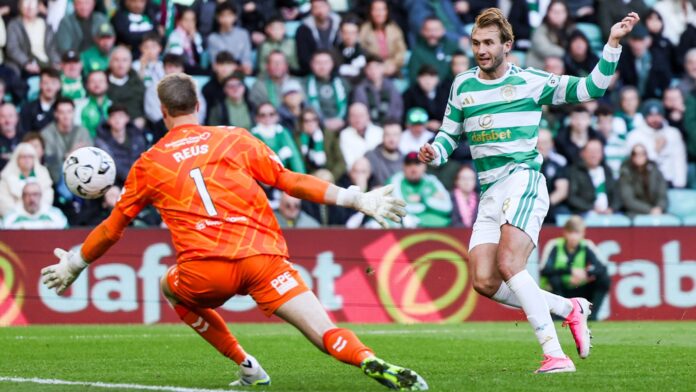
Antonio Nusa scored first in the 39th minute. Martin Ødegaard played him into the left corner of the penalty area, and Nusa curled a right-footed strike across goalkeeper Yahia Fofana and into the far post. The pace, angle, and weight of the finish is what players at Nusa’s level promise eventually. In a World Cup knockout match in the 39th minute, with 69,665 people in the stands, he delivered it precisely.
Ivory Coast’s response required patience. They found the equalizer from a substitution. Amad Diallo came on at the hour mark, and fourteen minutes later Nicolas Pepe played him through in the inside-left channel. Diallo shrugged off David Möller Wolfe and drove a left-footed shot across Nyland into the right-side netting. The Ivorian contingent inside Dallas Stadium had something to respond to, and for the next twelve minutes Norway had a question that needed answering.
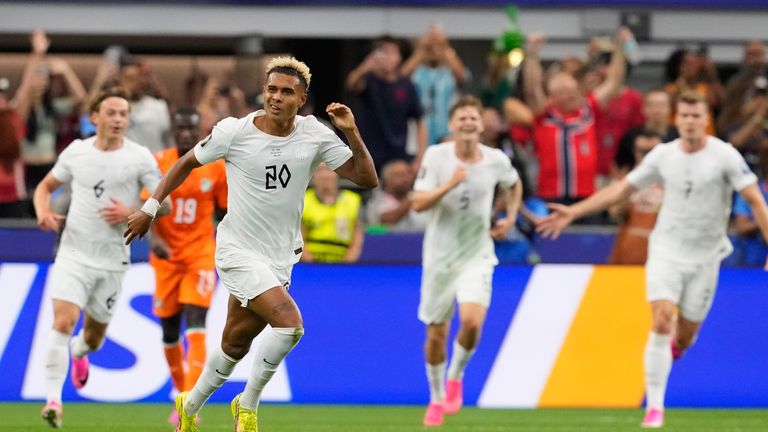
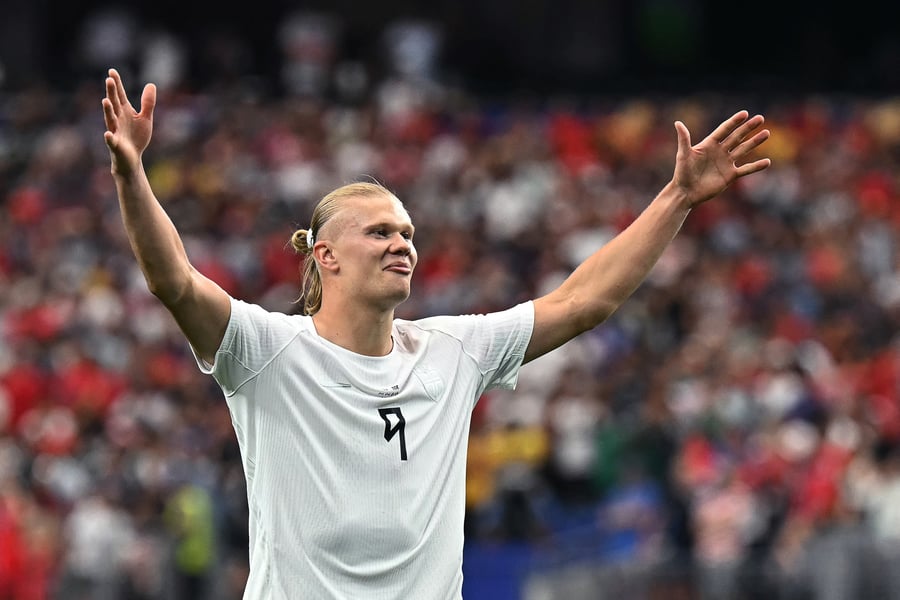
Norway needed the answer from the one player it was always going to come from. Oscar Bobb found Patrick Berg in the box with eight minutes remaining. Three Ivory Coast defenders converged on Berg. The space they created, six yards out with the ball arriving across the face of goal, was the space Haaland has built a career occupying. He tapped it in. The goal was his fifth of the 2026 World Cup and, as NBC News reported, his 60th international goal for Norway in 54 appearances.
“This is unbelievable,” Haaland told reporters after the final whistle. “This is history.” He is correct on both counts. Norway had never done this before, and producing five goals in four World Cup matches places him in the tournament’s upper tier of individual performance regardless of what Sunday brings.
Ørjan Nyland completed what Haaland had started. In the 94th minute, Amad Diallo struck a direct free kick toward the top corner. Nyland’s right hand got there first and deflected it away from the post. Without that save, Tuesday would have continued into extra time. With it, Norway were through.
Captain Martin Ødegaard, who created Nusa’s opening goal from the right side and controlled midfield for most of the 90 minutes, kept his summary short. “We’re really happy and proud of ourselves,” he said. The 4-1 group-stage loss to France, which left Norway’s qualification in doubt on the final group matchday, seemed from Tuesday’s vantage point like a result from a different tournament.
What arrives on Sunday is a different scale entirely. Norway face Brazil in the round of 16 at MetLife Stadium in East Rutherford, New Jersey. Five-time world champions, with Vinicius Júnior as the tournament’s most consistently dangerous attacker. Against that, Norway will deploy the defensive organization that limited Ivory Coast to 14 shots, and the striker capable of finishing a match in the 86th minute when everything else has failed to separate the sides.
The individual contest that organizes Sunday most clearly is Haaland against Gabriel, Arsenal’s centre-back. Their Premier League rivalry has produced some of the most directly contested forward-defender matchups in English football over the past three years. How Gabriel manages Haaland arriving from the channels, which is what Berg’s assist on Tuesday illustrated, is the central tactical question of the round-of-16 game.
Other sides from this knockout draw have established their own benchmarks. Mexico ended a 40-year knockout drought with a 2-0 win over Ecuador at the Azteca on Tuesday, with Quiñones and Jiménez scoring in a first half that decided the match. Australia face Egypt in Dallas on Friday, with Mohamed Salah’s hamstring the remaining variable in what has become an unpredictable round of 32.
Ivory Coast generated 14 shots and one goal. The result separated, as this round has done consistently, what a team deserved from what they received.
Norway will take the history. What Brazil does with Sunday will determine whether this is where it ends.