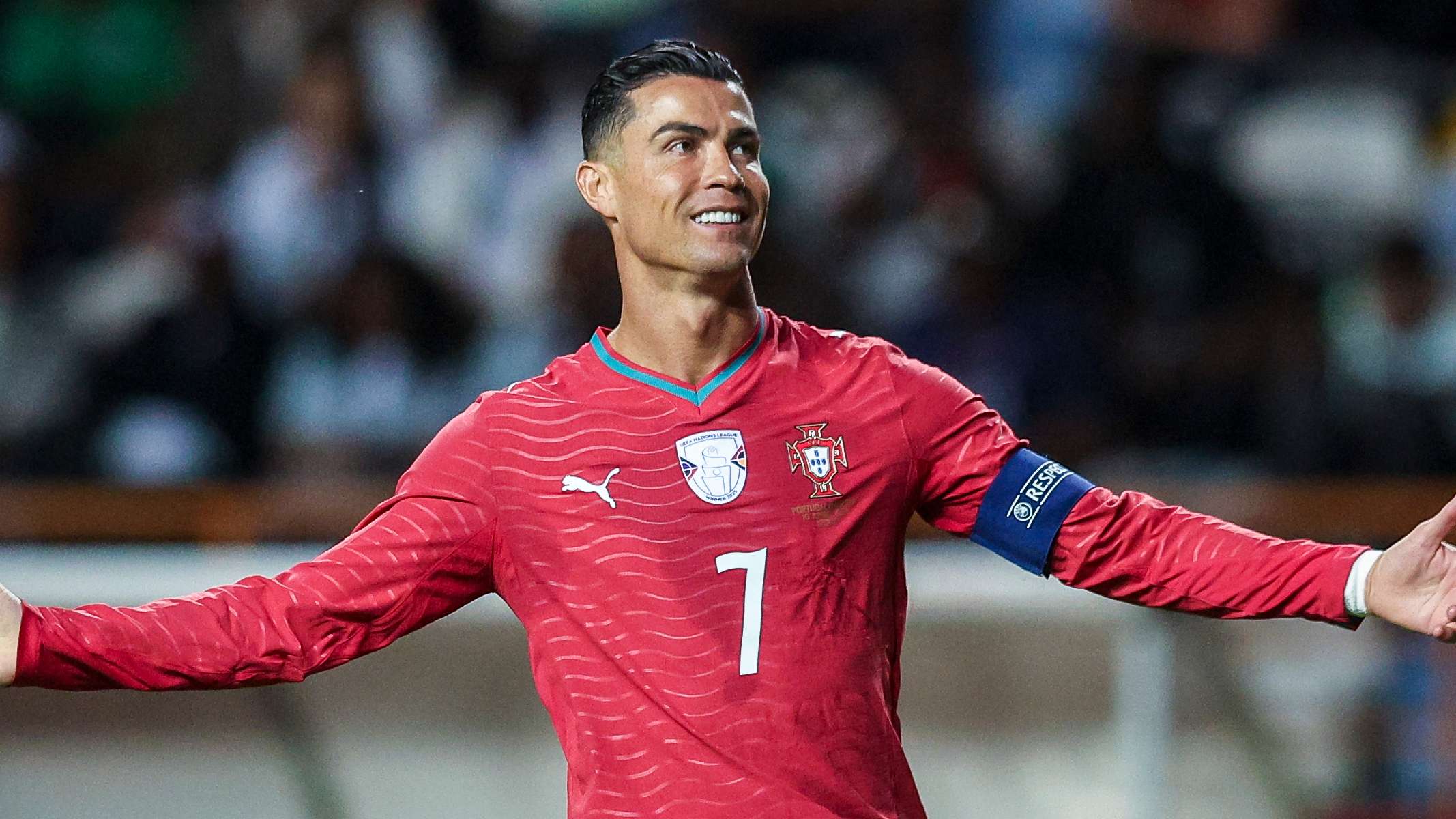

TORONTO — The numbers are almost too strange to believe. One player, 41 years old. The other, 40. Between them, nine World Cups, ten Ballon d’Or trophies, and approximately half of the last 20 years of football’s global conversation. Tonight at Rogers Centre in Toronto, at 7 p.m. Eastern, Cristiano Ronaldo and Luka Modric will share a football pitch at the World Cup for one of the last times either of them is likely to do so.
Portugal versus Croatia is, on paper, a straightforward Round of 32 knockout tie. Al Jazeera reported Opta’s model gives Portugal a 54.5 percent chance of winning in regulation, Croatia 20.4 percent, with a 25.1 percent probability of extra time. The group-stage records confirm the lean: Portugal collected five points as Group H runners-up, Croatia six as Group L runners-up, though Croatia’s body of work included a 4-2 defeat to Harry Kane’s England, who looked like the tournament’s most complete team in the opening three weeks.
None of those numbers are the point. What makes this match feel different is not the bracket arithmetic.
Ronaldo has scored in six consecutive World Cups. No player in the history of the tournament has done that. His two goals against Uzbekistan in a 5-0 rout provided the latest entry in that record, inside the group stage’s more forgiving conditions. What he has not done, in four previous knockout appearances spanning three tournaments, is score a single knockout-stage goal. That detail has aged into something close to a paradox: the most decorated individual goalscorer in men’s football, who has spent 25 years manufacturing impossible moments in impossible situations, has somehow never managed one when the stakes of the World Cup were actually highest.
Roberto Martinez, Portugal’s coach, was precise this week about heading off the speculation. “There is not an issue physically or mentally for Cristiano in today’s game to play the full 90 minutes,” he said before the squad departed for Toronto. The concern had been prompted by Ronaldo’s display against Colombia in the group stage finale; in that match he had only two touches inside the opposing penalty area across 90 minutes. For a player defined by positioning and finishing, it was a quiet day in the wrong way.
The Round of 32 has already produced moments that will outlast this tournament, from Belgium’s 3-2 comeback against Senegal to tonight’s trio of matches across Toronto, Vancouver and Los Angeles. What Portugal against Croatia carries is something different, not tactical surprise or a mismatch on paper, but the weight of two extraordinary careers arriving at what may be their final resting point.
For Modric, the arithmetic is simpler and perhaps more honest about what this tournament represents. Croatia have built a near-miraculous footballing culture from a nation of under four million people, 2018 World Cup finalists and 2022 semi-finalists, consistently outperforming their resources. That machinery has always run through Modric. Now 40 and playing club football for AC Milan, this is his fifth World Cup and almost certainly his last. He reached 200 international caps recently, joining Ronaldo himself at that milestone. Against Ghana he provided the assist for the winner in a 2-1 victory; against England, though, he conceded the penalty that helped set up the 4-2 defeat marking Croatia’s only group stage stumble.
Before this tournament, no outfield player had appeared at a World Cup beyond the age of 40 since Cameroon’s Roger Milla in 1994. Tonight, two such players will not only be on the field but will be the most important players on their respective sides. Football does not produce this kind of symmetry often.
Portugal’s head-to-head record against Croatia reads 7-1 in wins, with two draws across 10 matches. Croatia’s lone win came in a June 2024 friendly, with Modric on the scoresheet alongside Andrej Budimir, a result that offered a measure of encouragement before it was buried in the weight of historical precedent. The most recent meeting, a November 2024 Nations League encounter, finished 1-1.
Portugal’s group stage sent mixed messages. A 5-0 destruction of Uzbekistan provided the headlines, but a 1-1 draw with DR Congo in the opener and a goalless display against Colombia left the impression of a team that can be brilliant or brittle depending on the space it is offered. Croatia, by contrast, may have learned more from losing to England than from beating Panama and Ghana. The 4-2 scoreline looked brutal on paper, but Croatia competed until late before the margin widened. They have not conceded more than a goal in either game since.
The tactical picture sets Portugal as the heavier side in midfield. Joao Neves, 22, and Vitinha anchor the Portugal double pivot in a 4-2-3-1, operating behind an attacking trio of Pedro Neto, Bruno Fernandes, and Joao Felix. That generation represents what Portugal becomes after Ronaldo, and the question of how long he remains capable of occupying the space they create for him. Fox Sports projected Croatia to counter with a 4-3-3, with Mateo Kovacic and Ivan Sucic expected to carry workload around Modric rather than beside him. Josip Gvardiol at left back provides Croatia their most reliable ball-carrying outlet from deep.
What Croatia are likely to attempt is to slow the match, using Dominik Livakovic, one of the better goalkeepers still in the competition, as the foundation of a defensive structure aimed at reaching extra time. Their only realistic path to an upset runs through denying Portugal the open space those attackers thrive in, then hoping Modric can produce one decisive moment when it counts. On current form, that is a long shot.
The unanswered question, and it is genuinely unanswered, is whether Ronaldo can produce in the round that has always eluded him. Portugal have advanced past the World Cup group stage before with him leading the line. They have not gone further than the quarter-finals since 2006. If the answer is yes tonight, in Toronto, against a team built around the only other player whose age even approaches his, it would represent one of football’s more remarkable closing chapters.
If it is no, this may simply be the last time two of the game’s greatest players share a World Cup pitch.
That is enough to make this worth watching.