
WASHINGTON — When federal security agencies began coordinating protection for the 2026 FIFA World Cup, the largest sporting event ever staged on North American soil, they funneled sensitive operational intelligence through a single unclassified network designed to let dozens of agencies share information without sharing it with the public. That network was breached.
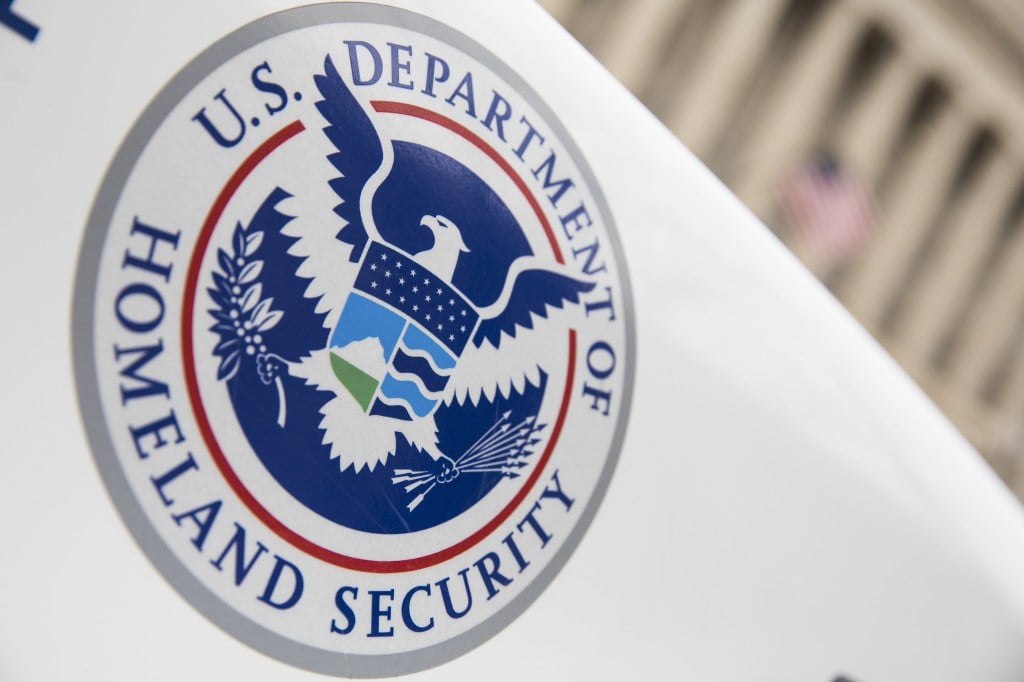
The Department of Homeland Security disclosed Wednesday that its Homeland Security Information Network, known as HSIN, was compromised sometime between late May and early June. The disclosure came roughly a month after the breach was contained, and weeks after the World Cup had already begun. The intrusion, as TechCrunch reported Wednesday, targeted a platform that DHS officials describe as “highly sensitive” though not classified, carrying cross-agency operational data linking federal, state, and local security partners in real time.
What HSIN carries matters as much as the fact of its breach. The network is not a classified system in the legal sense. It does not hold the intelligence category that triggers mandatory congressional notification under the strictest federal statutes. But it functions as connective tissue between law enforcement and security agencies working shared operations. DHS has confirmed it was used specifically for World Cup security coordination across 16 host cities in the United States, Canada, and Mexico. It was also deployed for the emergency response to the American Airlines collision at Reagan National Airport in January 2026, which killed 67 people.
The agency’s statement offered the standard containment language. “We immediately took action to isolate the affected systems, mitigate the vulnerability, and launch a comprehensive forensic investigation,” DHS said. No attribution was provided. The hackers’ identity remains unknown, and federal officials have declined to say whether that reflects an ongoing investigation or whether attribution may not be achievable.
Senator Mark Warner of Virginia, Vice Chair of the Senate Select Committee on Intelligence, said the exposure “risks national security.” The formulation is precise. HSIN is not the NSA. But an unclassified network linking federal agencies, state law enforcement, local first responders, and private-sector partners in real time routinely carries the kind of data that adversary intelligence services prioritize: personnel identifiers, inter-agency communication architecture, jurisdictional boundaries, and the operational timelines of specific missions. The gap between classified and “highly sensitive” is, in practice, a matter of paperwork.
The breach follows a recognizable sequence. Since January 2025, the handling of sensitive government systems under the current administration has generated a series of disclosures: military strike plans shared via Signal on a chat that inadvertently included a journalist; sweeping database access extended to DOGE personnel without standard security vetting; credential exposures at the Cybersecurity and Infrastructure Security Agency; and FBI agent phone numbers surfaced in public data repositories. HSIN is not the smallest item on that list.
The timing is the sharpest dimension of this disclosure. The World Cup’s group stage is already underway. Sixteen host cities have been operating their security infrastructure against what law enforcement has described as a historically elevated threat environment, a monthlong tournament drawing hundreds of thousands of international visitors from countries that include state actors known to conduct cyber-espionage operations. Security planners used HSIN as the coordination backbone. They now do not know what an adversary may have extracted from it during the weeks when the breach went undetected.
What forensic investigators will need to establish is how long the attacker maintained access before detection, what data was read or copied during that window, and whether any of the more than 50 federal agencies and hundreds of state and local entities that connect to HSIN were specifically targeted or swept up in broader access. Those answers may take months. Some may never arrive.
The technique of leveraging commercial infrastructure to bypass conventional perimeter detection is not new to this context. As Eastern Herald reported in June, foreign intelligence services have exploited commercial delivery networks and cloud routing layers to exfiltrate data from government devices without triggering conventional alerts. HSIN adds a different dimension to that threat model. A network specifically engineered to facilitate inter-agency trust, to let dozens of agencies share sensitive operational data without the overhead of classified channels, becomes a single high-value target precisely because of its breadth. The same design choice that made it efficient for World Cup coordination made it attractive to whoever got inside.
DHS has not said whether HSIN has been fully restored to operational status or whether affected agencies have shifted to alternative channels. The forensic investigation is ongoing. The World Cup continues through July.