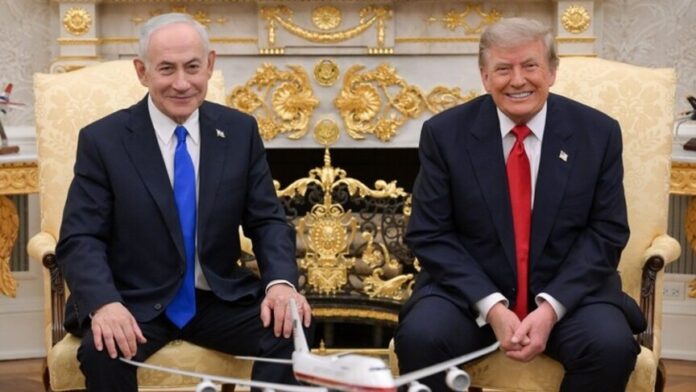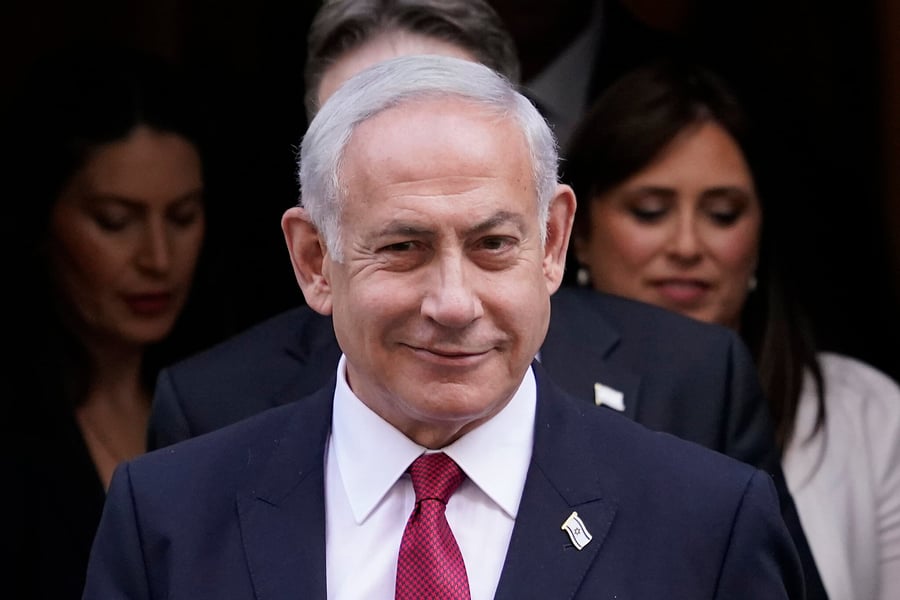

LONDON — Britain’s government formally raised objections with Israel’s government on Saturday after Prime Minister Benjamin Netanyahu described the United Kingdom as “the Islamic Republic of Britain” during a recorded podcast interview, calling the characterization “completely unacceptable” in one of the sharpest diplomatic complaints London has lodged against Jerusalem in recent memory.
The remark, made during an August 13 appearance on an Israeli Army Radio bereavement program, came as Netanyahu reflected on the contrast between how British journalists covered Israel during the 1967 Six Day War and how he believes British media treat Israel today. “What’s called ‘the Islamic Republic of Britain,'” Netanyahu said on the program, the Times of Israel reported. He then added: “Someone said that the first Islamic republic with nuclear weapons will be the Islamic Republic of Britain, so we’re making sure there won’t be another one in Iran.”
A UK government spokesman confirmed London had formally raised the matter with Israeli officials. “These comments are completely unacceptable and we have raised them with the Israeli government,” the spokesman said, Euronews reported, without indicating whether further diplomatic steps were under consideration.
Netanyahu’s Israeli government spokesman, David Mencer, moved quickly to contain the damage. In a BBC radio interview, Mencer said the prime minister “was making a quote that someone else had given” and suggested Netanyahu had been echoing comments made by United States Vice President JD Vance at a July 2024 National Conservatism Conference, where Vance had referred to Britain as potentially “the first truly Islamist country with nuclear weapons” following Labour’s election victory. The explanation offered a line of retreat while simultaneously drawing fresh attention to the ideological circuit Netanyahu’s inner circle now considers useful political material.
The remark arrives at a particular moment in UK-Israel relations. Britain was among the countries that recognized Palestinian statehood in 2025 and has repeatedly criticized Israel’s military campaign in Gaza. New Prime Minister Andy Burnham publicly apologized this summer for what he called Labour’s initially inadequate response to Israel’s operations, as this publication reported in July, while analysts noted the apology fell short of concrete policy change on arms exports. Netanyahu, in that environment, chose language that equated British society with an Islamist political framework hostile to Israel, framing borrowed from the Vance-adjacent nativist right rather than from the diplomatic vocabulary that even adversarial allies typically maintain.

What this episode makes visible is how Netanyahu’s political operating method has recalibrated toward an audience that is not Western governments but the far-right political base within them. Calling Britain an “Islamic republic” circulates as credible content among nativist audiences in the United States and Europe who share Vance’s framework about Muslim demographic change threatening Western institutions. It plays domestically in Israel, where anti-Western sentiment has intensified since the international community began applying legal and economic pressure over what rights groups describe as a genocide in Gaza. Whether the remark was deliberate provocation or careless repetition of talking-point language, Netanyahu’s office chose to explain it through attribution rather than apology, a calculation that reveals something about what the Israeli government currently considers politically costly versus politically manageable.
Britain’s diplomatic posture toward Israel has moved considerably since 2023. It has recognized Palestinian statehood. It has joined Western nations in sanctioning West Bank settler networks. When Israeli strikes in southern Lebanon killed eleven people this week, including three children in a residential attack on Ansar, as this publication reported, British officials were among those calling for restraint. Netanyahu’s government has consistently characterized such criticism as motivated by anti-Israel bias rather than legal or humanitarian principle, and the “Islamic republic” framing extends that argument: Western opposition to Israel is recast not as policy disagreement but as evidence of Islamicization.
The question the UK’s formal complaint does not answer is what follows it. A demarche and a public statement of disapproval are the mildest instruments in the diplomatic toolkit. Whether Britain escalates through further sanctions on Israel, through accelerated restrictions on arms exports, through active participation in international legal proceedings, is not determined by a podcast comment. It is determined by calculations that Burnham’s government is still in the process of making, and which existed before Netanyahu’s remarks added a sharper personal edge to them.
What Netanyahu’s remark has done is give those calculations a more visible reference point. The UK entered this government already managing a relationship inherited from fourteen years of Conservative positioning on Israel. It now has a record: the prime minister of a formally allied country characterized it, on tape, as a hostile religious polity. He has not apologized. His office says he was quoting someone else. The gap between those two positions tells its own story about how the Israeli government views the diplomatic relationship with London at this point in the Gaza conflict, which enters its third year with no resolution in sight.