
TEHRAN — The fatwa is gone. Ali Khamenei’s religious ruling against nuclear weapons, the one Iranian negotiators cited in every round of talks for two decades, died when he did on February 28. His son Mojtaba, elected supreme leader nine days later, has not issued a replacement. In four months in office, he has not, in any public statement, addressed nuclear weapons.
The nuclear working group resumes July 9, the week after the funeral ceremonies concluded in Tehran. The US team will be negotiating constraints on an enrichment program controlled by a man whose position on whether Iran should possess nuclear weapons remains, by every public measure, unknown.
That silence is the central structural uncertainty entering the post-ceasefire talks. Mojtaba Khamenei is not simply Ali Khamenei’s successor. He is the first supreme leader to govern without any binding religious constraint against nuclear weapons, and the first with deep institutional ties to the IRGC, the branch of the Islamic Republic that has historically advocated for weaponization.
The pressure to cross that threshold predates the war. In February 2025, during a meeting between Ali Khamenei and senior IRGC commanders, the commanders pushed him to rescind the nuclear ban. He refused. Ahmad Haqtalab, the IRGC commander responsible for protecting Iran’s nuclear facilities, said the following year that “a reversal of Iran’s nuclear doctrine and policies, including a shift away from previous considerations, is likely and conceivable.” The IRGC’s longstanding argument, that a nuclear deterrent would have prevented the strikes that killed the supreme leader, has only hardened since February 28.
In Shia jurisprudence, a fatwa is binding only while the issuing marja is alive. Ali Khamenei never encoded his ruling as a governmental decree or enshrined it in the Islamic Republic’s constitution. The Atlantic Council noted after his death that Iran had “sold the world a false narrative” about the fatwa’s permanence. It was always only as durable as the man who issued it. The binding constraint that structured every US-Iran nuclear negotiation since 2003 no longer exists.
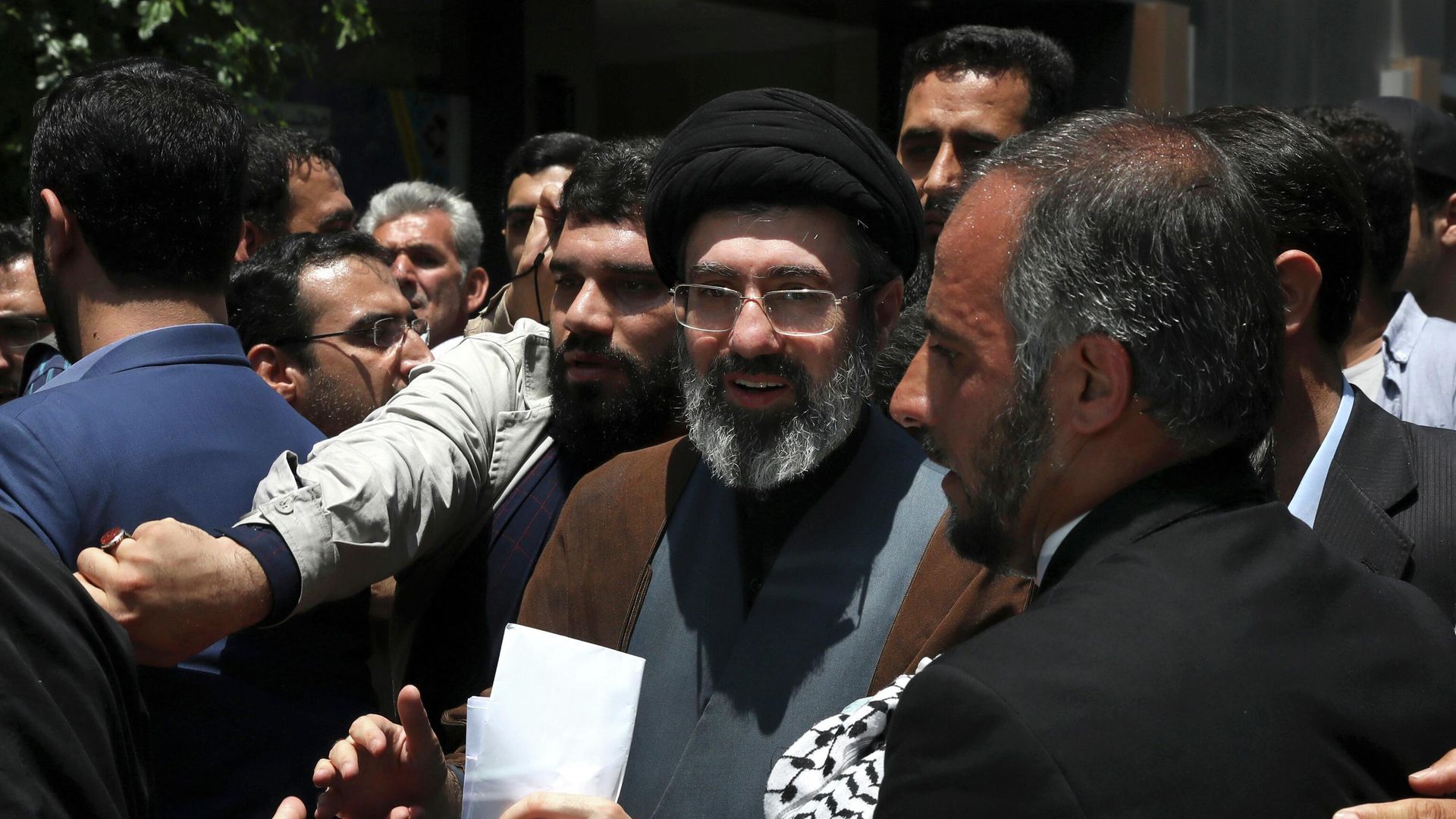
Mojtaba Khamenei, 56, spent most of his career as a political operative rather than a religious scholar or military commander. His network runs through the IRGC’s intelligence apparatus, and the council members who elected him on March 8 were drawn from the IRGC-aligned conservative current, not from the clerical establishment that produced his father’s generation of nuclear pragmatists. Iranian state media reported at the time that he was selected on the explicit criterion that he “be hated by the enemy.” His first public statement demanded vengeance. It contained no reference to nuclear weapons.
He has not appeared in public since being injured in the February 28 strike. Foreign Minister Abbas Araghchi confirmed in March that Mojtaba “already performs his duties.” He gave approval for the June MoU that Araghchi and US envoy Steve Witkoff initialed in Doha, the same agreement that established the current ceasefire framework and created the nuclear working group. Beyond that, the contours of his nuclear thinking are absent from the public record.
The material facts make the uncertainty acute. As of the IAEA’s last verified inspection, Iran held 440.9 kilograms of uranium enriched to 60 percent, the largest stockpile of highly enriched uranium in any non-nuclear-weapon state’s history. Enriched further to weapons grade, that material could yield approximately ten nuclear weapons. It sits in an underground complex in Isfahan, beyond the reach of international inspectors. Iran has blocked renewed inspection access since the war began.
Raz Zimmt, a senior researcher at Israel’s Institute for National Security Studies, assessed that the new leadership “might be willing to take more risks.” Richard Nephew, who led US sanctions policy on Iran at the State Department, said in March that Iran “could produce nuclear weapons relatively quickly, if they chose to do so.” The US was described at the time as “largely in the dark” about Mojtaba’s nuclear views, a characterization that has not been revised since.
The June MoU addressed enrichment caps and sanctions relief. It did not require Mojtaba to articulate a nuclear doctrine. The US position, conveyed by officials in background briefings after the signing, was that inspections and enrichment limits make a fatwa unnecessary. That argument holds only while the agreement holds. The agreement holds only while Mojtaba chooses to honor it. The IRGC-aligned hardliners who have challenged President Pezeshkian’s negotiating authority in parliament have not accepted that logic.
The July 9 working group will negotiate centrifuge counts, enrichment ceilings, and IAEA access protocols. It will not resolve the question now underlying every item on that agenda: whether Iran’s new supreme leader sees nuclear weapons as a line his father was right to hold, or as the one deterrent that might have kept his father alive.
He has not said. The Atlantic Council’s analysis of the fatwa’s collapse concluded that Iran’s negotiating partners were “left to infer doctrine from behavior.” Four months into Mojtaba Khamenei’s tenure, the behavior offers almost nothing to infer from.