
MINNEAPOLIS — What Kate Adamala built in her University of Minnesota laboratory does not breathe, does not metabolize food in the ordinary sense, and has no evolutionary history. It was assembled, component by component, from chemicals on a bench. Then it divided.
The structure, named SpudCell, replicated its own genome, grew in mass, acquired the materials it needed from its environment, and split into daughter cells. It completed, in other words, the full repertoire of actions that biologists use to define a living cell. The fact that nothing alive was used to build it has set off a debate the preprint describing the experiment, posted Wednesday, has made unavoidable: does the definition of life need to be revised, or does SpudCell simply not qualify?
Synthetic biologists have been working toward a minimal cell for decades. The J. Craig Venter Institute achieved a milestone in 2016 when it engineered a bacterium with the smallest genome known to support independent life, a stripped-down organism derived from the mycoplasma class of bacteria. That cell was biological in origin: it began from living material and had its genome successively deleted down to an irreducible core. SpudCell inverts the approach. Adamala’s team started with chemistry and built upward, which is why she argues the two achievements are not comparable.
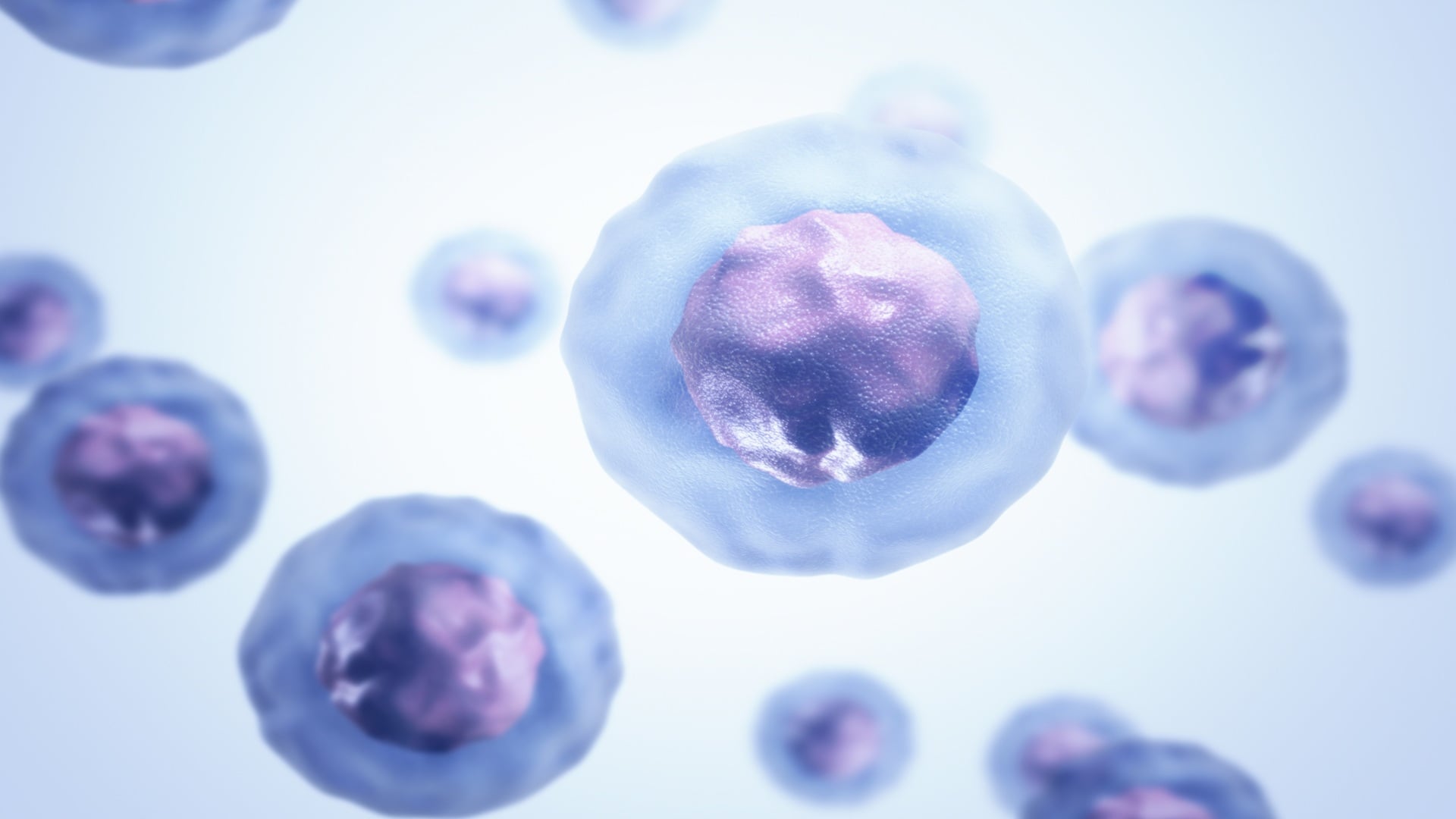
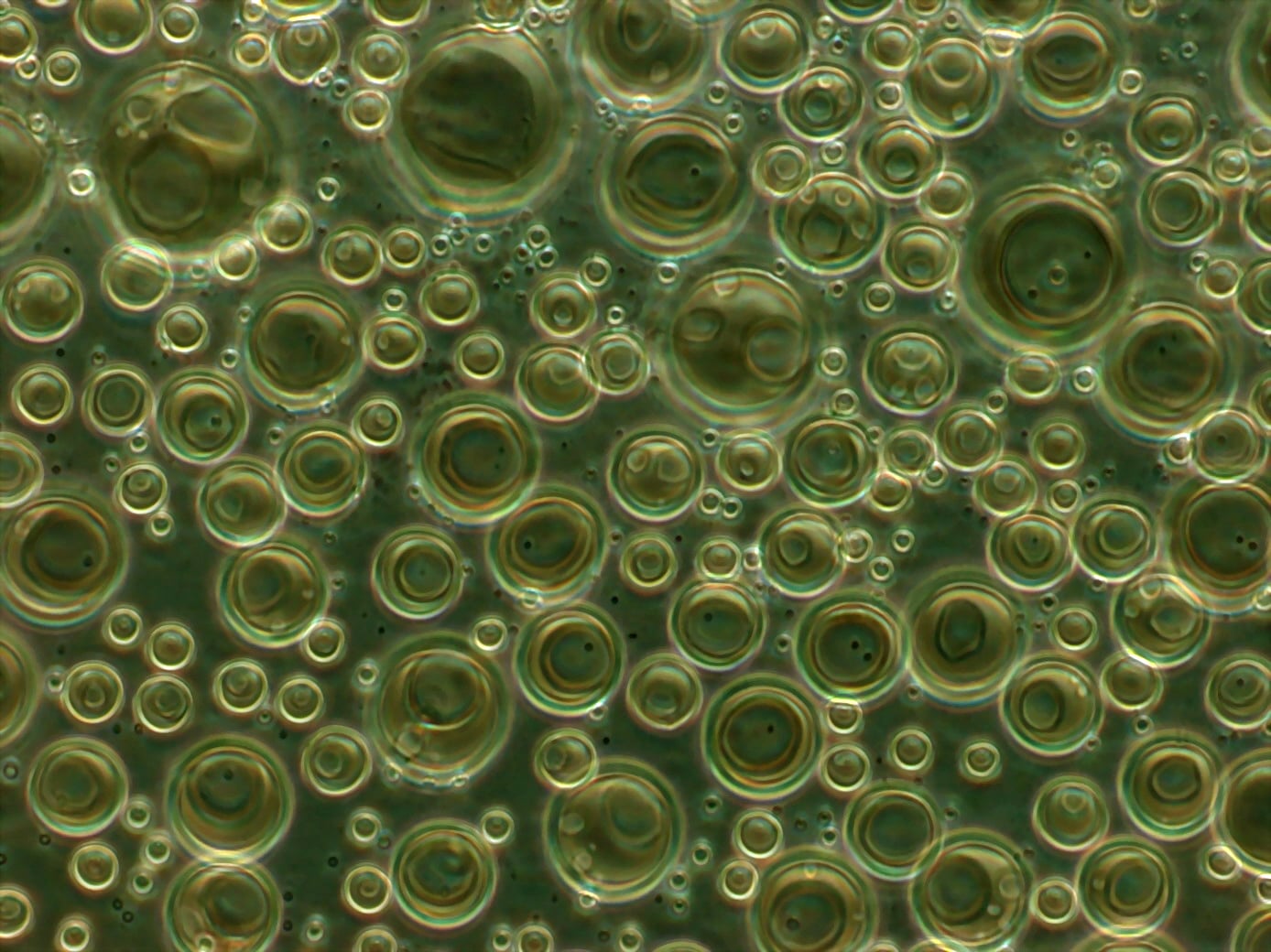
SpudCell’s architecture is deliberately spare. At its center is a genome of roughly 90 kilobase pairs, smaller than the 113-kilobase-pair minimum researchers had previously assumed a self-replicating system would require. That genome is carried inside a liposome, a bubble of fat that functions as the cell membrane. Encased alongside the genetic material are seven plasmids, small circular strands of DNA encoding specific instructions, and a minimal protein expression system capable of reading those instructions and producing the proteins the cell needs to act on them.
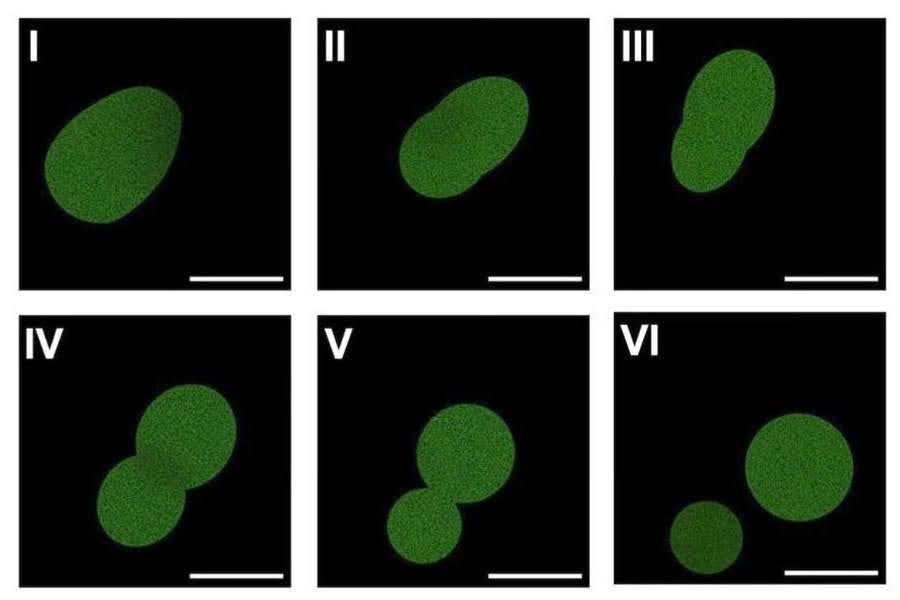
Together, those components constitute what the Adamala lab calls a minimal synthetic cell: not borrowed from biology, not derived from a living ancestor, but assembled from the chemical ground up. The liposome grows. The genome copies itself. When the cell reaches a critical size, it pinches off into two smaller cells, each carrying the full genome and the machinery to begin the cycle again.
What SpudCell cannot do matters as much as what it can. It has no cytoskeleton, the structural scaffolding that living cells use to organize their internal contents and control the mechanics of division. Its protein expression system cannot replenish itself; when the proteins responsible for reading the genome eventually degrade, the cell cycle halts. It cannot regulate its own metabolism. In those respects, SpudCell is a proof of concept rather than a prototype of life: it demonstrates that the minimum set of behaviors biologists associate with living cells can be reproduced without any biological input, while leaving open the question of whether anything more sophisticated can follow.
For medicine, the implications are not immediate but potentially significant. A synthetic cell designed from scratch could in principle be tuned to produce specific proteins for drug delivery, to break down materials in industrial processes, or to function as a biological sensor in environments hostile to conventional cells. None of that is what SpudCell does today. The current system is too fragile and too simple. But demonstrating that the life cycle is achievable in chemistry, in a test tube, in a reproducible experiment, establishes the foundation those applications would require.
The preprint’s reception among biologists has been notably mixed. A reviewer at the journal Cell, which has not yet accepted the paper for publication, questioned whether SpudCell’s achievements constitute “real biology,” a judgment that reflects a genuine tension in the field. Life science has historically been defined by studying things that are already alive. SpudCell arrived at the behaviors of life through chemistry, and at least one specialist is uncertain whether the path taken changes what was arrived at. Separate research on how sea anemones suppress their own immune response to fight viral infections has illustrated a related point: biology at the cellular level keeps producing mechanisms that overturn confident assumptions about what cells can and cannot do on their own.
Adamala, who is also a co-founder of Biotic, the platform hosting the preprint, said the skepticism was expected and welcome. “I was very happy, relieved, and a bit suspicious because I’m always double- and triple-checking results,” she said. She suggested that biologists may be underestimating what her team achieved. “I think biologists might not appreciate the significance of the chemical engineering simplicity of minimal cell,” she said.
CBS News reported that Adamala described SpudCell as representing a fundamentally different methodology from what the Venter Institute accomplished a decade ago. Her longer aim is not a demonstration but infrastructure: a platform for engineering biological processes in cells that are, by design, fully predictable because they were fully designed. Researchers studying how cancer cells hijack immune macrophages have pointed toward a similar ambition: understanding cellular behavior precisely enough to engineer around it. “Our goal is to have full operational ability to engineer biology,” Adamala said.
Whether SpudCell survives the peer review process intact is the question the field will spend the coming months answering. The Cell reviewer’s doubts are a single data point, not a verdict. Other specialists will have their own reads on what the Biotic preprint actually proves. What is already clear is that the experiment produced something that, if measured purely by behavior, passes every test biologists have historically used to distinguish the living from the non-living. That the same thing, measured by origin, passes none of them is not a contradiction SpudCell resolves. It is the one it leaves behind.