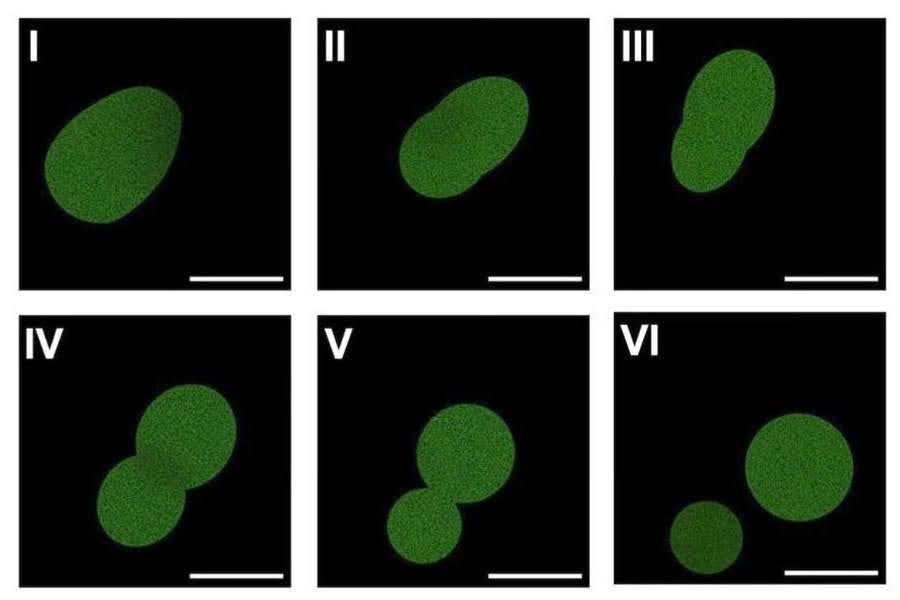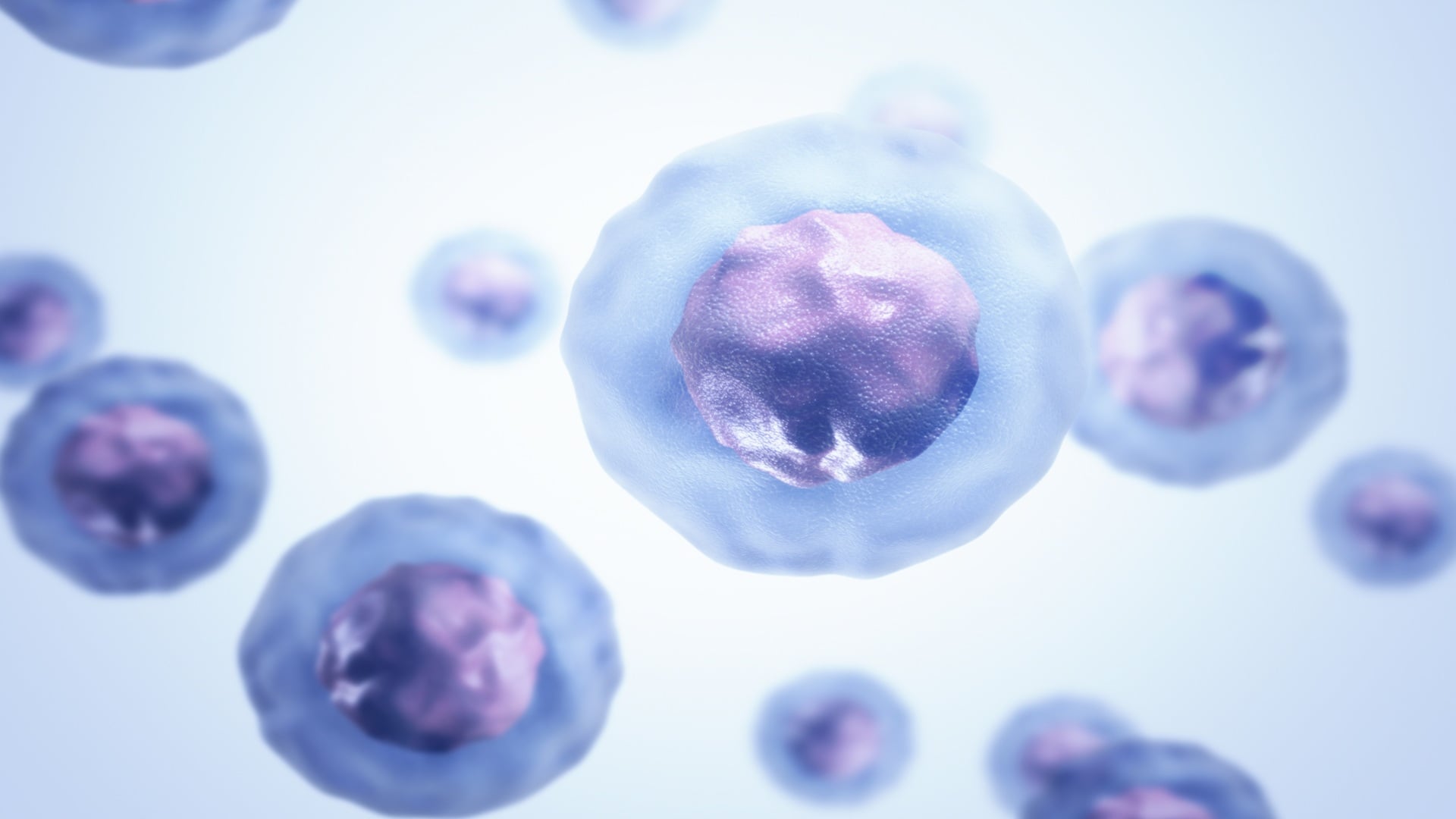

MINNEAPOLIS – In a Minneapolis laboratory, a synthetic cell assembled from nonliving chemical components divided, passed genetic information to its daughter cells, and showed evidence of natural selection, the condition that separates this work from every predecessor. The University of Minnesota team published their findings as a preprint on the bioRxiv repository on July 2, calling the system SpudCell. It has not been peer reviewed.
What peer review will assess, and what the preprint does not resolve, is whether what SpudCell demonstrates constitutes life. The system carries a 90,000-base-pair synthetic genome, smaller by orders of magnitude than most bacterial genomes, and depends on ribosomes borrowed from Escherichia coli bacteria, a fundamental molecular machine the synthetic cell cannot yet produce on its own. After five generations of division, approximately 30 percent of daughter cells received the complete synthetic genome. The majority inherited only partial copies. That figure is the most structurally significant number in the paper.
What SpudCell did accomplish clears a bar that synthetic biology has not previously cleared at the component level. Prior milestones, including the J. Craig Venter Institute’s work on JCVI-syn3A, produced cells with synthetic genomes by reprogramming existing bacterial chassis: stripping a living organism of most of its genetic material and replacing it with a designed sequence. SpudCell reversed that logic. Its components are not derived from any living cell. The genome was not installed in a bacterial membrane. The system was built from the ground up, from nonliving chemistry.
The researchers demonstrated natural selection by introducing a genetic mutation that allowed faster-growing variants to dominate successive generations. When faster-growing cells began to outcompete slower ones, the team had evidence of heritable variation driving differential reproduction. Those are the minimal criteria. The question of whether SpudCell’s natural selection capacity is self-sustaining, whether it could produce anything beyond what the controlled laboratory protocol was designed to elicit, the paper does not answer, and by its own structure cannot.
The team noted that “one of the most ambitious and fascinating goals of bioengineering is to build a biochemical system that could cross the threshold from chemistry to life.” SpudCell sits directly on that threshold, neither clearly inside it nor outside. It demonstrates life-like behaviors under controlled conditions. It requires externally supplied nutrients and E. coli ribosomes. Outside a laboratory, it cannot survive.
Those constraints define what kind of biosafety question SpudCell actually raises. When synthetic biology inserts a designer sequence into a living bacterial chassis, risk assessors have a known organism to characterize. When a system is assembled from nonliving components, the framework for assessing containment, mutation risk, or persistence under various failure conditions does not yet exist in any regulatory document. The researchers acknowledged that “increasingly sophisticated synthetic cells could raise new biosafety and biosecurity questions” and called for developing “a safety and security framework for future synthetic cell engineering.” They did not specify what form that framework would take or under whose authority it would be built.
No such framework exists at the federal level in the United States, where synthetic biology is divided among the Environmental Protection Agency, the Department of Agriculture, and the Food and Drug Administration. Each oversees different aspects of genetic modification, and a system assembled entirely from chemical components sits in ambiguous territory within each of those jurisdictions. The capability, in other words, is arriving ahead of the rules.
Fox News reported on the findings, noting the study represents what scientists involved described as a milestone, language that reflects how carefully the field calibrates such claims. Prior milestones in synthetic biology, from the first synthetic genome in 2010 to the first minimal cell a decade later, each advanced a specific capability while leaving the central goal unresolved. SpudCell advances another: it introduces natural selection into a system built from scratch. The central goal, a fully self-sustaining synthetic organism capable of open-ended evolution, remains unachieved.
Eastern Herald has covered a separate thread in the same inquiry this week: the detection of an atmosphere on a planet orbiting a dead star, a search for the chemical signatures that define life in the cosmos. SpudCell poses the inverse question. Scientists did not ask where chemistry meets life in the universe. They tried to build the meeting place in a lab, piece by piece, and got partway there. Whether partial arrival counts as crossing the threshold is, at the moment, a definitional dispute as much as a scientific one.
Peer review will determine whether the natural selection evidence holds under independent scrutiny, and whether the 30 percent genome-inheritance figure represents a methodological limitation or a deeper barrier in bottom-up cell engineering. What the paper makes clear is that the researchers identified their own constraints openly. What they could not state is what comes next. The sequence of steps from a 90,000-base-pair synthetic cell with borrowed ribosomes to a fully living system has not been written yet, by anyone.