
ROTTERDAM — The last person standing in the path of the outbreak flew home on Wednesday.
That person, the final contact traced from the hantavirus cluster that killed three people aboard the Dutch polar expedition ship MV Hondius, completed their quarantine, tested negative, and was cleared, the World Health Organization announced July 2. Sixty-six days after the first confirmed case, an outbreak that had required tracking more than 650 people across 33 countries was declared over.
“Today, the final contact of a person exposed to hantavirus on the cruise ship MV Hondius completed their quarantine period, tested negative and returned home,” WHO Director-General Tedros Adhanom Ghebreyesus said in a statement.
Three of the thirteen people who fell ill did not survive.
The MV Hondius, a Dutch-flagged polar expedition vessel, departed Ushuaia, Argentina, on April 1, headed into the remote South Atlantic. Its itinerary included stops near Tristan da Cunha and the Falkland Islands before turning north toward Tenerife in the Canary Islands and home to Rotterdam, where it docked on May 18. By then, the pathogen had already crossed borders, carried by passengers who did not yet know they were infected, or in whom symptoms had not yet declared themselves.
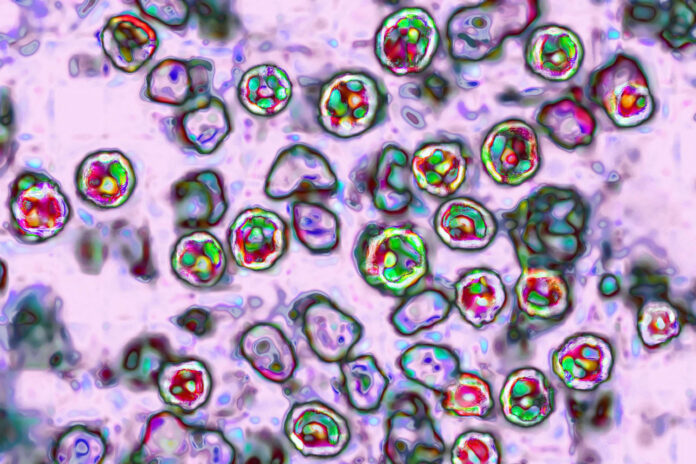
The virus responsible was Andes hantavirus, and the distinction from other strains matters considerably. Most hantavirus infections follow a dead-end route: a person breathes in particles from infected rodent droppings, urine, or saliva, falls ill, and the chain of transmission stops. Andes hantavirus, which circulates in the Andean region and Patagonia of South America, is the only strain scientists have confirmed capable of moving from one person to another through direct contact. That characteristic transformed what might have been a contained rodent-exposure event on a remote island into a global contact-tracing operation that consumed months of effort from national health authorities across five continents.
There is no licensed vaccine against any hantavirus. There is no approved antiviral treatment. Clinical management is supportive — controlling fever, managing fluid balance, and providing respiratory support when the most severe cases progress to hantavirus pulmonary syndrome, a condition in which the lungs fill with fluid and gas exchange fails. The case-fatality rate in Andes hantavirus outbreaks has historically ranged from roughly 30 to 40 percent. The Hondius numbers, three deaths from thirteen confirmed infections, placed the mortality at the lower end of that range.
Incubation sharpened the containment challenge. Andes hantavirus can incubate silently for between one and eight weeks before symptoms appear. That long and variable window meant that by the time the first Hondius patients fell visibly ill, the ship had long since docked, its passengers and crew had dispersed to home countries on multiple continents, and any early window for isolating exposure contacts had closed. What remained was a sustained effort to locate, test, and monitor every person who had been close enough to a confirmed case to be at risk.
The WHO and national health authorities ultimately identified and monitored more than 650 contacts across 33 countries, Al Jazeera reported, a figure that reflects the ship’s international passenger list and the incubation period that allowed travelers to return home before learning they needed to be found.
In the United States, the Centers for Disease Control and Prevention monitored 18 Americans connected to the Hondius cluster. All tested negative as of June 29, the agency said. National health authorities in other countries ran parallel monitoring programs, coordinating results with the WHO as each final contact moved through the end of the quarantine window.
The effort illustrates, with unusual clarity, how international mobility reshapes the containment calculus for a pathogen capable of person-to-person spread. A single exposure event aboard a vessel at sea produced a response requiring coordination among dozens of governments. The full cost of tracking those 650 contacts has not been publicly disclosed. The Hondius outbreak was the first documented hantavirus cluster linked to international cruise travel.
What the WHO’s declaration does not resolve is the question of how Andes hantavirus first reached the MV Hondius. The route from rodent reservoir to first human case has not been publicly confirmed. The ship’s itinerary included South Atlantic stops where populations of the long-tailed rice rat, the primary Andes hantavirus reservoir in southern South America, are present. A single early exposure at one of those sites would be consistent with the outbreak’s timeline, but investigators have not publicly named an index case, confirmed the location where the first transmission occurred, or disclosed whether protocol changes were recommended for future polar expeditions.
The declaration arrived while the WHO is managing simultaneous hemorrhagic fever responses elsewhere. Ebola has spread to a fourth province in the Democratic Republic of Congo, where the United Nations has warned the economic cost of the ongoing outbreak could reach $3.6 billion if not contained. In Uganda, a Marburg virus case in western Uganda has introduced a second hemorrhagic fever into a health system already under strain from the Ebola response. The formal closure of the Hondius cluster releases some monitoring capacity at a moment when the WHO is stretched across multiple concurrent crises.
Tedros, whose agency coordinated the international monitoring effort, framed the resolution in the terms of the person at its end: one final contact, somewhere in the world, completing a quarantine, returning a negative test, going home. Sixty-six days, thirteen cases, three deaths, and a containment operation that reached into 33 countries to account for every person who might have carried the only hantavirus strain known to spread between humans.