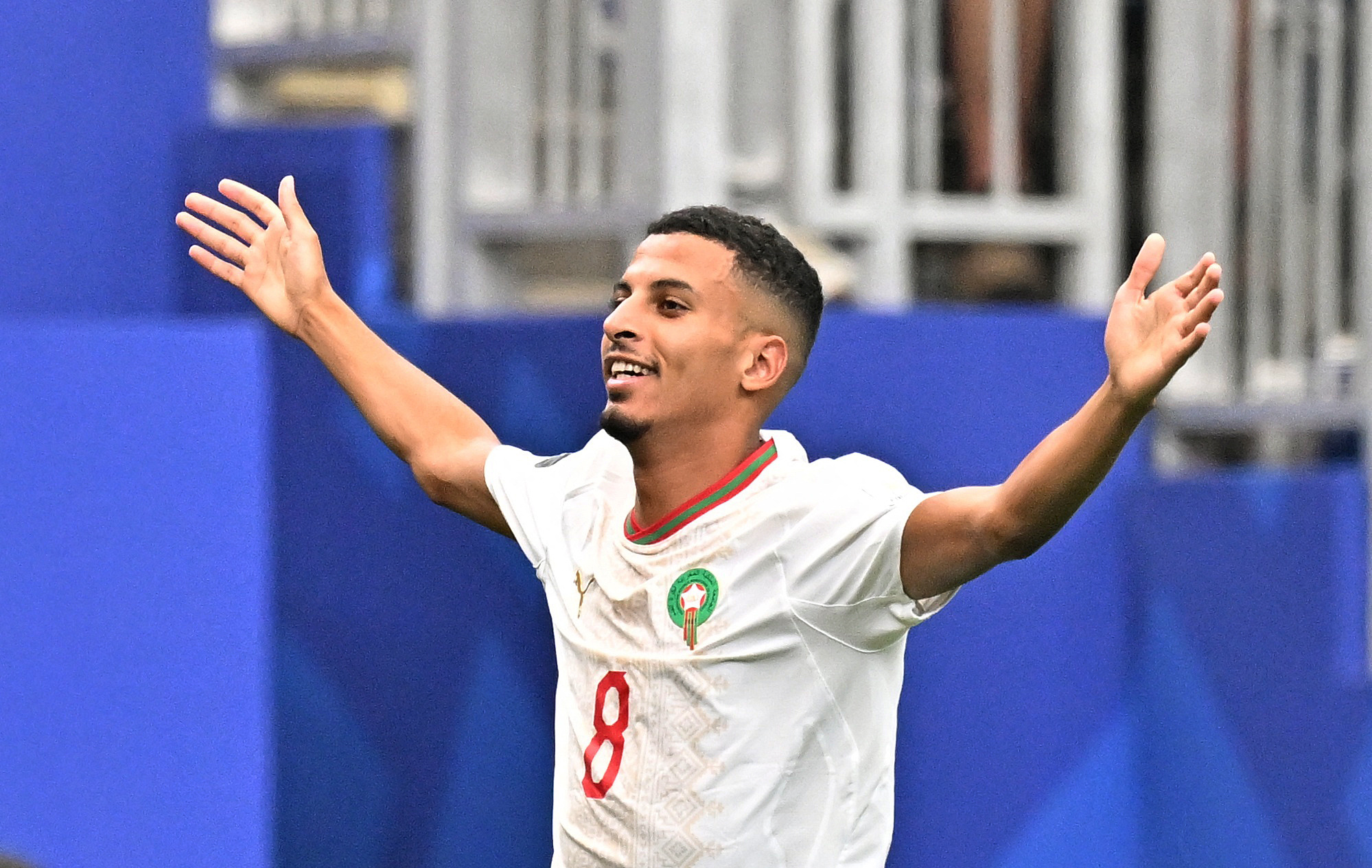

HOUSTON — At the 82nd minute on the Fourth of July, the date Canada had circled since earning the right to co-host this tournament, Azzedine Ounahi collected a short pass from Brahim Diaz inside the penalty area and drove a right-footed finish past Maxime Crepeau that had no answer. The score read 2-0. The crowd at NRG Stadium, which had come in volume and come in noise, understood instantly what it meant. Canada’s World Cup on home soil was over.
Morocco defeated Canada 3-0 in the Round of 16 on Friday evening, advancing to the quarterfinals of the 2026 FIFA World Cup and making Canada the first co-host nation eliminated from the tournament. The result was not fully in doubt by the 50th minute, when Ounahi had already opened the scoring. But the second goal at the 82nd settled it, clinical and unhurried and final.
Canada finished the night with eight shot attempts and an expected goals total of 0.79. Morocco needed three to reach the last eight. In a knockout match between these two sides, that gap was the whole story.
For the Atlas Lions, it was confirmation of a decade of structured development producing results at the sport’s highest level. Morocco becomes the first African nation to reach consecutive World Cup quarterfinals, building on the semifinal run that stunned world football in Qatar in 2022. Their next assignment, against France or Paraguay depending on Friday evening’s second match, awaits July 9 in New England, and coach Mohamed Ouahbi’s side arrives with an organizational discipline that makes draw quality feel like a secondary concern.
The first half at NRG Stadium was scrappy and inconclusive. Michael Oliver, the English referee, distributed eight yellow cards across 45 minutes, four to each side, as the contest settled into a physical battle for midfield control that neither team fully won. Richie Laryea and Achraf Hakimi, opponents along the right flank, both received cautions following a physical exchange early in the first period. Canada had the better of possession and positioning in stretches, pushing Morocco back without generating the finishing opportunities their share of the ball warranted.
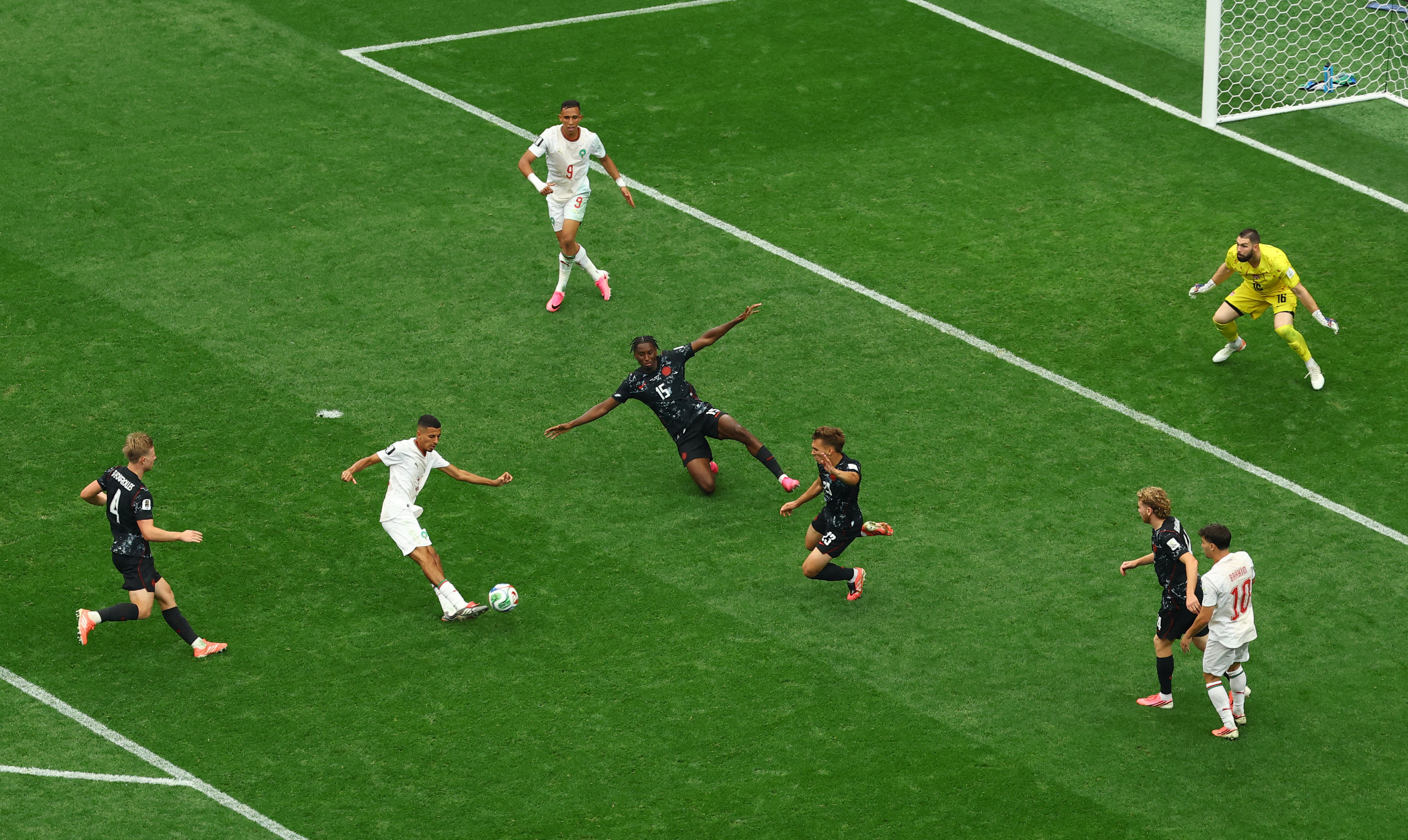
The breakthrough came immediately after halftime. Hakimi delivered a set piece into the area, and Ounahi arrived at the edge of the box to thread a low right-footed shot through traffic and past Crepeau, precise and unhurried, the kind of finish that settles a player into a match and unsettles an entire opposing team. Al Jazeera’s live coverage confirmed the opener at the 50th minute, Hakimi’s delivery the catalyst for a goal Morocco’s patient play had been building toward.
The goal arrived while Alphonso Davies, Bayern Munich’s left back and Canada’s most recognizable footballer, remained on the bench. Coach Jesse Marsch had chosen to begin the match without his prominent player after Davies reported his hamstring did not feel right at training Thursday. An MRI had cleared him, but clear was not the same as ready. Davies watched Morocco break the deadlock while Canada began to scramble for a response that never fully materialized, as NBC Sports tracked in its live coverage.
Marsch moved. Cyle Larin entered as a target forward. Jacob Shaffelburg and Promise David followed, Canada pushing along the flanks and testing Morocco goalkeeper Yassine Bounou three times. Bounou, who was born in Canada to Moroccan parents and made his allegiance to the Atlas Lions clear years before this evening, stopped all three. Morocco’s defensive shape did not crack. Canada’s window did not open.
Then came Ounahi’s second. Diaz, inventive and willing to carry the ball in tight space throughout the evening, released Ounahi on the counter at 82 minutes. The midfielder struck from the center of the box. Crepeau did not move in time. Morocco 2-0, and the co-host’s dream, the crowd in the stands carrying it as long as the scoreline allowed, went quiet with a certainty crowds recognize before analysts confirm.
Soufiane Rahimi, who had been on the pitch since the 22nd minute after Ismael Saibari limped off with an injury, completed the accounting in stoppage time. Diaz provided the thread again, a 3-on-1 counter-attack that Canada’s stretched and disbelieving backline could not close. Rahimi finished in the 95th minute. Three-nil at Oliver’s final whistle.
The personal context carries historical weight. Ounahi’s brace made him only the third Moroccan to score twice in a single World Cup match, joining Abderrazak Khairi and Salaheddine Bassir. The team performance confirmed what Qatar 2022 suggested: Morocco is not a program that overperforms in isolated moments. It is a program built with the infrastructure to compete deep in major tournaments, and it is doing so again.
Canada’s exit carries the particular sting of what had already been accomplished. They beat South Africa 1-0 in the Round of 32, their first-ever World Cup knockout win, making genuine history before arriving in Houston. Elsewhere in this week’s bracket, Egypt ended Australia’s tournament with a Salah Panenka in Dallas, the Round of 16 complete and the field narrowed to eight. For Canada, the step from defeating South Africa to defeating a Morocco squad with Hakimi, Diaz, Bounou, and Ounahi operating at this level was a step this version of the team could not make. Whether Davies, who has not played a full match this tournament, will be available when club football resumes in Munich is a question that Thursday’s MRI did not answer.
Morocco’s players gathered in the center circle as the final whistle confirmed another quarterfinal berth. New England and the last eight await. What they will face there is still being decided. What is no longer in question is who they are.