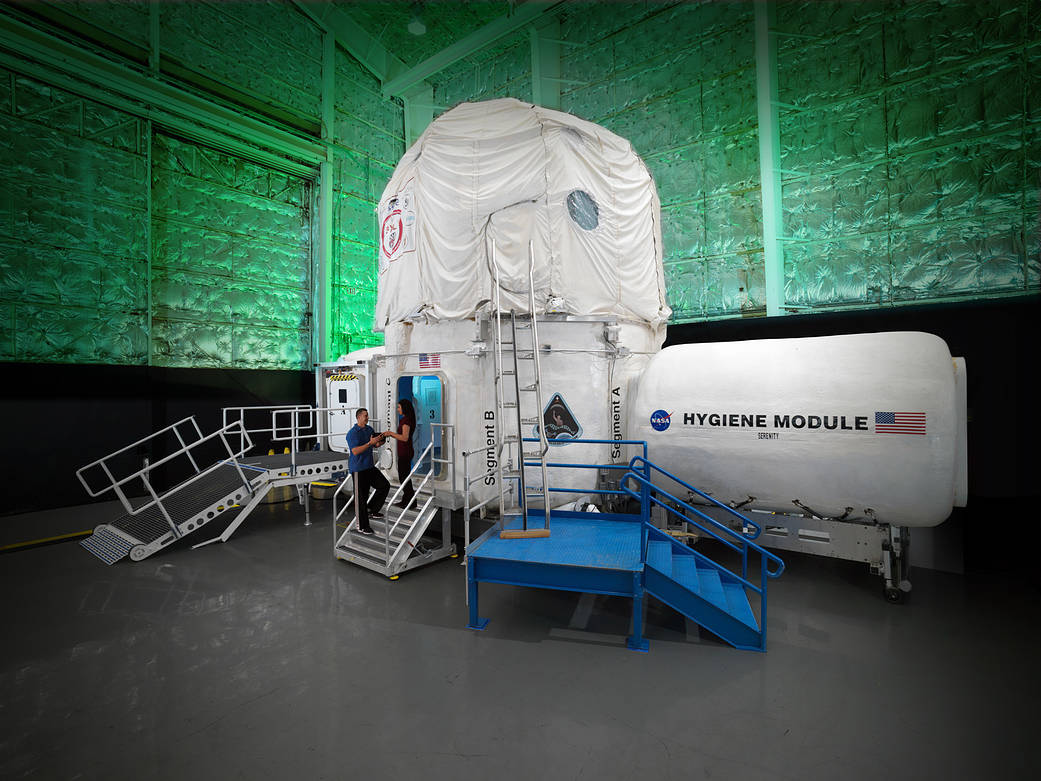

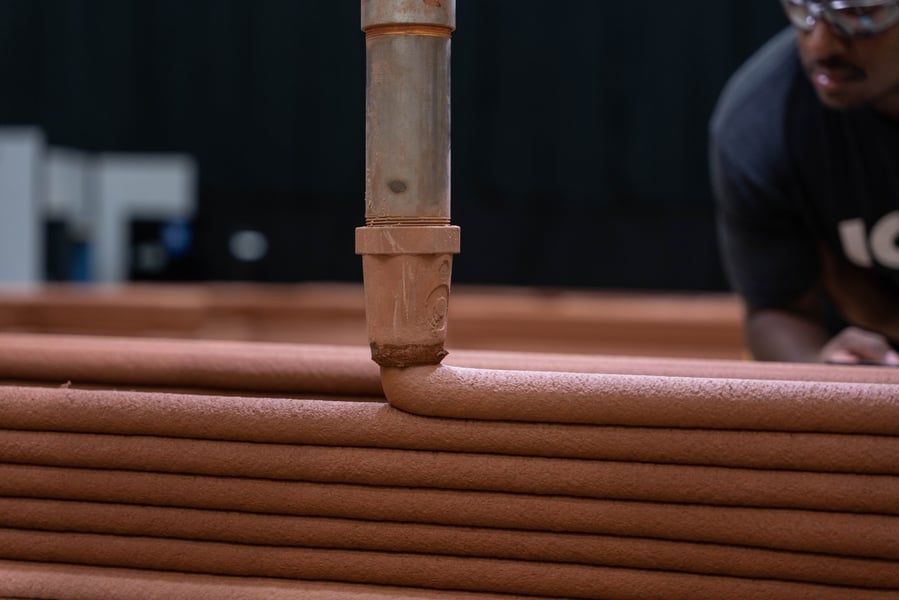
HOUSTON — Ross Elder, Ellen Ellis, Matthew Montgomery and James Spicer have not left a 1,700-square-foot printed habitat at Johnson Space Center since October 19. They have about three months left. On July 1, while that crew was still inside, NASA opened applications for volunteers willing to do something harder.
The new program is called the Moon and Mars Exploration Analog, and it folds two of NASA’s existing isolation studies into a single, longer one. Where the current CHAPEA mission simply locks four people inside a simulated Mars surface habitat for 378 days, the new mission adds a simulated spacecraft transit beforehand, using hardware from NASA’s separate HERA program, before the crew ever reaches the surface habitat. A volunteer selected for the new mission would move through both phases in sequence: confined transit first, surface operations second, with the psychological and physiological toll of each phase measured separately and then together.
NASA says the combined structure exists because the two phases stress a crew differently, and the agency has never measured what happens when the same four people absorb both stresses back to back without a reset in between. A real lunar or Mars mission does not give astronauts a break between the trip and the work once they arrive, and CHAPEA in isolation cannot capture that gap. The findings, according to the agency, are meant to inform how it staffs and supports crews for the Artemis campaign’s planned Moon Base and for any future Mars mission, both of which require the same transit-then-surface sequence the new analog is built to simulate.
HERA, the program supplying the transit simulation, has historically run much shorter missions of 45 days inside a two-story habitat at Johnson Space Center built to mimic a spacecraft rather than a planetary surface. Folding a 45-day-style transit simulation into a 378-day surface mission is itself an experiment in what happens when two previously separate research programs, with different habitats, different mission lengths and different crews, get run back to back by the same four people. NASA has not attempted a mission at this combined scale before.
NASA has not set a firm start date beyond “no earlier than August 2027,” and has not said how many volunteers it expects to apply or how selective the process will be beyond describing a multi-day evaluation that screens for physical fitness, relevant education and psychological resilience. The agency’s own account of the mission’s purpose is broad: to help “keep astronauts safe and mission-ready during future planetary surface operations.” What specific findings from the crew currently inside the CHAPEA habitat, whose mission will conclude roughly a year before the new one begins, are shaping the new mission’s design has not been detailed publicly.
The Houston-based CHAPEA program has already produced two full missions before the one currently underway, and NASA has published limited data from those earlier crews on stress, sleep disruption and team cohesion under Mars-length isolation, with resource constraints and simulated equipment failures built into the schedule. What it has not published, publicly and in detail, is how individual volunteers actually cope month to month, information that would matter directly to anyone applying to a mission designed to be harder, not easier, than the one still running. The application window gives prospective volunteers considerably less to go on than the agency is asking them to commit to.
The recruitment call lands at a moment when NASA’s actual crewed hardware timeline keeps sliding. Boeing’s Starliner, the capsule meant to be one of two vehicles ferrying astronauts to orbit, is not certified to carry a crew until 2027 at the earliest, and the agency’s newly awarded lunar lander contracts are still in early development rather than flight-ready hardware. Analog missions like CHAPEA and the new combined program are comparatively cheap and fast to run against that backdrop: they generate human-performance data years before the spacecraft meant to actually carry astronauts to the Moon or Mars are ready to fly.
Whether a longer, harder analog mission produces meaningfully different data than the three CHAPEA missions already completed, or whether NASA is simply testing how much isolation a volunteer crew can be asked to tolerate before the value of the data plateaus, is not something the agency has addressed. NASA is asking for a year of somebody’s life to find out. The application window is open. What exactly will be learned that three prior Mars simulations did not already show remains an open question inside the agency’s own program design.