
WASHINGTON – Six years after Boeing was supposed to have a spacecraft ready to carry astronauts to the International Space Station, the company’s Starliner capsule still has not earned the certification it needs to fly humans. NASA’s own watchdog now says it probably will not until 2027 at the earliest.
A new report from NASA’s Office of Inspector General, released Thursday, lays out the full scope of what has become one of the most expensive failures in the history of NASA contracting. The agency paid Boeing $4.2 billion in 2014 to develop a crewed spacecraft by 2017. Nine years and several failed attempts later, Starliner remains uncertified, and the OIG raised questions about $127.9 million in payments the agency made to Boeing for work that auditors say may not have warranted them.
The report’s most striking finding is not the money. It is the human-rating timeline. Certification for crewed Starliner flights is now a 2027 target at best, a projection that carries its own asterisk given the program’s history of optimistic estimates, none of which held.
At the center of the report is the June 2024 crewed flight test, which NASA classified as a Type A mishap, the agency’s most serious safety category. Two astronauts, Butch Wilmore and Suni Williams, boarded Starliner for what was supposed to be an eight-day stay on the station. They spent nine months there instead, returning not on Boeing’s spacecraft but on a SpaceX Dragon capsule after engineers lost confidence in Starliner’s propulsion system. The ISS, which faced its own structural vulnerabilities including an air leak in the Zvezda module earlier this year, was now relying entirely on one crew transportation provider to move astronauts in and out.
That dependency is precisely what the Commercial Crew program was designed to prevent. When NASA awarded contracts to Boeing and SpaceX in 2014, the dual-provider structure was supposed to eliminate single-point-of-failure risk in human spaceflight. The premise was competition: two certified vehicles, two providers, redundancy built into the system. SpaceX delivered. Dragon earned human-rating certification in 2020 and has completed 12 crewed missions to the station since then. Boeing has not delivered a single crewed mission.
The OIG report does not confine its criticism to Boeing. NASA management, auditors found, contributed to the program’s failure in ways that go beyond passive oversight gaps. The agency placed excessive confidence in Boeing’s ability to meet contractual milestones, accepted schedule projections without adequate scrutiny, and failed to properly monitor Boeing’s simulation data. Those are institutional failures of a kind that let a contractor’s problems compound quietly until they become publicly visible.
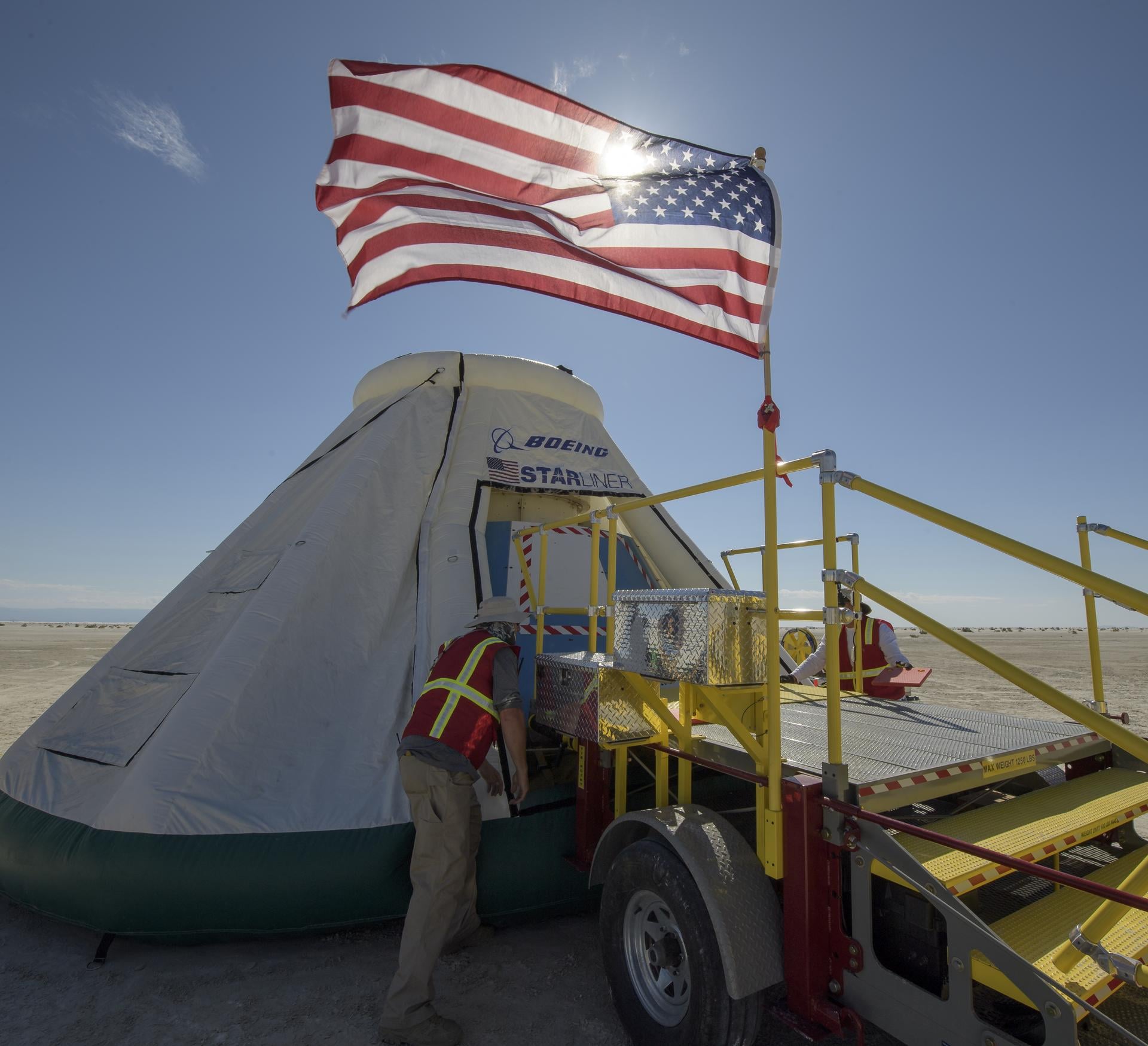
The financial picture reflects years of that compounding. Total program costs now exceed $8 billion, against an original combined budget of $6.8 billion for both contractors. The OIG questioned $127.9 million in Boeing payments in the current audit, in addition to $43 million flagged in a 2019 review. NASA also spent an additional $17 million accelerating SpaceX flights specifically to compensate for crew-transport gaps created by Starliner’s delays. The Commercial Crew program was meant to reduce NASA’s dependence on single providers. Instead it has made NASA more reliant on SpaceX than any single-provider contract would have.
The agency has not said publicly what happens if Boeing cannot meet the revised 2027 timeline. What the OIG report makes clear is that the stakes are unusually high. The ISS is scheduled to retire in 2030, leaving roughly four years to either get Starliner certified and operational or to contract additional SpaceX flights. Auditors found that NASA does not currently have enough contracted crew transportation to cover the full period through station retirement. The agency’s attention has shifted increasingly toward lunar missions under Artemis, but the ISS crew gap is a near-term problem that cannot be deferred.
SpaceX’s position in this context is worth noting. The company recently filed for an IPO that valued it at approximately $1.75 trillion, driven in part by the strength of its NASA Commercial Crew contract and its record of delivery. Boeing, meanwhile, is under sustained pressure across multiple divisions, from quality-control failures in commercial aviation to the Starliner program now under formal OIG scrutiny. The audit does not say Boeing is incapable of fixing its spacecraft. It documents what has already happened and projects where that trajectory points.
NASA’s formal response, included in the report, acknowledged the OIG’s findings and committed to implementing the auditors’ recommendations. That language is standard for Inspector General reports. The recommendations themselves are procedural: tighter milestone monitoring, better documentation requirements, clearer criteria for what constitutes a billable deliverable under the Boeing contract.
Whether any of that produces a certified Starliner spacecraft in 2027 is a question the report cannot answer, because the agency cannot answer it either. The auditors note the 2027 certification target as a projection, not a commitment. Given that the original commitment was 2017, then 2019, then 2021, the weight the new projection can carry is limited.
What the OIG report leaves unresolved is whether Starliner will ever fly crew again. That is not evasion. It is the honest state of the program as of July 2026: a spacecraft that failed its most serious test, a contractor that has consumed more than twice its original contract value without delivering its core product, and an agency committed to both parties without explaining how it reconciles that commitment with a four-year retirement clock.