
The United States men’s national team entered the 2026 FIFA World Cup carrying unprecedented expectations. Playing on home soil, backed by a growing soccer audience, and featuring a generation of players competing across Europe, the USMNT was expected to deliver the deepest World Cup run in program history.
Instead, Belgium delivered a painful reality check.
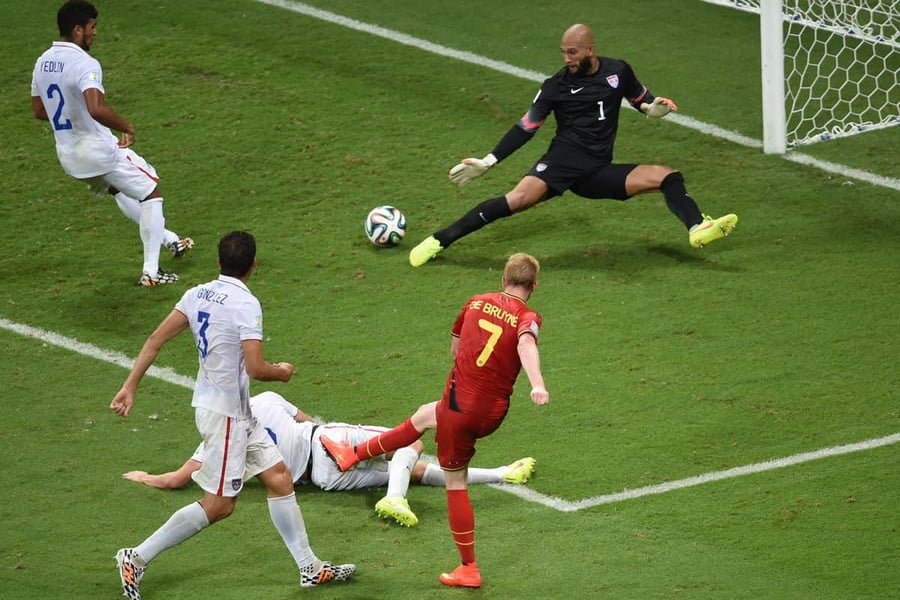
The Americans’ World Cup journey ended with a 4-1 defeat to Belgium in the Round of 16, turning a summer of optimism into a national debate about whether the United States has truly built the foundation needed to compete with the world’s elite football nations.
The defeat came after a tournament filled with historic moments for American soccer. The United States’ World Cup journey had generated enormous attention, with fans expecting the home team to make a landmark run on football’s biggest stage.
Belgium Exposes the Difference Between Talent and Tournament Readiness
The United States arrived in the tournament with a roster filled with players competing at the highest levels of European football. Christian Pulisic, Weston McKennie, Antonee Robinson, and Folarin Balogun represented the most talented generation in American soccer history.
But Belgium demonstrated why international football is decided by more than individual talent.
The European side controlled key moments, punished defensive mistakes, and showed the tactical maturity expected from a nation with decades of elite football infrastructure. The result highlighted familiar USMNT problems, including inconsistent possession under pressure, difficulty breaking down experienced defenses, and struggles maintaining control against top opponents.
The absence of key attacking options also became a major talking point. The situation surrounding Folarin Balogun added another layer of frustration as the Americans attempted to find solutions against a disciplined Belgian defense.
For the USMNT, the defeat raised difficult questions about whether the program has reached its competitive ceiling or whether deeper structural changes are required.
The Youth Development Debate Returns
Almost immediately after the final whistle, attention shifted from the players to the American soccer development model.
Critics argue that the United States has invested heavily in facilities, professional leagues, and player recruitment but still lacks the grassroots football culture that consistently produces elite talent.
Unlike traditional football nations where children develop through informal street and community football, American players have often progressed through expensive organized youth systems. That has created concerns about accessibility and whether the country is identifying enough future stars early enough.
The debate does not center on a lack of investment. The United States has made significant progress over the last two decades. More players are competing abroad, Major League Soccer has expanded, and soccer’s popularity has grown dramatically across the country.
However, the challenge remains creating a development pathway capable of producing players who can consistently compete with nations such as Belgium, Argentina, France, and Spain.
World Cup Success Cannot Be Measured Only by One Tournament
Despite the disappointment, the 2026 World Cup was not a complete failure for American soccer.
The tournament introduced millions of new fans to the sport, created historic moments, and demonstrated that the United States can compete on football’s biggest stage.
The popularity of the tournament was reflected in record-breaking viewership, showing that American interest in soccer has reached levels previously unseen.
Individual players also created memorable moments. Christian Pulisic remained one of the central figures of the USMNT campaign, with his performances continuing to shape discussions around the future of American soccer.
The pressure surrounding Christian Pulisic reflects the expectations placed on the country’s biggest football stars.
The Road to 2030 Begins With Difficult Questions
The Belgium defeat will likely become one of the defining moments of this USMNT era.
The players have improved. The investment has increased. The fan base has grown.
But global football remains unforgiving.
The next four years will determine whether American soccer uses this disappointment as motivation or repeats the same cycle of optimism followed by elimination.
The United States has shown it can host a successful World Cup and attract a massive audience. The challenge now is transforming popularity into sustained competitive success.
The 2026 World Cup proved that the USMNT belongs on football’s biggest stage. Belgium showed that belonging is not the same as competing for championships.
For American soccer, the next step is not simply finding better players. It is building a system capable of creating them.