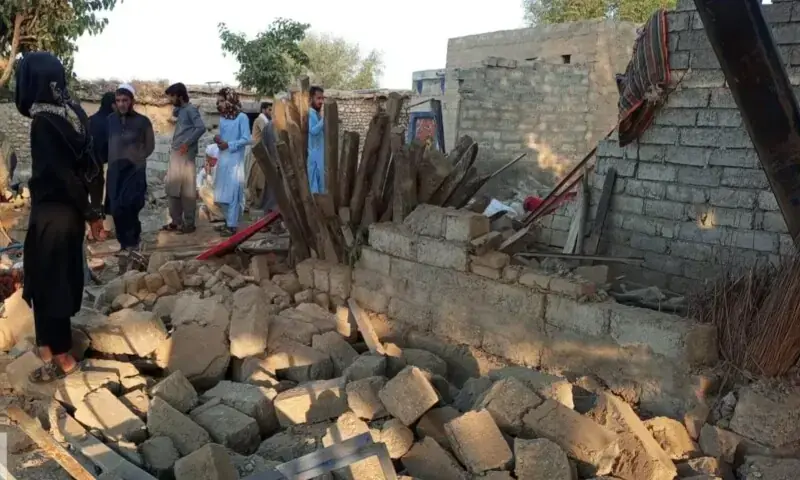

KHUZDAR, PAKISTAN – A suicide bomber detonated an explosive-laden vehicle at the main gate of PPP leader Shafiq Mengal’s residence in Khuzdar on Friday, destroying the gate, the boundary wall, and a large section of the building. The initial blast triggered a series of explosions across the area, followed by a three-hour armed battle in which attackers carrying rocket launchers and grenades engaged security forces. At least 17 people were killed – most of them police officers and security guards assigned to protect the compound. More than 30 others were wounded.
Mengal, a Pakistan People’s Party leader and president of the Jhalawan Panel, survived the attack unharmed. Five of the assailants, including suicide bombers, were killed when security forces pushed back. The Baloch Liberation Army claimed responsibility within hours, adding Friday’s assault to a campaign that has increasingly targeted civilian political figures alongside military infrastructure.
The attack took place in Khuzdar’s Shahzad Town neighborhood, in central Balochistan. After the vehicle-borne explosion, armed BLA fighters opened fire from multiple positions, triggering the firefight that lasted through much of the morning. Rescue teams transported the dead and wounded to Khuzdar Teaching Hospital and the Combined Military Hospital, where emergency protocols were activated. Security forces launched search operations and increased deployment across the city.
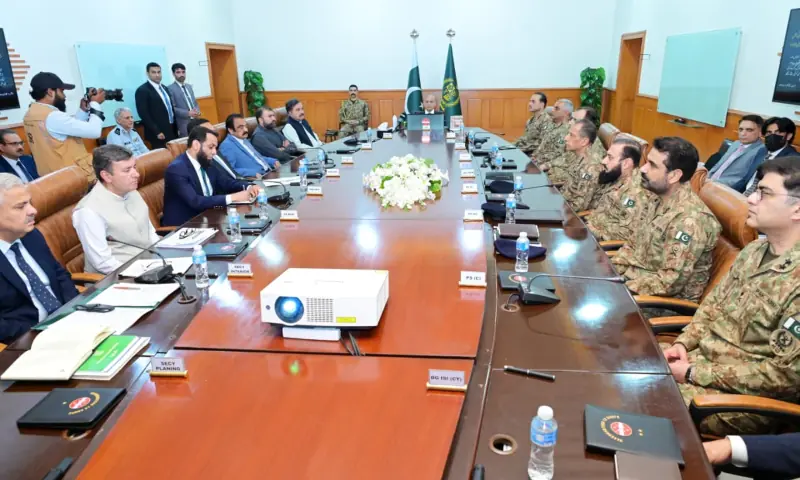
Friday’s attack is the deadliest single incident in a week that had already recorded significant violence across the province. Between July 5 and July 8, three separate terrorist incidents killed 42 people – including 27 police officers and 11 members of the security forces – in attacks at Quetta’s outskirts, a police post in Ziarat, and an army convoy in Bela. Prime Minister Shehbaz Sharif chaired an emergency provincial security meeting in Quetta on July 9, declaring it “a mutual and singular decision of the civil and military leadership that we must end terrorism collectively,” Dawn reported from the meeting.
Security forces launched what Pakistani authorities designated “Operation Shaban” in the days after those July 5-8 attacks, reporting approximately 75 militants killed across Balochistan in the ensuing operations. The BLA assault on Mengal’s home, carried out with vehicle-borne explosives and heavy weapons less than 48 hours after that tally was announced, raises immediate questions about the operation’s disruption of BLA planning capacity.
Friday’s assault on a PPP politician’s residence follows a different template from the BLA’s recent infrastructure attacks. In May 2026, the BLA’s Majeed Brigade carried out a suicide car bombing on a military passenger train near Quetta’s Chaman Phatak station, killing at least 24 people – most of them soldiers and family members traveling for the Eid holiday. That attack targeted the state’s military personnel. Friday’s targeted a state-linked civilian politician. The tactical shift suggests a deliberate widening of the category of acceptable targets.
Mengal’s PPP affiliation, and his role as a local Jhalawan Panel leader, makes him a representative of the Pakistani state’s political structure in a province where the BLA rejects that structure’s legitimacy outright. Balochistan is Pakistan’s largest province by area but its least populous, and it sits atop significant mineral and natural gas reserves. The BLA and affiliated groups have long argued that the province’s resources benefit Pakistan’s central government and Chinese investment projects – particularly the China-Pakistan Economic Corridor – while Baloch communities remain economically marginalized.
Pakistani officials have consistently denied that characterization and have attributed Balochistan’s instability to external interference. Prime Minister Sharif’s July 9 remarks attributed recent attacks to “forces with India” – a claim New Delhi has not publicly acknowledged. The relationship between India and Pakistan has remained sharply adversarial through 2026, following heightened tensions and military exchanges along the Line of Control earlier in the year.
The province’s escalating violence has also intersected with tensions from its western border. On July 2, the Afghan Taliban launched drone strikes into Balochistan in the first direct aerial incursion on Pakistani territory, injuring two people near a government school. Pakistan shot down four drones and accused the Taliban of harboring Pakistani militants, adding a third adversarial dimension to the province’s security situation.
Shafiq Mengal has not made public statements since the attack. His security detail, which bore the brunt of the casualties on Friday, reflects a pattern visible in recent Balochistan incidents: the politicians and officials the state assigns guards to are surviving while the guards themselves die. The implications for civilian officials’ willingness to remain in posts across a province with difficult terrain and limited federal policing resources are not addressed in any government statement issued so far.
What is not in dispute is the province’s casualty toll. Friday’s 17 deaths follow a week in which at least 42 more were killed, a government counterterrorism operation claiming 75 militants neutralized, and a sustained BLA campaign that has cost Balochistan hundreds of lives since the group’s escalation began in earnest in late 2024. The question that Prime Minister Sharif’s Quetta summit left unaddressed is whether the government’s response capacity is sufficient to change the trajectory – or whether Friday’s attack answered that question already.