
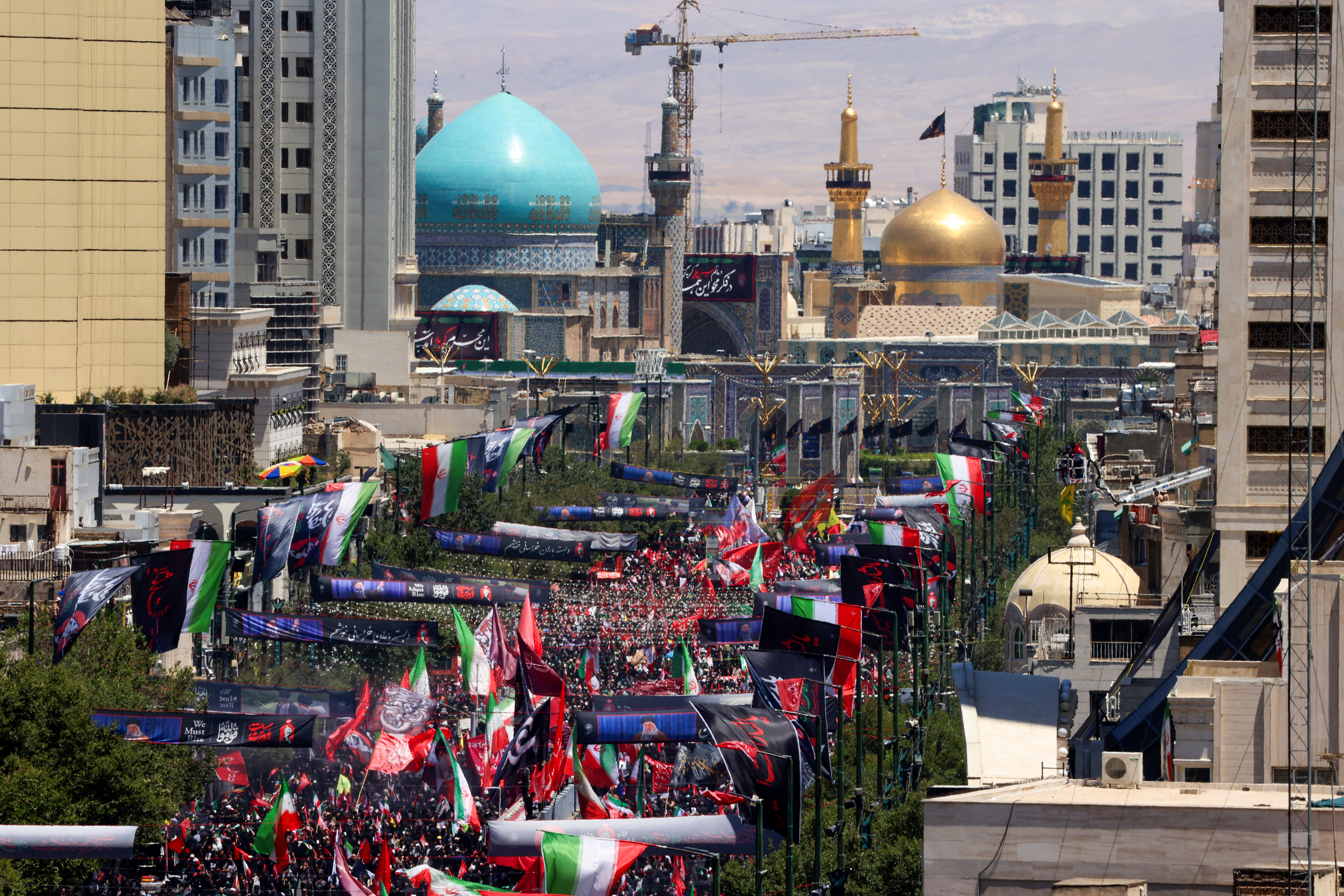
MASHHAD – The streets of Mashhad were not big enough. The governor of Iran’s second city had said he expected 15 million people to arrive for the burial of Ayatollah Ali Khamenei, and by Thursday the city had filled beyond what its ordinarily manageable crowds could hold. People had come from across Iran, by road and by rail, to the city that houses the Shrine of Imam Reza – Iran’s most sacred place of worship and the site where Khamenei asked to be interred.
The choice of the shrine was deliberate and carried a weight that secular diplomatic language struggles to convey. Imam Reza is the eighth of the twelve Imams in the Twelver Shia tradition, and his shrine in Mashhad draws tens of millions of pilgrims annually. To be buried there is to be placed among the most venerated figures in the faith. Whether Khamenei made that request before his death or whether it was chosen by the Islamic Republic’s ceremonial authorities is a detail that will matter to historians; Thursday’s crowds did not appear to need the clarification.
The burial was the final act in six days of ceremonies that began with the body lying in state in Tehran and moved through a funeral procession that drew millions through the Iranian capital last week. The route from Tehran to Mashhad followed a rail corridor that, on Thursday morning, was damaged by American airstrikes. Reuters reported that US forces struck a bridge on the China-Iran rail corridor. Iranian state television confirmed the Tehran-Mashhad railway had been suspended. The timing was not coincidental.
The railway strikes placed the United States in the position of targeting infrastructure through which mourners were traveling to the burial of a head of state. The symbolism was absorbed quickly in Tehran. Whatever military justification the Pentagon offered, strikes on rail lines leading to a Supreme Leader’s funeral arrived in a context that made any technical explanation beside the point. Iran’s foreign ministry characterized the strikes as deliberate desecration; the framing resonated among the 15 million who had already reached the city by other means.
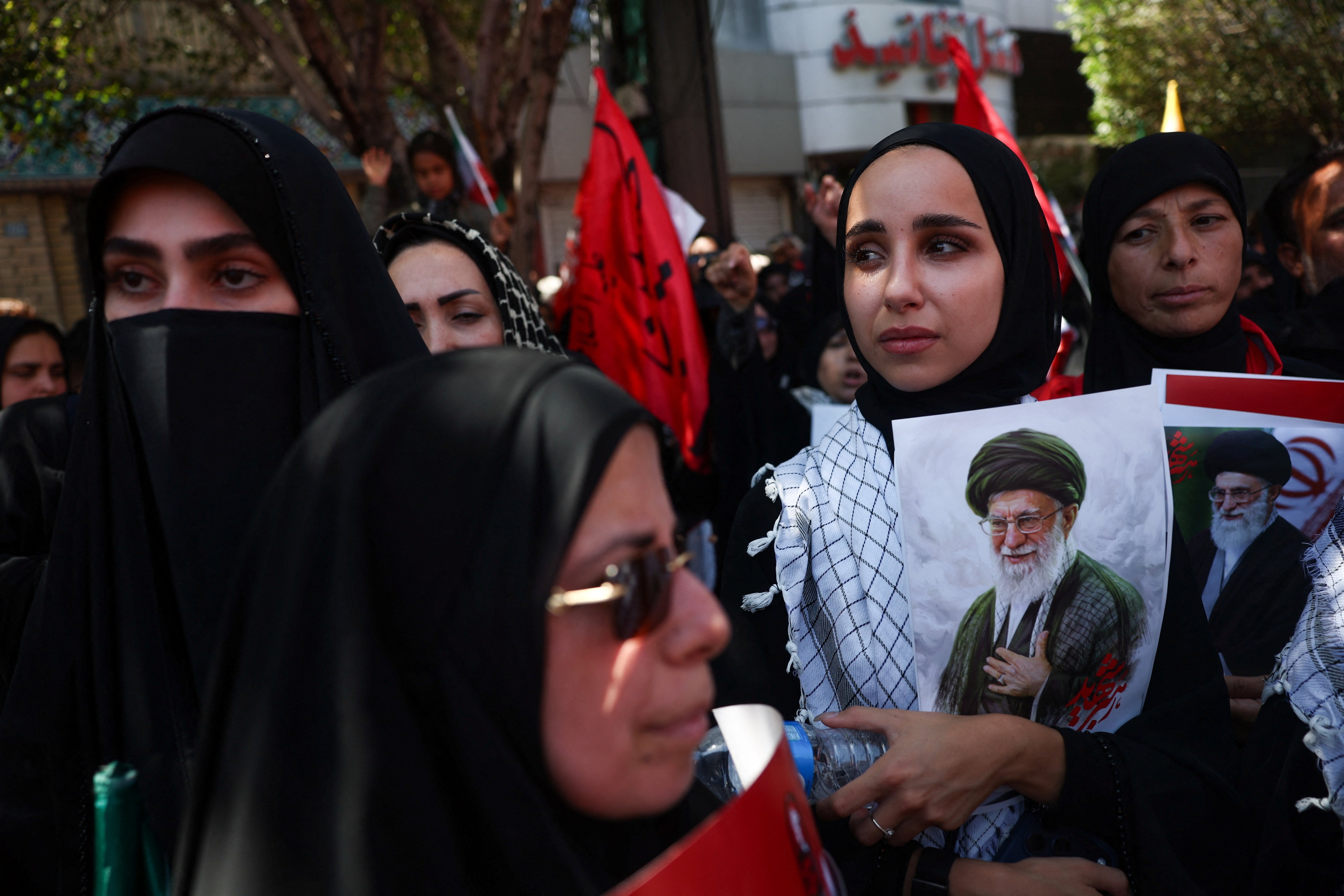
Al Jazeera’s photographic record of the burial ceremony captured what the attendance figures suggest: streets lined with mourners carrying photographs of Khamenei and flags of the Islamic Republic, a city mobilized at a scale that has few modern equivalents outside of pilgrimage. The Mashhad governor’s figure of 15 million was not independently verified at the time of filing, but the images confirmed a turnout of an order of magnitude that overwhelmed the infrastructure meant to process it.
Khamenei was killed on February 28, the first day of the US-Israel military operation against Iran. The campaign that opened with his killing has since expanded and contracted through the ceasefire that collapsed on Thursday, with both sides resuming strikes across the region on the same day as the burial. The coincidence was not incidental. Iran’s government read it, and said as much: American forces struck during the burial not because they lacked awareness of the timing but because they chose to proceed regardless.
The diplomatic attendance at the funeral ceremonies reflected a more constrained international consensus than Tehran had projected. Russia sent a senior official rather than President Putin; China sent a legislator rather than its head of state. The formal protocol of the funeral reflected Iran’s real but limited global support: broadly sympathetic among non-Western governments, but short of the unambiguous strategic alignment that Tehran had sought in the months since Khamenei’s killing.
What the funeral does not resolve is the most consequential political question facing Iran. Khamenei’s successor as Supreme Leader had not been publicly named as of Thursday. The Assembly of Experts, which holds constitutional authority to appoint the next leader, has been in session. Who emerges from that process, and what mandate they understand themselves to carry in a country that has just buried a Supreme Leader killed by foreign military action, will define the next phase of Iranian politics more than the scale of Thursday’s crowds.
The war that killed Khamenei has not paused for his burial. American forces struck Iranian targets Thursday. Iranian forces struck targets in the Gulf. The railway to Mashhad was damaged. The ceasefire declared over. The country that brought 15 million people to Mashhad to bury its Supreme Leader at the Shrine of Imam Reza did so under active American bombardment – a fact that Iranian state media repeated throughout the day and that will not be easily separated from Thursday’s mourning in the political memory Iran is constructing around this death.
What remains unknown: whether Khamenei’s successor will pursue the confrontation with the United States that his killing opened, or whether the burial will create space for negotiation that the war’s momentum has not yet allowed. The Islamic Republic has never before had to replace its Supreme Leader, and the process by which it does so is not transparent to outside observers. Thursday’s funeral answered one chapter of Iran’s history. The chapter that determines what Iran becomes after it is still being written.