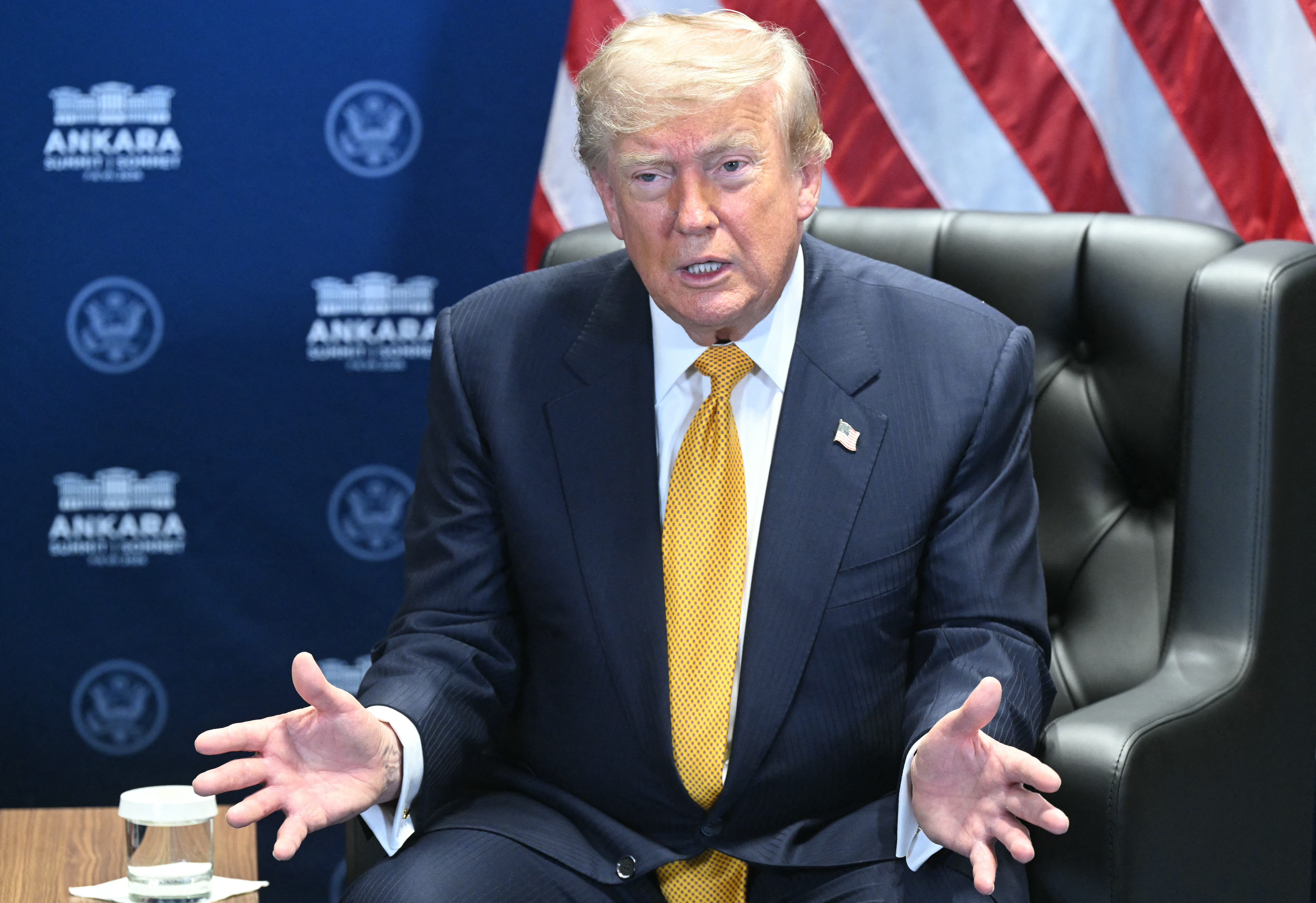

DUBAI – Six thousand seafarers are stranded in the Persian Gulf. Their ships sit at anchor in waters that, fewer than four weeks ago, were supposed to have been reopened by the memorandum of understanding the United States and Iran signed on June 17. On Thursday, American forces struck Tehran. Iranian forces fired missiles and drones at Gulf installations and at the Azraq military base in Jordan. President Donald Trump, speaking from Ankara on the sidelines of the NATO summit, declared that he believed “the truce is over.”
It was not a declaration that surprised anyone who had been paying attention to the strait.
The June 17 MoU produced a ceasefire. It did not produce the political conditions necessary to sustain one. Tehran and Washington suspended their military exchanges and opened a 60-day negotiating window. What they did not do was resolve the underlying dispute – the Islamic Revolutionary Guard Corps’s claim to authority over Hormuz transits, Iran’s demand for transit fees, and Washington’s refusal to concede either. In the absence of those resolutions, the ceasefire depended on both sides’ willingness to absorb the political costs of restraint. That willingness ran out before the 60 days did.
The collapse unfolded slowly, ship by ship. On June 25, the Singapore-flagged Ever Lovely was struck by a projectile roughly 14 kilometers from the Omani coast. No injuries, no oil spill. On June 27, the Panama-flagged Kiku, carrying more than two million barrels of crude, was hit by a drone. Again, no casualties. Between July 6 and 7, three more vessels were targeted: the Qatari LNG tanker Al Rekayyat, which suffered an engine fire requiring crew evacuation; the Saudi supertanker Wedyan, damaged while carrying crude; and the Liberian-flagged M/T Cyprus Prosperity. Five ships in 18 days. None of the attacks produced the mass casualty event that would have forced an immediate political reckoning, which may explain why neither government moved to address them before the pattern set.
According to Al Jazeera’s tracking of Hormuz transit data, only 513 ships passed through the strait between June 18 and July 5 – an average of 28 per day. Before the war, the strait averaged 100 vessels daily. The gap between those numbers, expressed in barrels of oil and cubic meters of liquefied gas that did not reach their destinations, is the arithmetic of the ceasefire’s failure. Insurance premiums for Gulf-bound shipping have reached levels that make transit commercially prohibitive for many operators; tankers are rerouting around the Cape of Good Hope, adding weeks to voyages and costs to supply chains that were already strained.
Britain and France deployed mine-clearing ships to Hormuz in early July to address the physical infrastructure of the ceasefire – the mines Iran laid during the conflict that commercial insurers refuse to certify as cleared. The tactical reality those vessels arrived to address is now, following Thursday’s escalation, back in question.
The IRGC had already added a new dimension before Thursday’s strikes. Iran demanded that vessels transiting Hormuz pay fees and follow Tehran-designated routes, threatening attack on any ship that did not comply. Trump called the demand “unacceptable.” Tehran did not withdraw it. The standoff over who controls passage through the world’s most critical oil chokepoint was never resolved by the MoU; it was merely deferred. Thursday’s events are the deferral ending.
Iran’s response on Thursday extended well beyond Hormuz. Ten ballistic missiles struck Jordan’s Azraq military base, one of the United States’ most significant forward installations in the region. The strikes on Azraq represent an expansion of the conflict’s geography, targeting US military infrastructure in a third country that is neither Iran nor a Gulf state. Jordan had not publicly confirmed the attack or its casualties as of the time of filing.
American forces struck Tehran Thursday morning, following earlier attacks on Iranian coastal cities on June 26 and 27. The sequence matters to the politics. Iran did not resume strikes in a vacuum. It resumed strikes after the United States struck its territory. Whether Washington considers the Iranian ship attacks a violation of the MoU that authorized a US response, or whether the Trump administration regards itself as no longer bound by the MoU at all, had not been formally clarified by Thursday afternoon.
The context surrounding Thursday’s escalation is also the context surrounding the burial of Iran’s Supreme Leader. Khamenei’s coffin is making its way to Mashhad, having left Tehran in a procession that drew millions of mourners through the capital last week. US forces struck Iranian railway infrastructure this week targeting routes toward that city. The timing – American strikes falling on transport routes leading to a head of state’s burial site – is the kind of symbolic escalation that makes managing a ceasefire collapse substantially more difficult than managing a straightforward military exchange.
The June 17 MoU had already excluded Gaza from any political settlement, treating Palestinian diplomatic objectives as a residual concern for a later negotiation. The architecture of that exclusion is now at risk of collapsing along with the ceasefire itself. The framework that sidelined Gaza to produce a deal between Washington and Tehran has proven, 22 days after its signing, insufficient to hold.
What remains unknown: whether Thursday’s exchanges represent a controlled re-escalation – both sides absorbing damage while signaling readiness to negotiate a second ceasefire – or whether the accumulated political costs of the first ceasefire’s failures have made a second one structurally harder to reach. Six thousand seafarers in the Gulf, and the global economy that depends on their cargo routes, are not in a position to wait long for that answer.