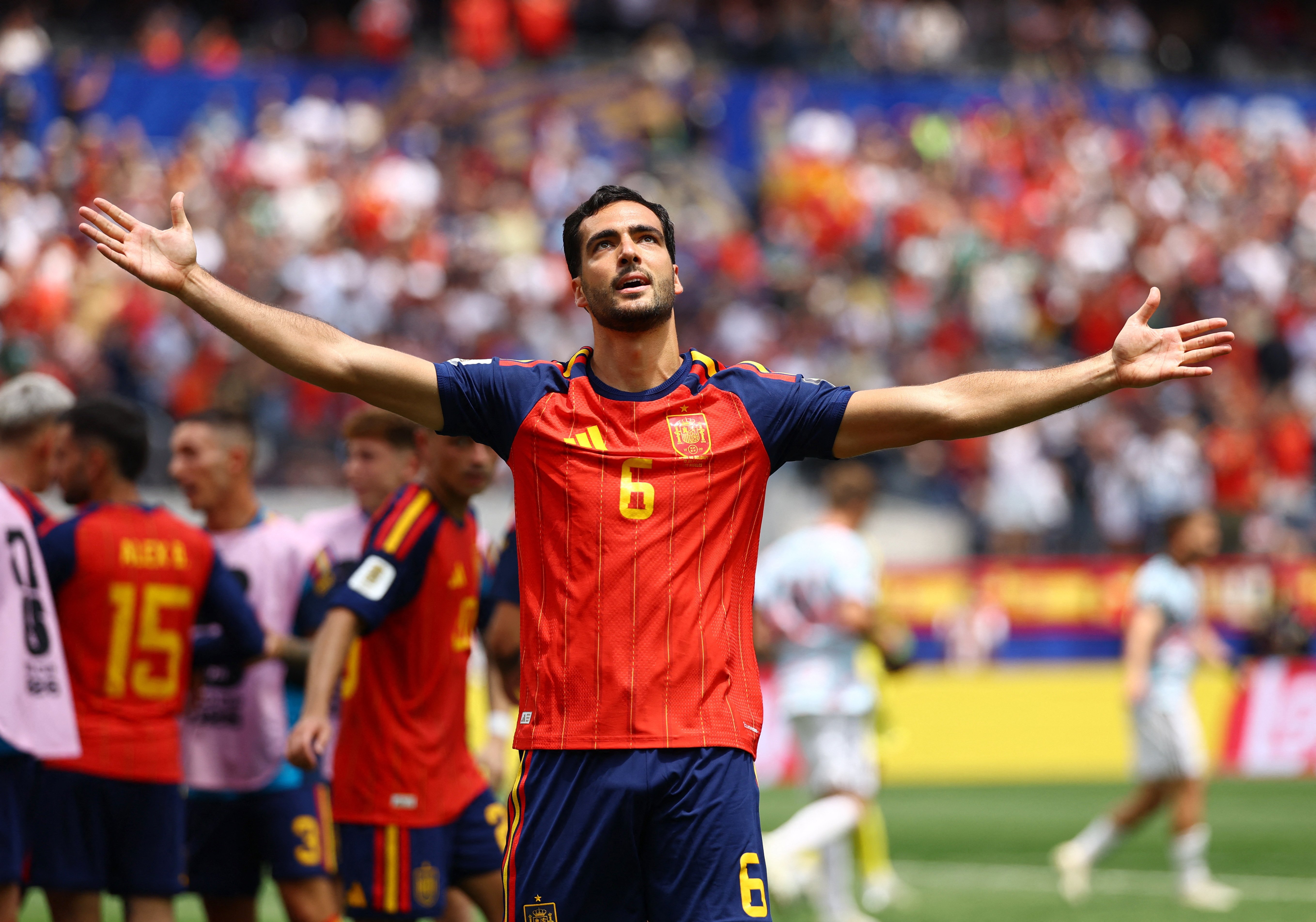

LOS ANGELES – Mikel Merino had been on the pitch for two minutes when he settled it. A Pau Cubarsi shot from distance, substitute goalkeeper Senne Lammens getting his hands to it but failing to secure the ball, and Merino arriving at the rebound in the 88th minute to poke Spain into a 2-1 World Cup quarterfinal victory over Belgium at the Rose Bowl. France wait in Dallas on Tuesday.
The decisive moment arrived against the backdrop of a match Spain should have controlled and briefly lost. For 649 minutes of tournament football they had conceded nothing. Charles De Ketelaere ended that run in the 41st minute, meeting a Timothy Castagne cross from the right with a header that Unai Simon could not keep out. Belgium were level. Spain had a problem that their usual dominance of possession was not, in those minutes, going to solve.
The goals tell the match’s outline without fully explaining it. Fabian Ruiz opened the scoring in the 30th minute after Dani Olmo’s effort was parried by Thibaut Courtois and returned directly to Ruiz, who finished without needing to think. Spain had the lead. They built from it with the patient, high-press possession game that has defined their 2026 tournament, maintaining territorial dominance against a Belgium side that had been willing, throughout this World Cup, to absorb pressure and strike on transition.
What changed the match’s complexion was not Spain’s play but Courtois leaving in the 71st minute with what appeared to be a thigh injury. Manchester United’s Lammens came on in his place. In a match with Belgium still searching for a winner, bringing in an inexperienced international goalkeeper for the final stretch is a gamble of the kind that tends to resolve itself one way or the other, sharply. On the rebound from a Cubarsi shot in the 88th minute, it resolved the wrong way for Belgium.
Merino’s presence in the penalty area was itself the product of a substitution made only two minutes earlier. Spain coach Luis de la Fuente brought him on in the 86th minute, and Merino scored from his second meaningful touch of the ball. It was his second decisive late goal in knockout football at this World Cup. Against Portugal in the round of 16, Merino entered as a substitute and scored in injury time to send Spain through 1-0. He is now two for two in knockout appearances off the bench – a record of substitute impact that has no equal in this tournament and very few in recent World Cup history. Whether de la Fuente starts him against France, or preserves that weapon for when Spain need it again, is among the most interesting selection questions in international football going into the semifinal.
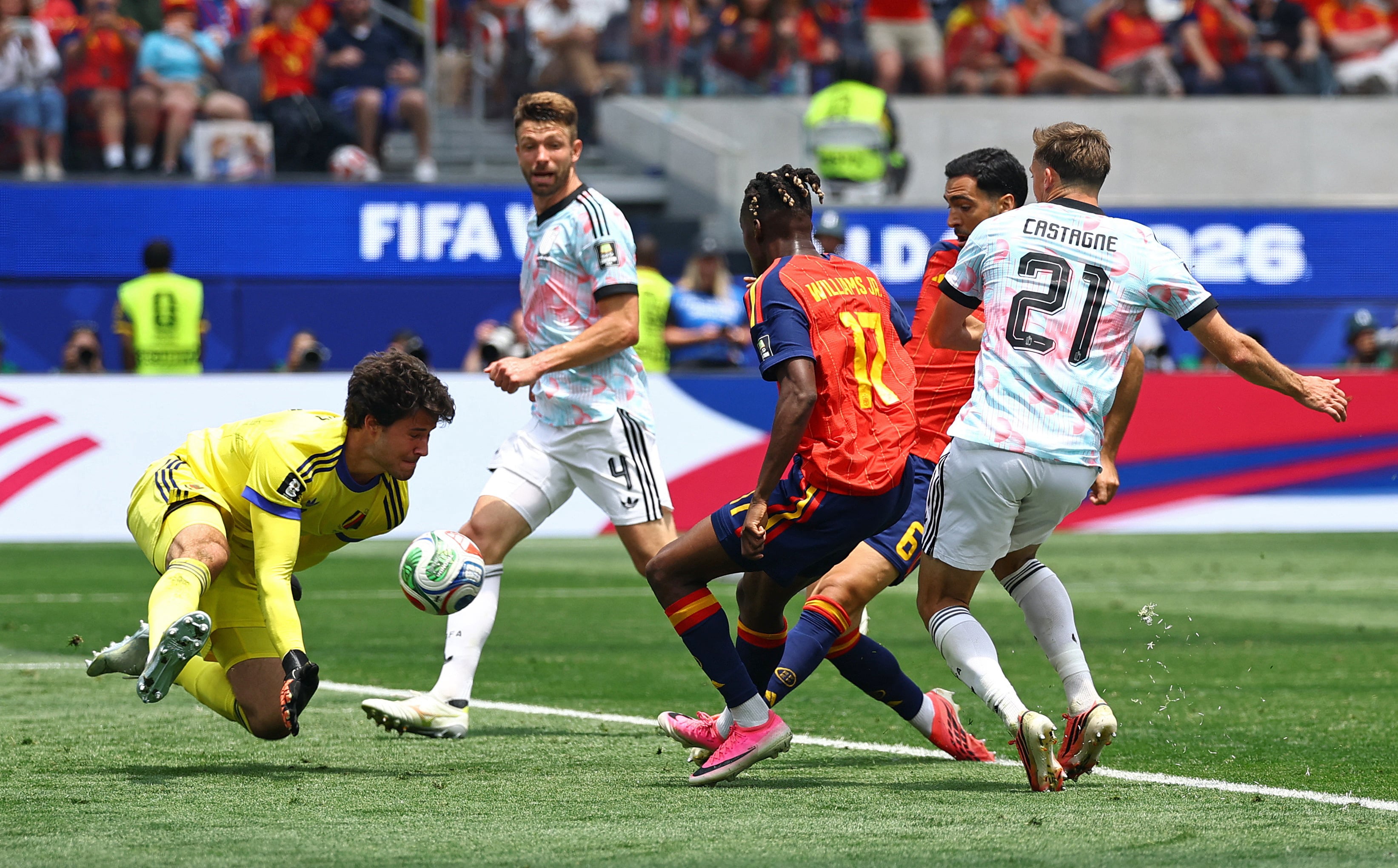
Belgium’s late pressure was genuine. In the minutes after Merino’s goal, Aymeric Laporte cleared what was Belgium’s best chance of an equalizer. Lammens made saves in the second half that kept his side in contention before the error cost them. Belgium can leave Los Angeles knowing they competed in this quarterfinal; they will also leave knowing that a goalkeeping change in the final twenty minutes of a match you need to win is a situation that tends to punish the team that changed keepers.
For Kevin De Bruyne, who entered Friday’s match described as possibly playing his final World Cup game, the exit is the close of a tournament career that peaked in 2018 when Belgium reached the semifinal for the first time. The generation of Belgian footballers who promised something extraordinary in Russia never quite found the same level again – not in Qatar, and not in Los Angeles. De Bruyne was involved without being the decisive force the match required of him.
Spain’s broader tournament picture is one of near-total dominance with one visible crack now apparent. They have not lost. They have not conceded in six of their seven matches. The high-press, technically fluent football de la Fuente has organized through this World Cup recalls in structure the Spanish sides that dominated European and world football between 2008 and 2012 – though the personnel are different enough that the comparison is more atmospheric than tactical. The squad has been largely healthy. The rotation has been managed. The path to the final now requires only one more result.
France are the opponent. Kylian Mbappe, who scored his eighth tournament goal against Morocco in the quarterfinals, stands one behind Lionel Messi’s all-time World Cup scoring record of 21. France were beaten finalists four years ago and have been consistently near the top of international football for a decade. The Spain-France matchup carries tactical history – the two sides have met in Nations League and European Championship competition in recent years – but a World Cup semifinal introduces stakes that club-season competition does not replicate. As this publication noted before the quarterfinals, France entered the knockout rounds as the team with the widest range of ways to win.
Spain have not been in a World Cup semifinal since 2010, the year they beat Germany and then the Netherlands to win it in Johannesburg. The generation that did it – Xavi, Iniesta, Villa, Casillas – is long gone. What de la Fuente has built is a different Spanish team with the same organizing principle: technical quality used in service of an idea about how football should be played. Whether that idea is enough for France in Dallas, on Tuesday, is the question that now matters most.