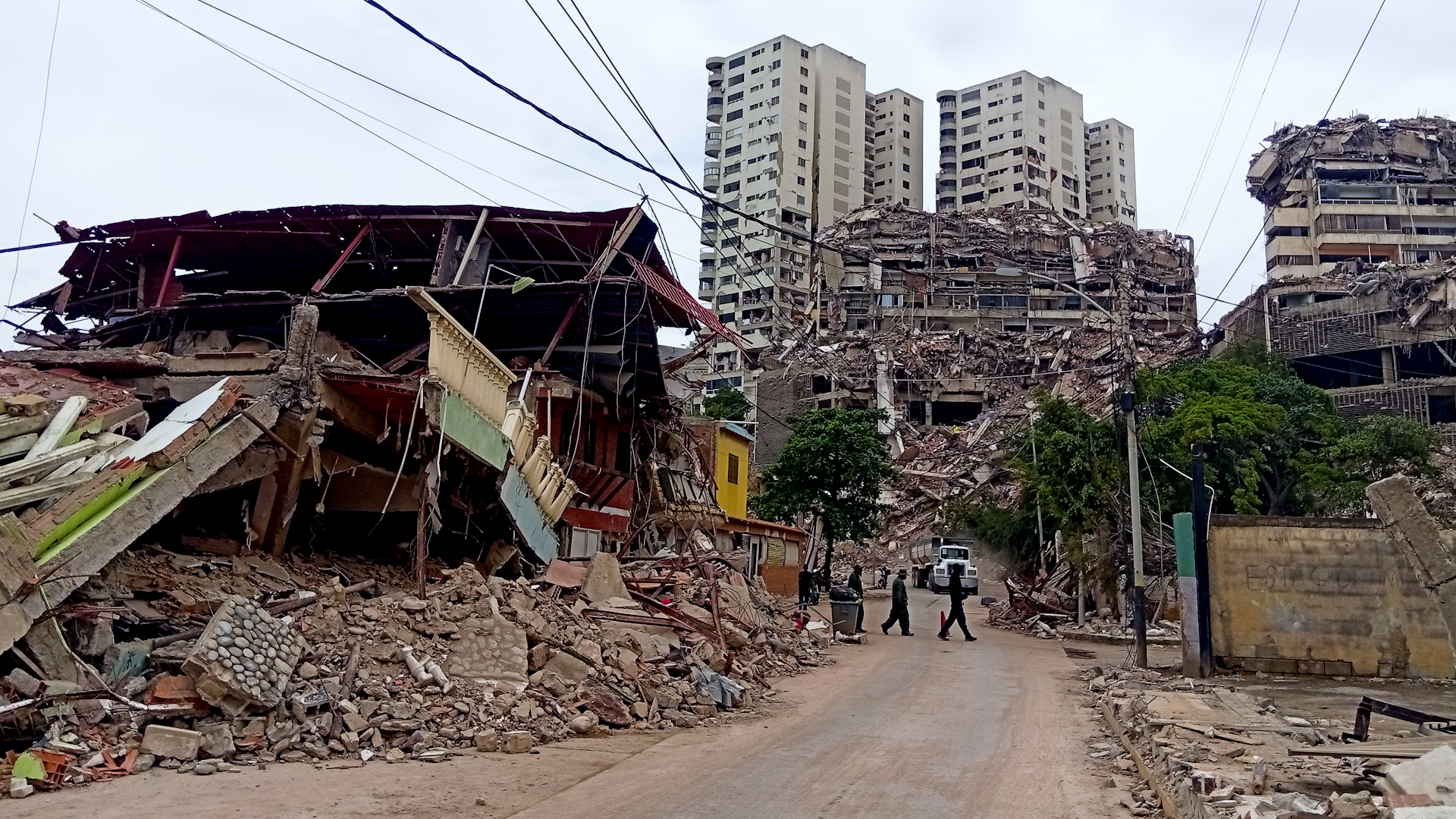

LA GUAIRA – Janet Viana has not left the tower block on Avenida Principal in Catia La Mar. The 72-year-old has stood outside it for days as the structure continues to list, waiting for her son’s body to be brought out before demolition equipment arrives. “I hope I can get my son’s body back before they tear it all down,” she told Al Jazeera. “That’s all I hope for.”
Eighteen days since twin earthquakes struck Venezuela’s northern coast on June 24, the confirmed death toll has crossed 4,300. The United Nations estimates that as many as 50,000 people remain missing – buried under collapsed apartment towers and coastal structures between La Guaira and Catia La Mar, or unaccounted for in a missing-persons registry that has grown faster than rescue teams can work through it.
The scale of the loss has outrun Venezuela’s institutional capacity to respond. La Guaira Governor José Alejandro Terán has said publicly that more than 6,000 survivors were pulled from the ruins in the days following the June 24 tremors, citing it as evidence of immediate government action. On the streets of Catia La Mar, a different picture has taken shape.
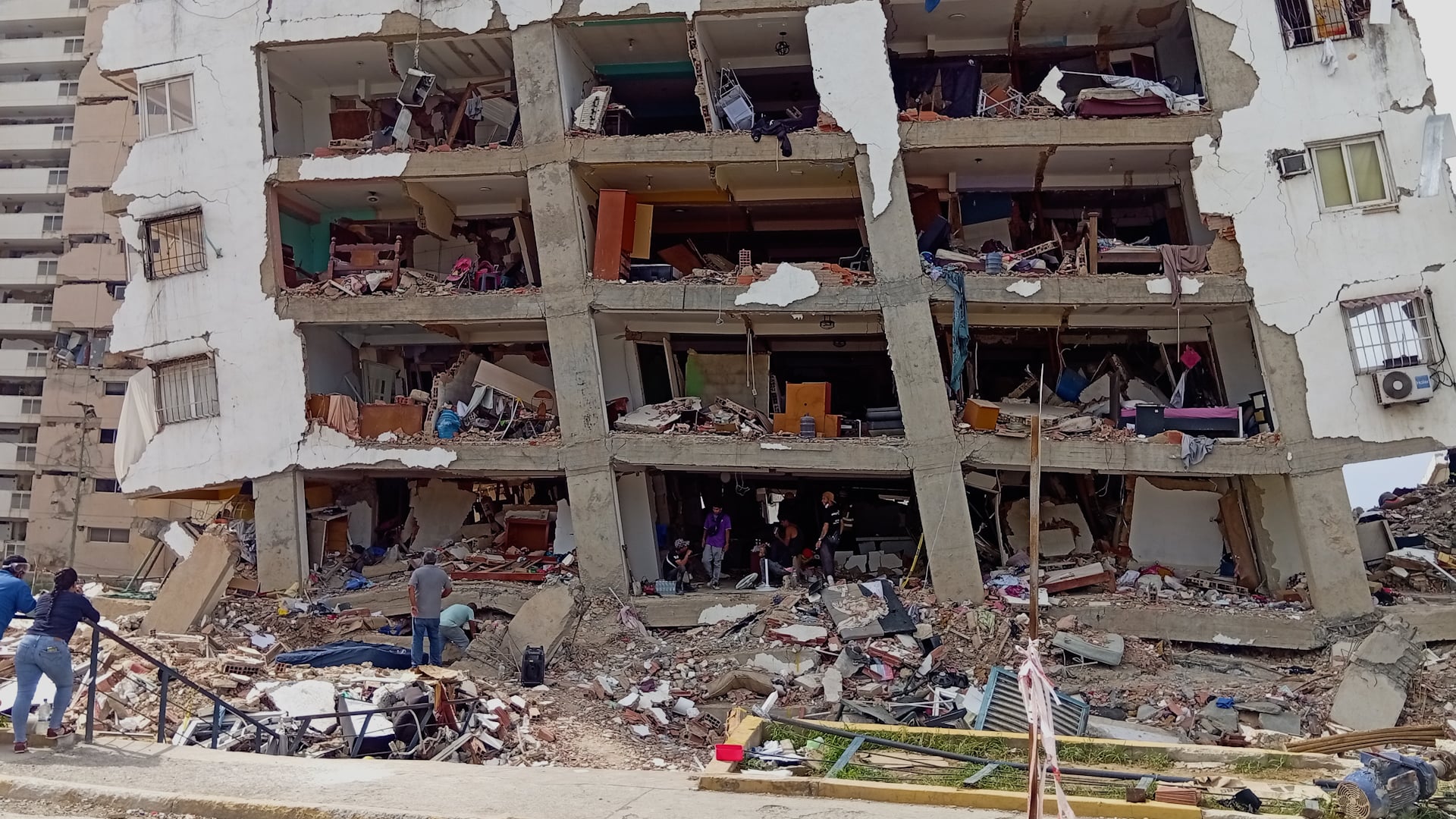
Javier Villegas, 30, has been leading unauthorized recovery operations inside a tower that government crews determined too dangerous to enter. He believes 38 bodies remain inside. Without heavy machinery – and without official sanction – his team moves rubble by hand through sections where floors have pancaked to under a meter in height. “All we see is decay, but we’re still fighting to get our loved ones out,” Villegas said.
This gap between official figures and ground-level reality has defined the entire aftermath. International teams – the Qatar International Search and Rescue Group and the Syrian White Helmets among them – joined early operations after the June 24 quakes. India deployed the Operation Amistad field hospital in Caracas, which was treating more than 400 survivors daily as of early July. The largest search teams have since scaled back or departed, leaving what remains as a recovery effort increasingly conducted by families.
The United Nations Office for the Coordination of Humanitarian Affairs launched a $300 million appeal earlier this week, seeking emergency funding for shelter, water, sanitation, and medical services across the affected region. OCHA has simultaneously warned that decomposing remains and severely disrupted sanitation infrastructure in La Guaira are creating conditions for disease transmission. Quicklime has been applied at multiple recovery sites to manage decomposition – a practice that complicates the forensic identification of remains.
Venezuela’s missing-persons registry holds more than 50,000 names by UN estimates, though official Venezuelan counts remain lower. The discrepancy reflects both the pace of formal filings and the structural reality of the disaster zone: entire floor plates in some Catia La Mar tower blocks have been compressed to under a meter in depth, making identification of remains dependent on forensic processes that the country’s overwhelmed morgues cannot yet absorb.
The fuel shortages that define much of Venezuela’s infrastructure have been a persistent obstacle throughout. In the first two weeks of the recovery, donated heavy cranes sat immobile at staging areas for lack of diesel. Military roadblocks delayed rescue teams in some neighborhoods while permitting access in others. Aid distribution points ran through supplies within hours of opening at multiple sites, sending families to organize their own informal networks.
The twin earthquakes struck 39 seconds apart on the morning of June 24, collapsing a 22-storey residential tower in Caracas and leveling much of the housing stock along the La Guaira seafront. International rescue teams had largely departed by July 10 with the toll then at 3,811, and 40,000 names on the missing register. In the ten days since, nearly 500 more confirmed dead have been added as recovery teams work through rubble sites that initial search operations could not clear.
The United States Geological Survey initially projected a final toll of between 10,000 and 100,000, based on population density and structural data in the worst-affected zones – a range that reflected how little engineering information existed for the dense hillside housing most damaged by the secondary tremor. Venezuela’s confirmed figures have so far stayed below the lower end of that projection. Whether the 50,000 missing represent overlap with the confirmed dead, remain in uncleared rubble, or relocated to relatives outside the disaster zone is not yet known. Janet Viana’s answer may come when the tower in Catia La Mar finally comes down. When that will be, she has not been told.