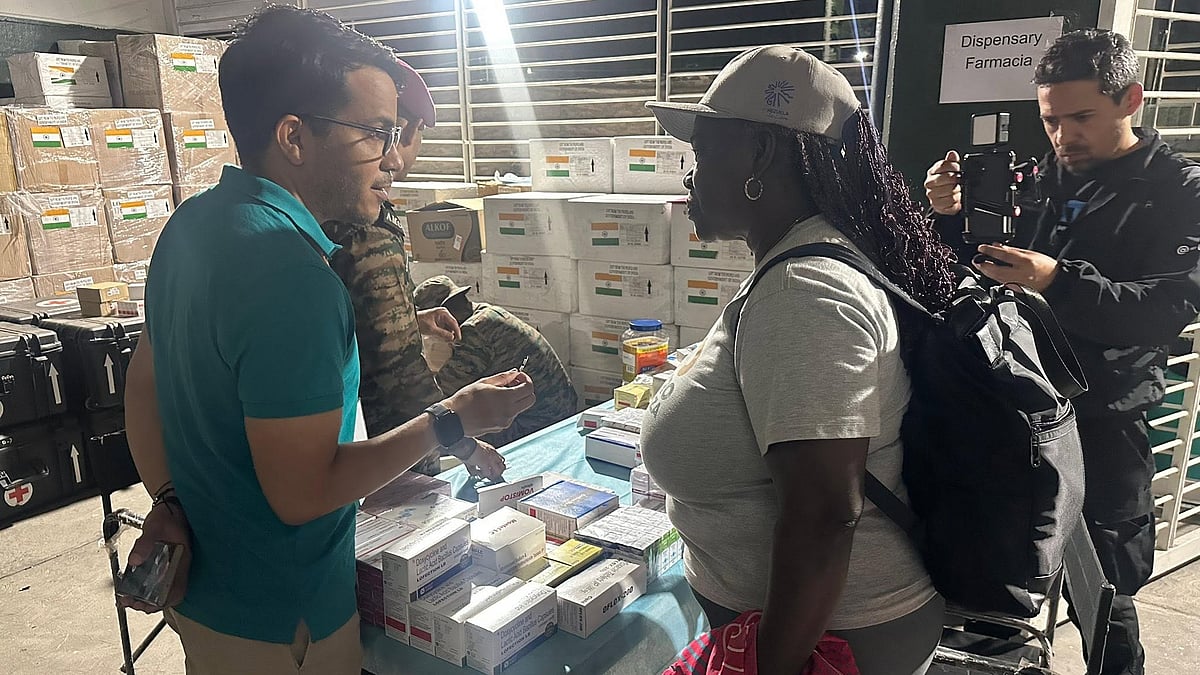

NEW DELHI — She is in her 60s, and in all those years she said, she had never seen medical attention like this in Caracas. At the International La Rinconada Racetrack, where India has set up a field hospital staffed by 41 military doctors, her testimonial was among the videos shared this week by India’s Ministry of External Affairs spokesperson Randhir Jaiswal as evidence of what Operation Amistad has become: the most active medical facility for earthquake survivors in the Venezuelan capital.
On Friday, Venezuelan Foreign Minister Yvan Gil arrived at the hospital to deliver a formal expression of gratitude. Standing beside India’s Ambassador P.K. Ashok Babu, Gil did not reach for diplomatic language. “We have no words to thank you, Ambassador,” he said. “Please convey to the Government of India all our love and gratitude.” His ministry also conveyed the thanks of Acting President Delcy Rodriguez. Four hundred people, Gil said, are seeking care at the facility every single day.
That number tells its own story. A hospital built to treat 20 patients at a time, expandable to 50 beds, is absorbing 400 daily visits in a country whose healthcare system was already in crisis before the earthquakes struck.
India launched Operation Amistad, a name that translates from Spanish as friendship, after twin earthquakes of magnitude 7.2 and 7.5 hit Venezuela on June 24. Two Indian Air Force C-17 Globemaster III aircraft flew 14,000 kilometres from Delhi in a 23-hour transoceanic mission, carrying 66 tonnes of relief supplies and the components for two BHISHM Cubes. The abbreviation stands for Battlefield Health Information System for Humanitarian Operations on the Move, a modular hospital system designed to be broken down, airlifted, and reassembled in hours. The Indian Army had previously deployed BHISHM systems in Ukraine and Jamaica. Venezuela marks its longest-range deployment yet.
At La Rinconada, 41 doctors including medical officers, surgeons, anaesthetists, dental specialists, and orthopaedic specialists work alongside X-ray machines and laboratory diagnostic equipment. The hospital set up inside a racetrack does not announce itself as improvised. A second Venezuelan resident, whose name was not released, told those present: “I am thankful to your country.”
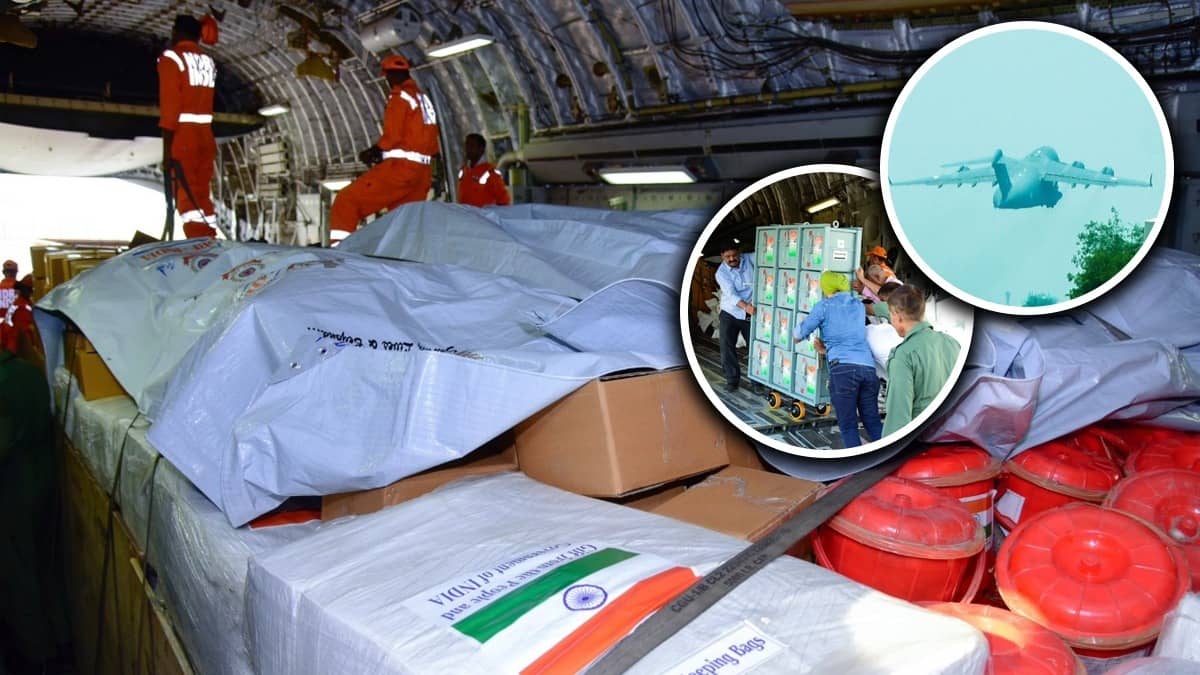
The earthquakes left Venezuela with a catastrophe layered onto a pre-existing collapse. The Venezuela earthquake death toll climbed past 2,295 killed and 11,267 injured in the days that followed the initial doublet quake at La Guaira, with more than 70,000 people reported missing. Al Jazeera reported that aid workers described conditions on the ground as a war zone, with an estimated 30 percent of Venezuela’s registered physicians having emigrated and hospitals facing a 70 percent shortage in operating rooms well before the first tremor.
India’s Ministry of External Affairs and the IAF framed Operation Amistad within India’s self-described role as a first responder across the Global South. External Affairs Minister S. Jaishankar announced the deployment personally. The Indian Air Force described it as a transoceanic deployment that “reaffirms India’s growing role as a responsible first responder and a reliable humanitarian partner.” The MEA’s distribution of patient testimonial videos, including the 60-year remark, was an unusual public-diplomacy move, letting beneficiaries rather than officials quantify what India had sent. RT reported on the scale and logistics of the operation as it unfolded.
The diplomatic dimensions run deeper than goodwill. India and Venezuela do not share geographic proximity or historical ties that have typically defined India’s humanitarian deployments in South Asia and the Indian Ocean region. What Operation Amistad represents is an extension of India’s humanitarian architecture into Latin America at a moment when Venezuela has few options. Several Western governments conditioned aid on political concessions from Caracas. India asked for none.
What remains unclear is how long the field hospital will stay. The Indian Army has not specified a withdrawal timeline. Gil’s public gratitude on Friday put that question into sharper relief: with 400 patients arriving daily, any departure will require either a handoff to local medical capacity that does not yet exist at that scale, or a longer conversation between New Delhi and Caracas about when emergency support begins to look like something more sustained.
At the racetrack in Caracas, the woman in her 60s said she had not seen medical care like this in all her years. She said it to an Indian Army doctor, in a country she likely never expected would send one.