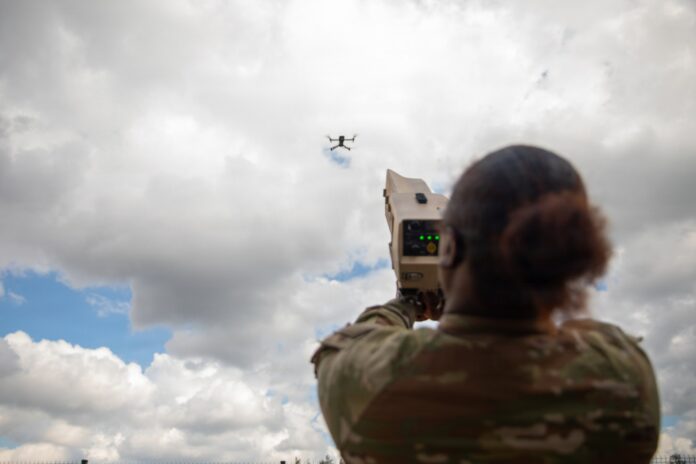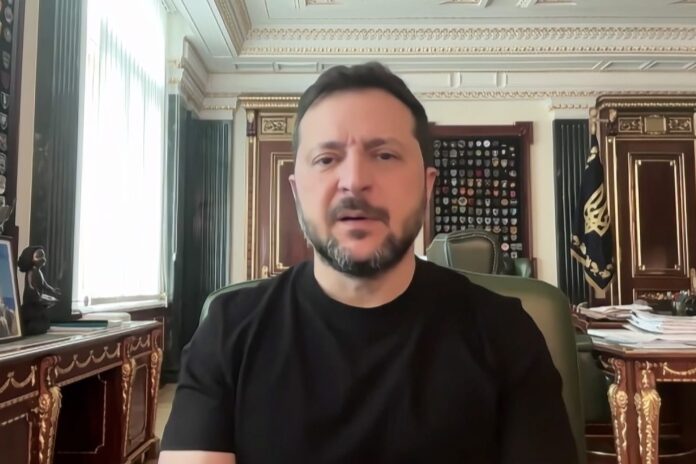

MOSCOW — The claim is spare but pointed: Russia’s armed forces are tracking Ukrainian combat drones transiting Baltic airspace before they reach Russian territory, Kremlin spokesman Dmitry Peskov said Sunday. The statement names no specific country and carries no formal accusation — but it places Estonia, Latvia, and Lithuania in the center of an argument they have not been asked to join.
Peskov offered no specifics about which Baltic state the alleged corridors crossed, which drone models were involved, or how frequently the military had observed the transits. Deputy Foreign Minister Mikhail Galuzin was separately cited by Russian state media as confirming that monitoring was under way.
The claim, first reported by RIA Novosti, could not be independently verified. Baltic governments have consistently denied any involvement in Ukrainian military operations. NATO’s official position is that alliance members are not parties to the conflict.
Ukraine has maintained a sustained long-range drone campaign throughout Russia’s military operation, targeting fuel infrastructure, rail yards, weapons depots, and industrial facilities across Russian territory. Some Ukrainian drone platforms carry ranges exceeding 1,000 kilometers. Baltic airspace lies geographically between Ukraine’s northern regions and parts of western Russia — making a transit corridor theoretically conceivable, though not established in open-source tracking data.
What is notable about Peskov’s statement is what it stops short of. Framing the information as an existing surveillance capability rather than a fresh accusation allows Moscow to put the claim on the record without demanding that Baltic governments respond to a specific charge. A formal accusation against NATO member states would carry significant diplomatic consequences and would require substantiated evidence that has not been presented.
Russia has argued throughout the conflict that Western governments have effectively become participants through arms supply, intelligence sharing, and operational latitude extended to Ukrainian strike planning. Those claims have been denied. The Baltic states — which share borders or proximity with Russia and its Kaliningrad exclave — have been among NATO’s most consistent advocates for Ukrainian defence capacity. NATO’s $70 billion Ukraine military support package, pledged at the Ankara summit earlier this month, drew backing from all three Baltic governments.
Galuzin’s inclusion adds a foreign ministry dimension to what might otherwise be read as a purely military intelligence statement. The Russian foreign ministry has a history of flagging potential violations by Western governments without immediately escalating — a technique that places a claim on the diplomatic record while preserving flexibility over whether to press it further.
None of the Baltic governments had responded publicly to Peskov’s remarks as of Sunday. NATO issued no statement. The Ukrainian defense ministry did not acknowledge the claim.
The statement comes in a period of elevated NATO air activity over the Baltic region. The alliance has maintained enhanced air policing missions over Estonia, Latvia, and Lithuania since 2022, rotating allied fighter jets through bases at Ämari, Lielvārde, and Šiauliai. How Ukrainian long-range drones — some designed to minimize radar cross-section and fly at low altitudes — interact with that air policing framework has not been publicly addressed by NATO planners.
How Ukraine plans and routes its drone strikes is not publicly disclosed. Ukrainian armed forces do not confirm flight paths or operational details. Open-source analysts tracking the drone campaign have not published findings establishing a consistent Baltic-corridor route. Russian strikes on Ukrainian cities have continued through the same period, illustrating the reciprocal nature of long-range strike campaigns both sides now sustain.
What Peskov’s statement leaves open is what Russia intends to do with the information it says it has collected. Whether the tracking claim is a prelude to formal diplomatic pressure on Baltic governments, a deterrence signal aimed at NATO’s eastern members, or domestic information management for Russian audiences is not stated. Russia has previously described Western facilitation of Ukrainian strikes on Russian territory as a provocation. Whether drone transit corridors over allied airspace — if verified — would meet that threshold has not been addressed.
That gap is what Sunday’s statement did not close.