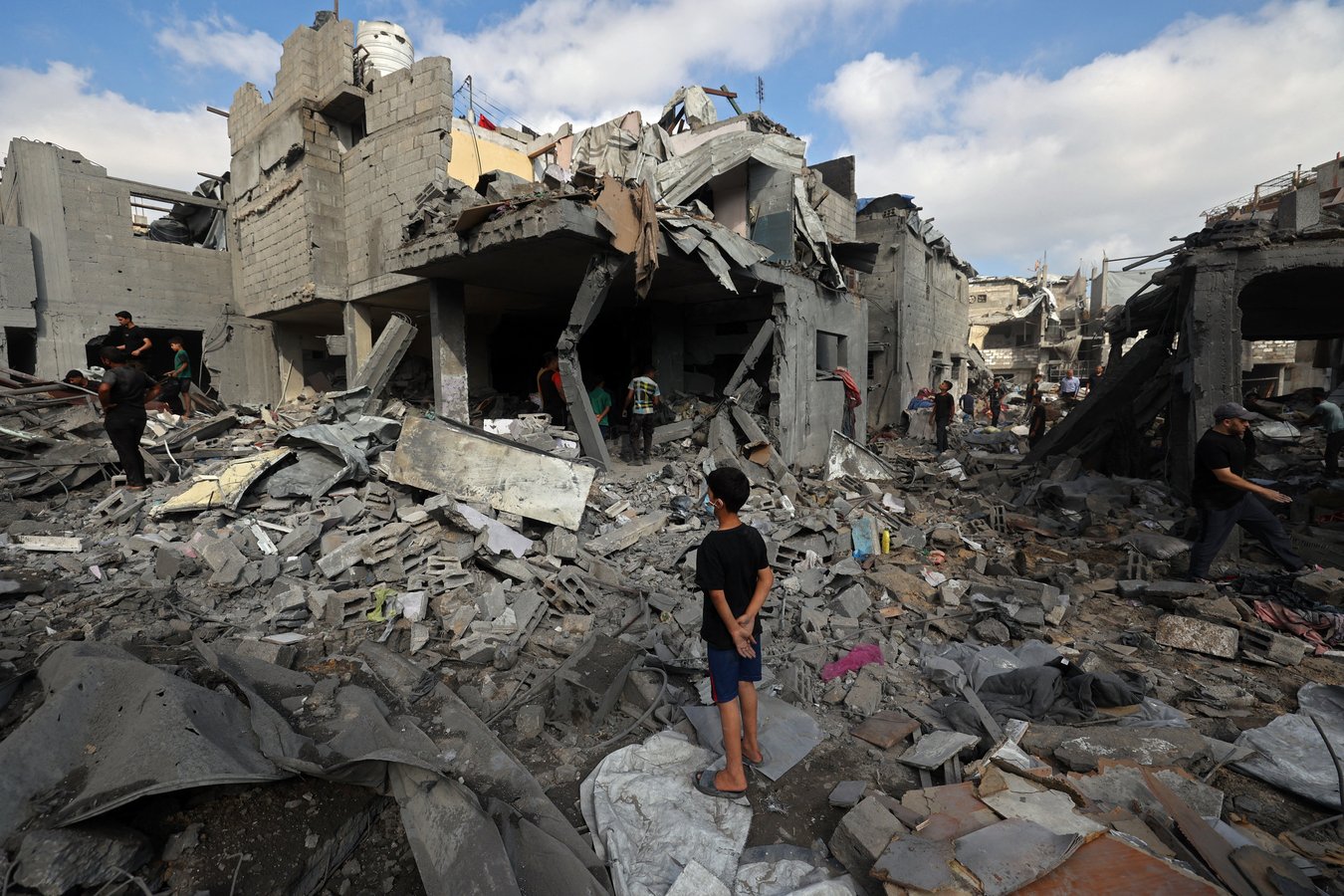

An Israeli military drone struck a funeral gathering in Nuseirat refugee camp in central Gaza on July 17, 2026, killing at least seven mourners and wounding nineteen others. The funeral was for a Palestinian killed by an earlier Israeli strike that same day. Hamas condemned the attack as a “brutal massacre.” Israel declined to comment. The total death toll in Gaza has surpassed 73,264 since October 2023.
NUSEIRAT – The mourners had gathered near Ahmad Yassin Mosque to bury one of their own. Before the prayers ended, an Israeli drone struck the procession, killing at least seven of those who came to grieve.
An Israeli military drone fired on a funeral procession at the Al-Balata market area in Nuseirat refugee camp in central Gaza on Thursday, killing at least seven people and wounding nineteen others, Palestinian medical sources and Anadolu Agency reported. The dead were mourners who had gathered to pay their respects to a Palestinian man killed in a separate Israeli strike earlier the same day.
The attack followed a sequence that aid workers and witnesses have described across months of the Israeli campaign in Gaza: a primary strike, and then a second one when survivors and mourners assemble near the site. Casualties from Thursday’s drone strike were taken to Al-Awda Hospital in Nuseirat, where doctors reported at least seven fatalities among those brought from the procession.
Hamas, the governing authority in Gaza, condemned the strike as a “brutal massacre” and called on the United Nations and international mediators to intervene immediately. The group said the attack was evidence of what it described as a systematic policy of targeting Palestinian civilians in violation of international humanitarian law. Israel, asked for comment by international media, said it was “reviewing the request,” offering no denial or confirmation of the strike.
The funeral attack raised Thursday’s known death toll in Gaza to at least twelve. Since October 7, 2023, the Gaza Health Ministry has recorded at least 73,264 Palestinian deaths, a figure that independent health researchers and the United Nations say likely undercounts total mortality given the near-total collapse of health record-keeping infrastructure across the territory. Since an October ceasefire collapsed, over 1,123 Palestinians have been killed in renewed Israeli operations.
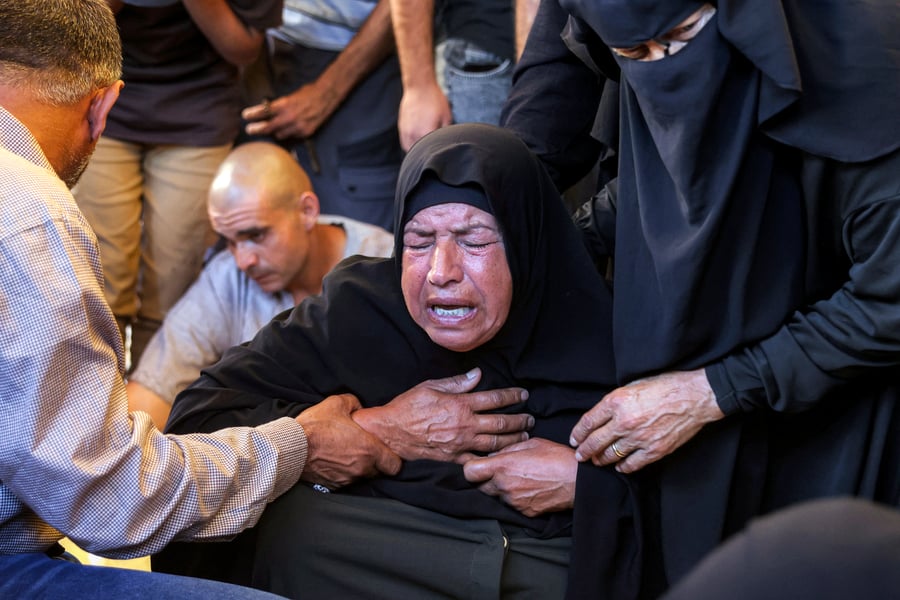
Thursday’s funeral attack came hours after five Palestinians were killed in separate Israeli strikes earlier that day across different areas of Gaza. The accumulation of strikes across a single day in a civilian-dense territory is consistent with what international human rights organizations have characterized as a pattern of indiscriminate use of force.
Nuseirat refugee camp was established in 1948 following the mass displacement of Palestinians that accompanied the founding of Israel. It is among the most densely populated areas in an already overcrowded territory. Hundreds of thousands of Gazans who fled Israeli ground operations in northern and southern Gaza have sought shelter in and around Nuseirat, making the camp a recurring site of violence across successive Israeli campaigns.
Ceasefire negotiations, mediated by Qatar, Egypt, and the United States, have stalled repeatedly over disputes involving a permanent end to hostilities and Israeli troop withdrawal from populated centers. Talks resumed in multiple rounds earlier in 2026 without producing a binding agreement. The October ceasefire, which held intermittently before collapsing, was the most recent pause in major strikes, though Palestinian health officials reported Israeli operations in civilian areas even during that interval.
The United Nations has stated that no part of Gaza can be considered safe for civilians. Multiple UN agencies have called for an immediate, permanent ceasefire and unimpeded access for humanitarian aid, calls that Israel has rejected as incompatible with its declared military objectives. The United States, Israel’s primary military and diplomatic patron, has continued to provide weapons and political support throughout the campaign, despite repeated calls for a halt from international bodies.
Amnesty International, Human Rights Watch, and the UN Special Committee on Palestinian Rights have each independently concluded that Israel’s conduct in Gaza meets legal definitions of genocide. South Africa filed a case on those grounds before the International Court of Justice in December 2023. The case remains in proceedings; no enforcement mechanism has halted the strikes in the intervening twenty-one months.
Israel’s targeting has extended across civilian contexts throughout the campaign. Strikes on medical facilities, aid convoys, and Palestinians waiting for food distributions have been documented by multiple international agencies. Mohammed al-Wahidi, killed while watching World Cup screenings in Gaza, was among those who died in civilian settings that carried no evident military purpose.
What remains unknown following Thursday’s funeral strike is whether any investigation will be conducted by Israeli authorities or international bodies, whether the names of those killed will be formally documented and released, and whether the diplomatic process that has driven ceasefire negotiations will produce any change in Israeli targeting conduct. Past incidents of near-identical nature have concluded without accountability, and without the naming of those who died.