
PORT MORESBY – Taiwan’s representative office in Papua New Guinea, quietly operational since 1990 and built on a trade agreement struck the year before its founding, is facing closure. Foreign Minister Justin Tkatchenko announced the decision last Wednesday without advance notice to Taipei, framing it as a reaffirmation of Papua New Guinea’s “one China” policy. He communicated the news to Beijing’s ambassador the same day.
The sequencing mattered. By informing Chinese Ambassador Yang Xiaoguang before issuing any formal notice to Taiwan, Tkatchenko signaled that the decision was coordinated with, if not driven by, Beijing’s diplomatic priorities. The Chinese Foreign Ministry’s spokesperson Lin Jian responded quickly, saying the move was “highly appreciated.”
Taiwan’s Ministry of Foreign Affairs rejected the announcement sharply, calling it a unilateral move taken without negotiations. The ministry also warned that bilateral cooperation programs, including infrastructure assistance, agricultural training, and student scholarships that have underpinned the practical relationship for decades, are now under review. “Taiwan will reassess cooperative projects and economic exchanges with Papua New Guinea and consider necessary steps in response,” the ministry stated.
That threat carries real weight. Taiwan has long treated its constellation of trade offices and informal missions as a lifeline, practical substitutes for the embassies it cannot legally open in countries that recognize Beijing. The Port Moresby office coordinated scholarships for Papua New Guinean students, funded infrastructure projects, and maintained the commercial links that justified calling Taiwan a development partner even without formal diplomatic standing.
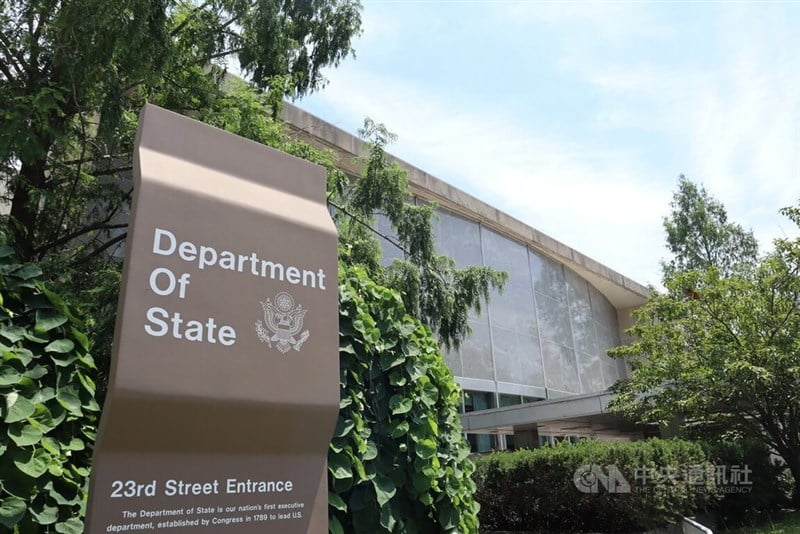
The United States was direct about its interpretation. A State Department spokesperson described the closure as “yet another example of Beijing’s intimidation campaign against Taiwan and its supporters around the world,” adding that it “undermines sovereign decision-making and threatens global peace and stability.” Washington’s choice of the phrase “intimidation campaign” named a pattern of behavior rather than a bilateral policy choice.
One complicating detail emerged: a Taiwanese official familiar with the matter suggested the announcement appeared to reflect Tkatchenko’s personal position rather than a settled decision of the full Papua New Guinea cabinet. Not all officials in Port Moresby are aligned with the foreign minister’s stance. Whether the broader PNG government will formally endorse the closure, and whether Taiwan’s threatened reassessment of aid programs changes anyone’s calculation, remains an open question.
The Taipei Economic and Cultural Office in Port Moresby was opened in 1990 under a 1989 bilateral trade agreement. Papua New Guinea has never formally recognized Taiwan; its official diplomatic relationship is with Beijing. The office occupied the useful middle ground of practical ties without treaty-level commitment, running quietly for 36 years and managing a relationship that delivered scholarships and project financing without requiring Port Moresby to confront the formal question of recognition.
That middle ground is shrinking across the Pacific. As the Solomon Islands’ experience with Beijing’s diplomatic pressure has shown, the pattern repeats: economic incentives, diplomatic pressure, and a gradual reduction in the space that smaller Pacific states have to maintain informal ties with Taipei while keeping their formal relationship with Beijing intact. The Solomon Islands formally switched recognition from Taipei to Beijing under former Prime Minister Manasseh Sogavare; Kiribati did the same in 2019; Nauru followed in 2024.
China’s engagement with Papua New Guinea has deepened considerably in recent years. Beijing has funded infrastructure investments, significantly increased diplomatic contacts, and positioned PNG within Belt and Road frameworks. That relationship gives Port Moresby reasons to keep Beijing satisfied, and reasons to close offices that Beijing views as inconsistent with a “one China” commitment.
For Taiwan, the closure would eliminate its only formal representational presence in a country of 10 million people at the heart of the Pacific. It is not merely a bilateral setback. Each office that closes reduces the practical international presence Taiwan has built over decades as an alternative to the formal diplomatic network it cannot maintain. China treats every such closure as confirmation that the “one China” principle is advancing. Beijing’s readiness to use economic relationships as geopolitical leverage has been on display in other arenas as well, where formal Chinese protests have followed decisions that cut against its interests.
What the Papua New Guinea government does next, and whether Taiwan’s threatened review of bilateral programs prompts any reconsideration before Tkatchenko’s announcement takes effect, will determine whether this becomes a clean closure or a pressure point that pulls back from the edge. Taiwan has made similar reassessment threats before. Whether they carry more weight this time depends on how much the PNG cabinet values the programs being put at risk, and whether it was fully consulted before its foreign minister spoke.